
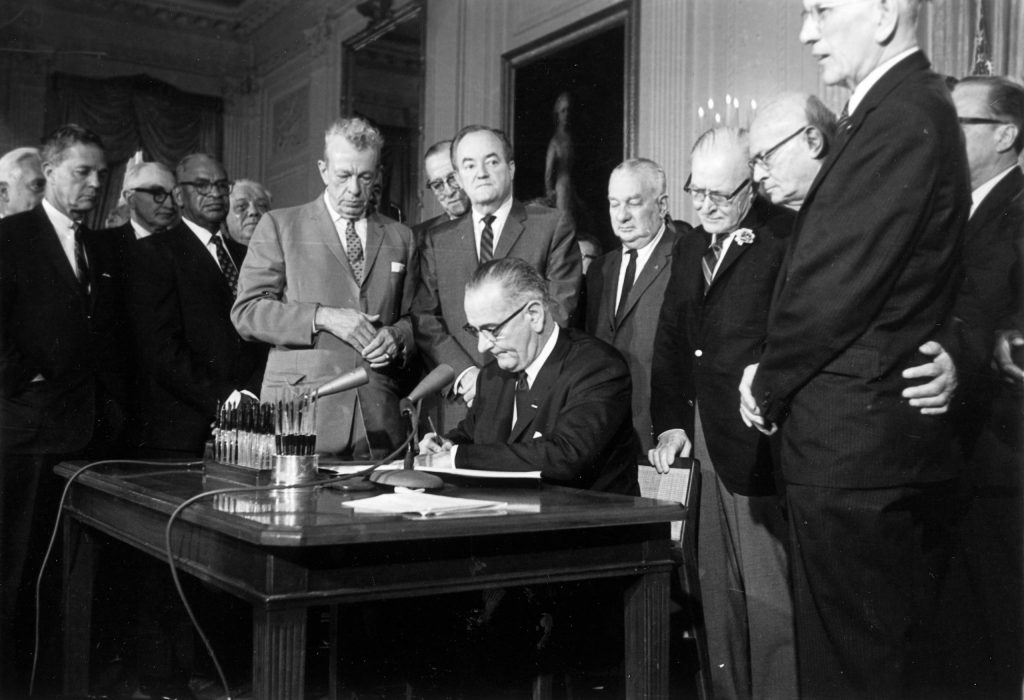
WASHINGTON (AP) — On July 2, 1964, President Lyndon B. Johnson signed into law the Civil Rights Act of 1964, one of the most significant civil rights achievements in U.S. history. This new law made it illegal to discriminate on the basis of race, color, religion, sex, or national origin; It ended school, work and public facility discrimination, and barred unequal application of voter registration requirements.
Five hours after Congress approved the law, Johnson signed it, then turned and handed pens to various key figures in getting the legislation passed, including Attorney General Robert Kennedy. He went on to address the country in a nationally televised address, saying the law was a challenge for the United States to “eliminate the last vestiges of injustice in our beloved country.”
Real journalism.Trusted by millions.
Unlimited access to in-depth reporting, expert analysis, and the stories that shape our country.
Already a member? Log in