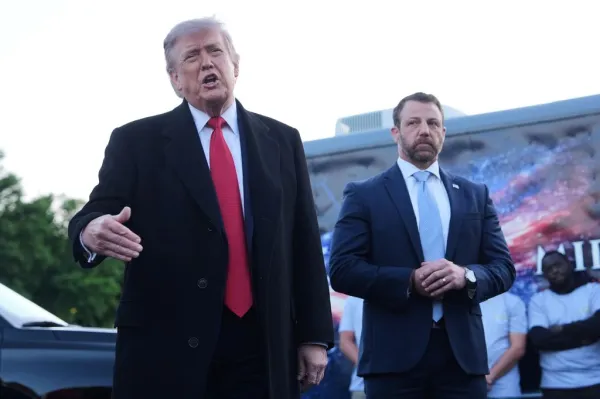
More than a few commentators have analogized Donald Trump’s election to that of Andrew Jackson: anti-establishment, populist, and rooted in a grassroots anger against existing Washington ways and policies. And more than a few commentators have called Donald Trump’s tweets and media blasts a modern-day version of Theodore Roosevelt’s bully pulpit: a way to call out corporations and business elites for serving their own narrow interests over the broader ones of the nation.
What we have not seen is a Donald Trump who seems all that familiar with the constitutional “powers and duties” of an office he has now sworn to “faithfully execute.” On the one occasion during the campaign he was asked directly about a constitutional issue—his willingness as president to defer to Congress’s Article I prerogatives—his answer was a bollixed muddle that included a defense of an article that doesn’t even exist. Indeed, only a few minutes after taking it, the new president declared that “the oath of office I take today is an oath of allegiance to all Americans,” rather than, as the oath itself has it, a pledge to “preserve, protect and defend the Constitution of the United States.”