

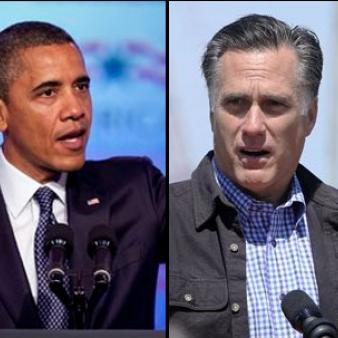
Bill Galston, one of the most intelligent center-left observers of contemporary American policies, is surprised:
My colleague Fred Barnes, one of the most intelligent center-right observers of contemporary American politics, is puzzled:
Galston and Barnes suggest various explanations for the voters’ disinclination to turn against Obama as strongly as might have been expected. Many of those explanations are reasonable. But here’s one reason neither discusses: George W. Bush.
The recession began in late 2007—under George W. Bush. The financial crisis happened in the fall of 2008—under George W. Bush. The very sluggish recovery, to be sure, has happened under Barack Obama—and he’s paid a political price for that. But one reason the price hasn’t been much higher is surely that voters remember which party had the White House—and had controlled Congress for most of the recent past—when the troubles began.
This is where the historical and political science models may break down. We don’t have recent experience of, in effect, a five-year recession. We don’t have recent experience of a reelection campaign happening in a bad economy for which there is what might be called ambiguous causality. But given that ambiguous causality, it shouldn’t be surprising that voters are hesitating to drop the hammer on Obama.
As Frank Cannon and Jeffrey Bell put it in the current issue,
What is to be done?
One path ahead for Romney would be to stress that his economic agenda is distinct from the Bush policies. There are several grounds for doing this–Jeffrey Bell and Rich Danker suggested one area of distinction last week in THE WEEKLY STANDARD, and Peter Wallison lays out another in this week’s issue. More broadly, Romney could still adjust to run a more forward-looking, conservative reformist, I’m-in-the-spirit-of-Chris-Christie-and-Bob-McDonnell-and-Scott-Walker type campaign, one that would make it more difficult to claim that Romney’s policies simply hearken back to Bush’s. Some of us thought (hoped?) that was the meaning of the Paul Ryan pick. We seem to have been mistaken.
But it might be a bit late in the day for such an adjustment—though it surely should be tried. That leaves the other thing Romney can do: Broaden the debate beyond the economy. Granted, the economic issues are dominant. But if Romney and Obama are basically fighting that set of issues to a draw (in last week’s Fox News poll, the two were dead even at 46 percent on the question of which candidate would be better at creating jobs and improving the economy), then other sets of issues could be tie-breakers.
Which brings us to national security. Given the urgency of what’s happening in the Middle East, voters may well look to foreign policy to resolve their indecision. What’s more, given that Romney started to address this issue last week, got criticized, and now runs the risk of looking weak if he backs off, engaging seriously and strongly on foreign policy is now a leadership test for Romney—and should be the priority for his campaign.
Romney doesn’t have to make up his double-digit polling gap with Obama on national security (though given what’s going on in the world, that wouldn’t be out of the question). He does have to narrow the gap, and to become more credible and more competitive than he now is as a potential commander-in-chief. I’d even go so far as to make this suggestion: Whoever wins the national security debate over the next few weeks will win the election.
Can Romney do it? Can he perform well outside his economic comfort zone? Can he overcome resistance in his own campaign to do what’s necessary and to seize the moment? It’s not a bad test for a man who wants to be president.
