

Sometimes the brutal theater of sports explains realpolitik better than any classified briefing.
In October 1974, George Foreman and Muhammad Ali met in Kinshasa for the Rumble in the Jungle, the most anticipated fight in a decade. Foreman arrived as the undefeated destroyer, fresh off dismantling Joe Frazier and Ken Norton in just four rounds combined. Ali, older and discounted, was expected to absorb a pounding until the inevitable end.
Recommended Stories


For seven rounds, that is exactly what happened.
Ali leaned back against the ropes and let Foreman swing. Punch after punch landed on his arms and shoulders. To the crowd, it looked like domination. In reality, it was design. By using the ropes as a shock absorber, Ali forced Foreman to burn through his energy in the stifling Zairean heat. By the eighth round, the champion was exhausted. Ali stepped forward — and ended the fight.
That lesson — power without pacing — now hangs over Washington.
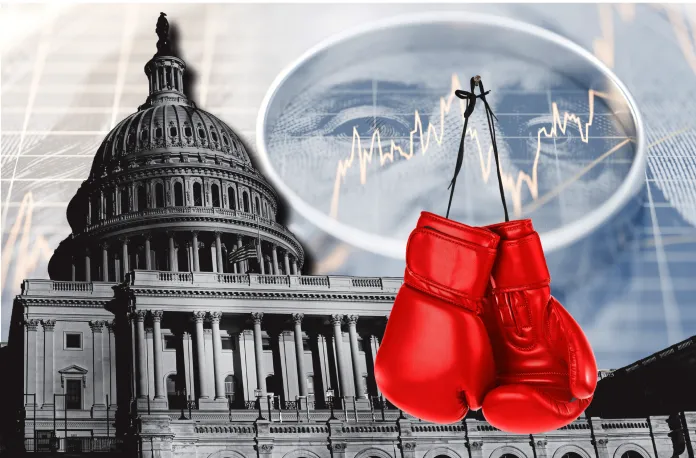
Today, the United States risks playing the role of Foreman in a geopolitical fight. Armed with a maximum-pressure campaign, Washington has spent the past year landing heavy blows across multiple theaters.
The January 2026 special forces operation that captured Nicolás Maduro delivered a visible knockdown — one that seemed to signal the collapse of Venezuela’s Bolivarian system. From the Persian Gulf to the Caribbean, the U.S. continues pressing its advantage: tightening enforcement against Iran’s shadow fleet, striking its military infrastructure, and increasing pressure on Havana.
To audiences in Washington, the champion looks dominant. But a knockdown is not a knockout. The adversaries are not collapsing; they are absorbing.
The past weeks offer a glimpse of how this rope-a-dope strategy is unfolding. Headlines have swung from ceasefire negotiations to renewed escalation within hours. This constant oscillation forces U.S. policymakers to stay fully engaged — politically, militarily, and economically — accelerating the very exhaustion the strategy is designed to produce.
Nowhere is this rhythm clearer than around the Strait of Hormuz, through which roughly a fifth of the world’s oil supply flows, where rhetoric about opening or closing the waterway resembles a boxing exchange: feints, jabs, and counters rather than decisive blows.
This is not chaos. It is rhythm.
The real challenger in this fight isn’t Caracas, Tehran, or Havana. It is Beijing that is using those regimes as its ropes. China cannot yet out-punch the U.S. in a direct military confrontation. Instead, it plays the role of strategist, enabling the endurance of its partners while avoiding direct exposure. The instruction is simple, as it was from Ali’s cornerman: Stay on your feet and let the big man swing.
China doesn’t need these regimes to win. It only needs them to stay in the fight.
They function as strategic buffers in a global contest of logistics and time. By sustaining shadow shipping networks, facilitating financial channels that bypass the dollar, and absorbing discounted energy flows, China ensures that American pressure lands without delivering a decisive blow. The objective is not confrontation. It is exhaustion.
We are still in the early rounds, perhaps the fourth or fifth. The U.S. offensive appears dominant, but sustaining simultaneous pressure across the Middle East, Latin America, and the Caribbean carries real costs. Every additional theater stretches logistics, fiscal resources, and, most critically, the political consensus at home. Power, in this context, is not just about how hard you can punch. It is about how long you can keep punching.
The eighth round may not occur overseas.
It may arrive in Washington on Election Day in November 2026.
As instability accumulates, energy markets react to every signal from the Persian Gulf, and the specter of a mass migration crisis in the Straits of Florida looms, the political oxygen sustaining the current U.S. strategy begins to thin.
A shift in congressional control would introduce a barrage of investigations, funding constraints, and legislative gridlock, fracturing the very campaign that now appears so dominant.
That is the bet: not that the U.S. loses abroad, but that it loses the ability to sustain its strategy at home.
If that happens, the outcome will not resemble a decisive knockout. It will look like fatigue. Pressure will ease. Commitments will narrow. And the regimes that spent months absorbing punishment will step off the ropes — damaged, but intact.
In the world of realpolitik, victory does not always go to the strongest. It goes to the side that manages time and endurance more effectively than its opponent, as the U.S. learned in Vietnam and Afghanistan.
RURAL VIRGINIANS GETTING FAIRFAXED
The lesson for Washington is not to stop punching; it is to fight with discipline. Prioritize theaters. Align objectives with political sustainability. Target the systems, especially the Chinese-enabled logistics networks, that allow adversaries to endure.
Because if the U.S. continues to throw without recalibrating, it risks discovering, too late, that it has been winning rounds while the other side was fighting for the outcome.
