

Apple sales in China, the iPhone-maker’s third-largest market, grew more slowly than in any other region in late summer amid rising trade tensions between the Trump administration and Beijing.
Revenue from the world’s second-largest economy climbed 16 percent to $11.4 billion, the Cupertino, Calif.-based company said in a statement on Thursday. That compared with gains of 18 percent and 19 percent in Europe and North America, the next-slowest areas, and an increase of 34 percent in Japan, the most rapid.
Recommended Stories



The growth rate, the lowest since the end of 2017, nonetheless demonstrated that if Trump’s tariffs on $250 billion of Chinese imports and President Xi Jinping’s retaliation have weighed on Apple’s growth in China, they have by no means halted it.
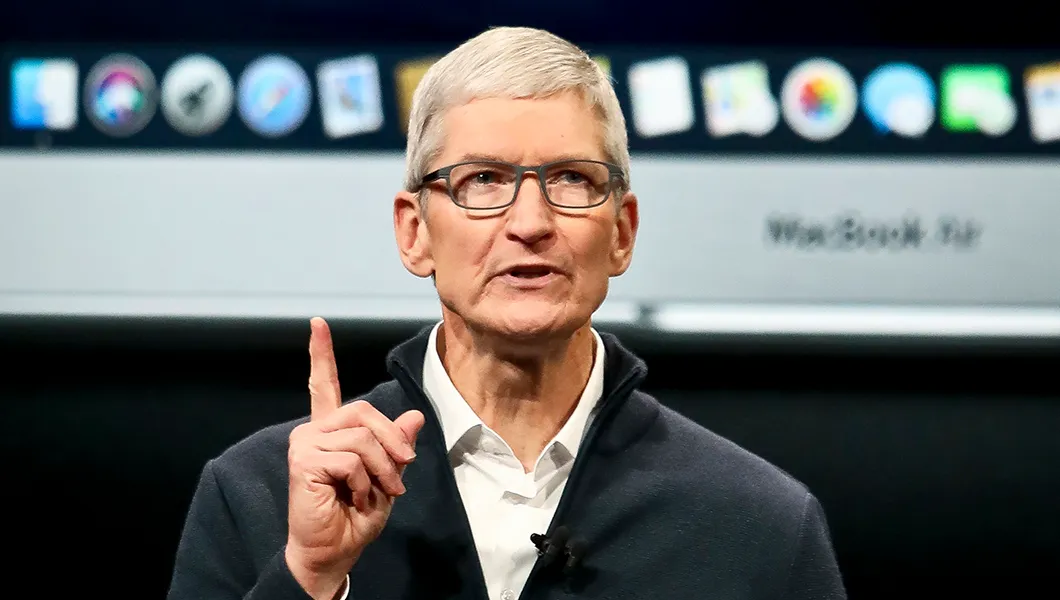
“Our business in China was very strong last quarter,” said Chief Executive Officer Tim Cook, who said he was pleased with the 16 percent gain and singled out growth in iPhone sales.
Cook said he remains optimistic that global leaders will be able to reach mutually beneficial trade deals, though economists and Republican lawmakers have warned that President Trump risks undermining the benefits of last year’s tax cuts with protectionist policies that have antagonized U.S. trading partners and competitors alike. The White House has threatened duties on as much as $267 billion more of Chinese goods, which would include the Apple Watch and AirPods that have so far escaped tariffs.
As the world’s two largest economies, the U.S. and China “have this unavoidable mutuality where China only wins if the U.S. wins and the U.S. only wins if China wins and the world only wins if China and the U.S. win,” Cook told investors earlier this year. Several of the trade deals the U.S. has with other nations are in need of modernization, he said at the time, but tariffs are the wrong approach.
[Related: Business alarmed as Trump administration refuses exemptions for China tariffs]
Also during the past three months, a virtual moratorium on video-game approvals required by the Chinese government — the result of a new evaluation process — has affected App Store sales, Cook added. The CEO believes it’s unrelated to Beijing’s promise of nontariff relation against U.S. duties, once Xi has added levies to all American imports.
“We did see a few games approved recently, but it’s very far below the preferred pace,” Cook said. “We don’t know exactly when the approvals will return to a normal pace. I would not want to predict that.”
Companywide, Apple’s profit of $2.91 a share in its fourth fiscal quarter topped the $2.78 average estimate from analysts surveyed by FactSet. Net income climbed 32 percent to $14.1 billion on sales of $62.9 billion.
“We’re thrilled to report another record-breaking quarter that caps a tremendous fiscal 2018,” Cook said, noting that Apple has now shipped more than 2 billion devices with the iOS mobile operating system and offered its App Store for a full decade.
The Cupertino, Calif.-based company’s shares fell 6.4 percent to $207.90 after the close of regular trading in New York. The shares previously surged 33 percent to $222.22 in the 12 months prior to Thursday’s earnings report.
