
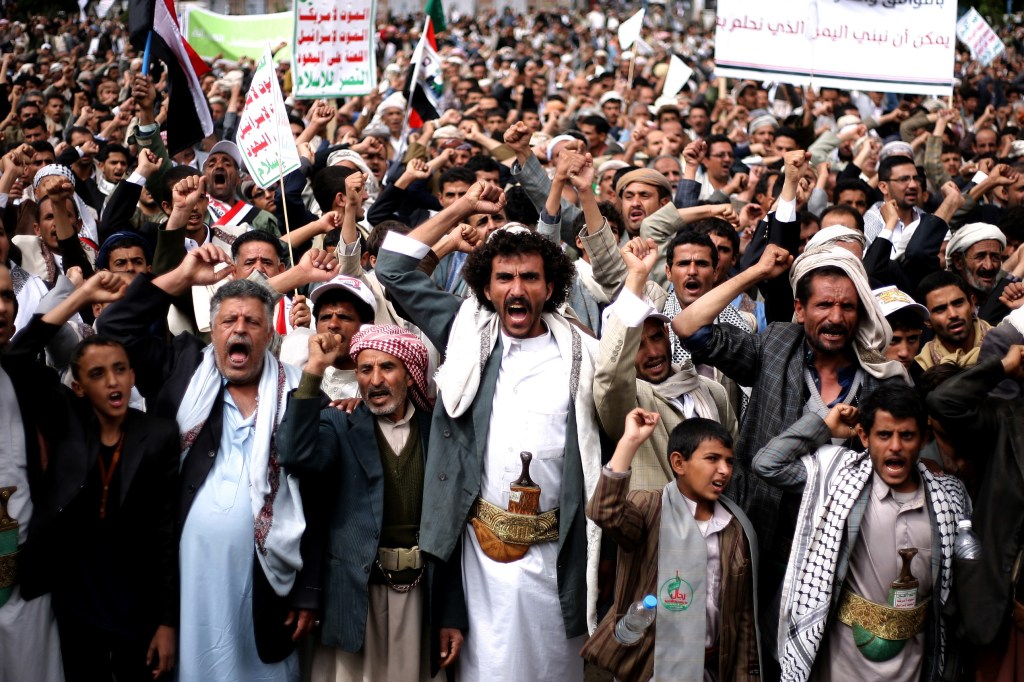
SANAA, Yemen (AP) — Yemen’s 2011 Arab Spring revolt began with a nucleus of young men and women, a mix of socialists, secularists and moderate Islamists. In the capital’s “Change Square,” they launched their sit-in protest, a dreamy and romantic movement seeking to end autocrat Ali Abdullah Saleh’s 33-year rule and transform the poorest Arab nation into a democratic, modern society.
Nearly four years later, Yemen is in chaos. Shiite rebels have overrun the capital. Saleh is out of power, but remains powerful, with his loyalists infusing the political scene and the military. Al-Qaida’s branch in the country is carrying out deadly attacks in Sanaa. Attempts at real reform are in disarray.
Recommended Stories



Print subscriber? Click here to login/register your account
Digital subscriber? Click here to login/register your account.