

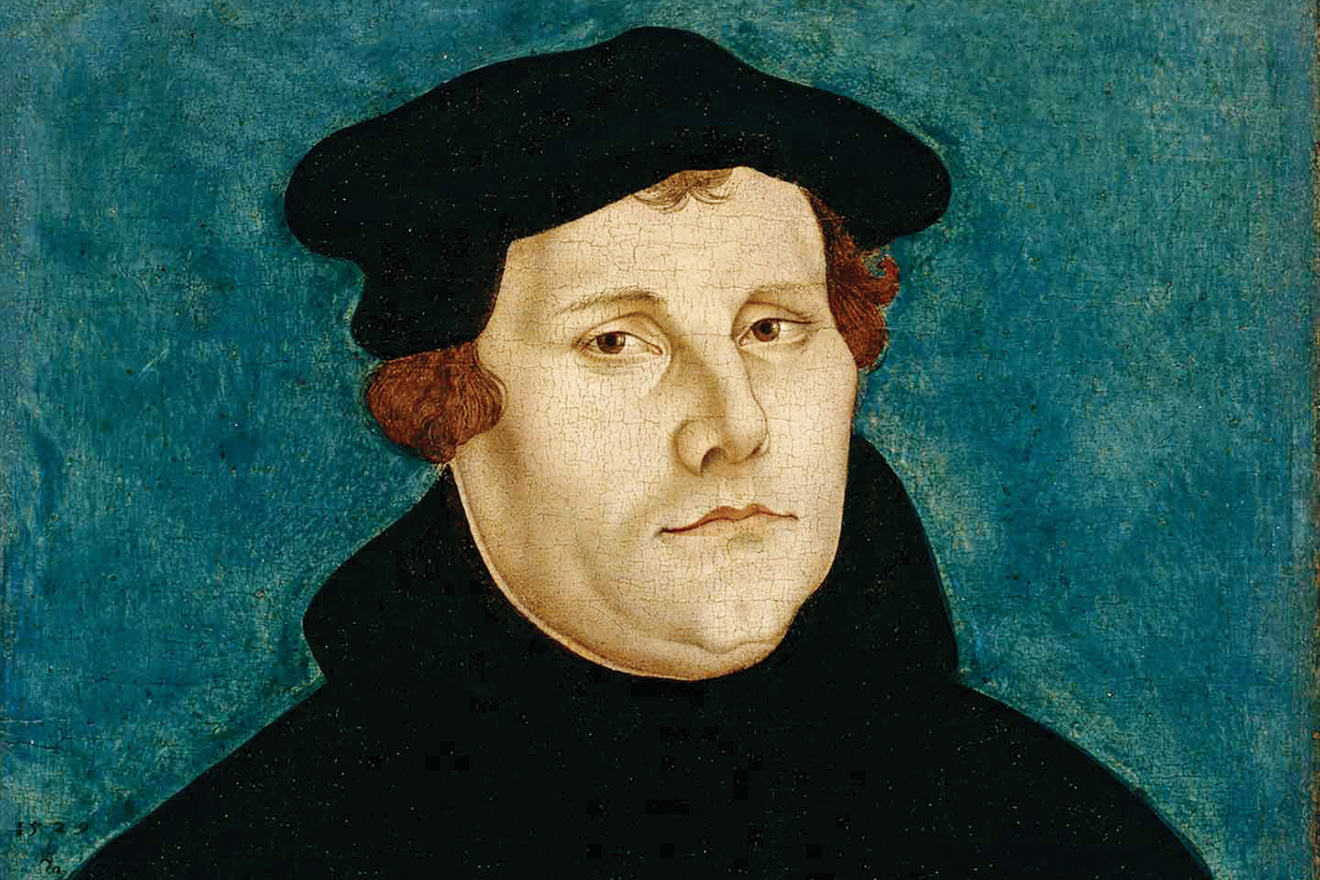
On October 31, exactly 500 years will have passed since a German monk named Martin Luther posted his 95 theses on the door of the Castle Church in Wittenberg. That’s at least the tradition, but certainly Luther circulated his collection of brief contentions. Mainly he intended to provoke a debate over the sale of indulgences, a feature of penance for sins that granted their full or partial remission.
Luther was angered by the crass advertising campaign launched by the papacy to raise money for the construction of Saint Peter’s Basilica, but he was not alone in that. What troubled him was the concept of “indulgence” itself. The very idea, he felt, was at odds with the Christian gospel. And so although he meant to start a discussion among academic theologians—his theses were written in Latin—he provoked a Europe-wide dispute over the essential features of Christianity. In 1521 Pope Leo X excommunicated Luther. The pope thought he had taken care of the problem, but in fact the next 150 years would be marked by the argument Luther started—the Reformation and Counter-Reformation—and modern life and culture unalterably transformed as a consequence.
Stay informed.Stay ahead.
Join Washington Examiner for unlimited access to the news, analysis, and commentary that matter most.
Already a member? Log in
