

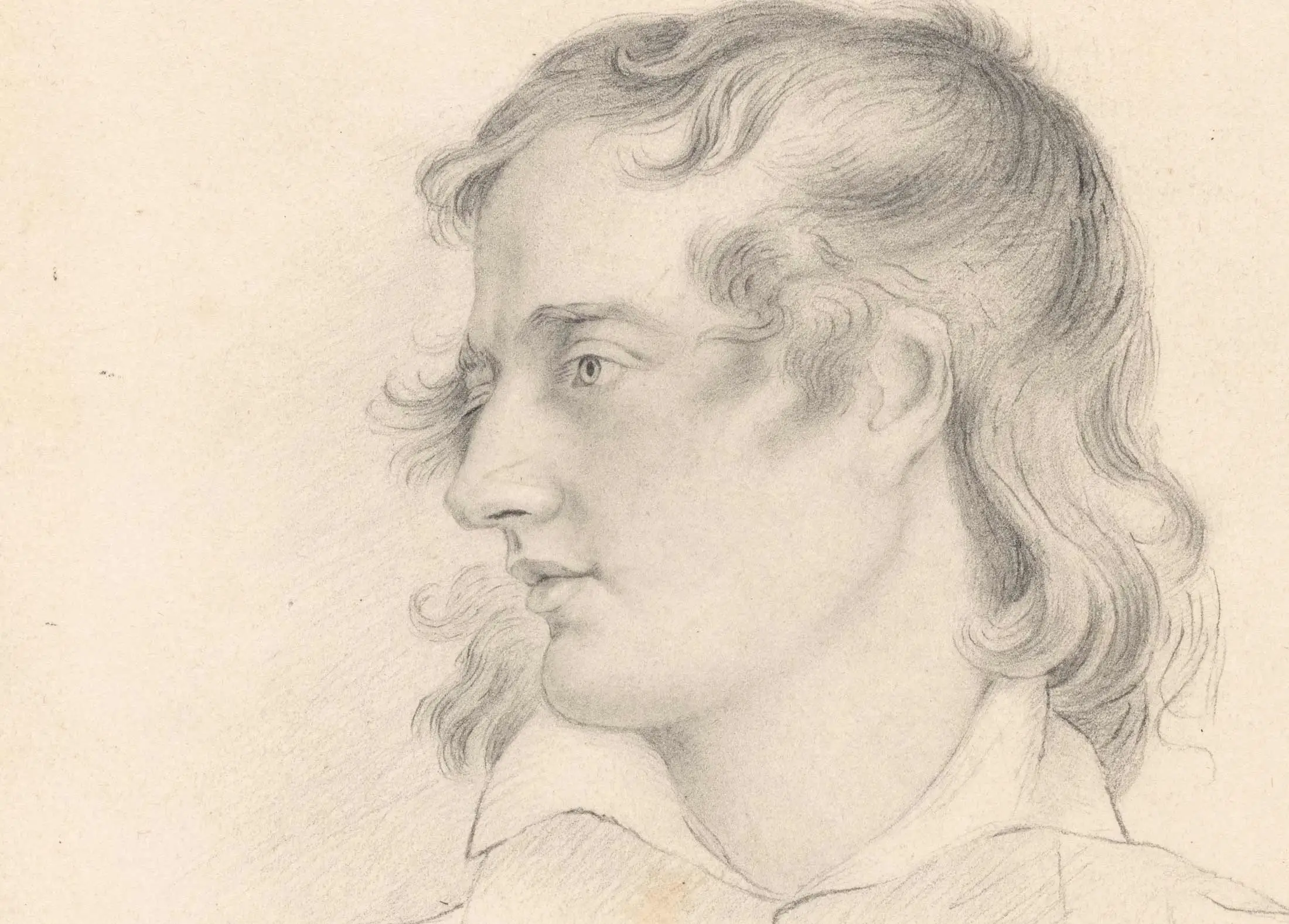
When English lyric poetry is the subject, one thinks first of the Romantics. To many readers for whom poetry is not a life-sustaining staple, and even to some for whom it is, the Romantics have come to define poetry’s very essence: the eruption of exorbitant feeling too rich for the heart to contain in silence. Readers better versed in older and more recent poetry may downgrade Romantic extravagances in favor of, say, the brainy eroticism of John Donne, the eviscerating wit of Alexander Pope, or the chill austerity of Geoffrey Hill. Yet there is no denying that the two poetic generations that thrived from the 1790s to the 1820s represent an artistic efflorescence surpassed in English literature only by that of Shakespeare and his contemporaries.
Although they may be herded together to mark a period or even a movement, each of the Romantics was a singular figure. In the first generation, whose principals outlived those of the second, William Blake, almost unknown in his day, couched shattering curses and blessings in language of disarming simplicity, and conceived theogonies and prophecies intended to rival or even supplant the Bible. Samuel Taylor Coleridge and William Wordsworth joined forces in the collection Lyrical Ballads (1798) “with a view to ascertain how far the language of conversation in the middle and lower classes of society is adapted to the purposes of poetic pleasure.” Coleridge took opium as more conventional gentlemen took snuff and gave birth to fantastic visions, while Wordsworth made heroes of leech gatherers and idiot boys and mourned the loss of “the visionary gleam” in a world hellbent on “getting and spending.” In the second generation, Percy Bysshe Shelley took the lash to a political, social, and religious order that bred human depravity and abjection, and he proclaimed the glorious coming day when freedom and true worship will make a heaven on earth. John Keats, bound for a consumptive’s early grave, kept house with rapturous melancholy and “beauty that must die.”
Stay informed.Stay ahead.
Join Washington Examiner for unlimited access to the news, analysis, and commentary that matter most.
Already a member? Log in
