

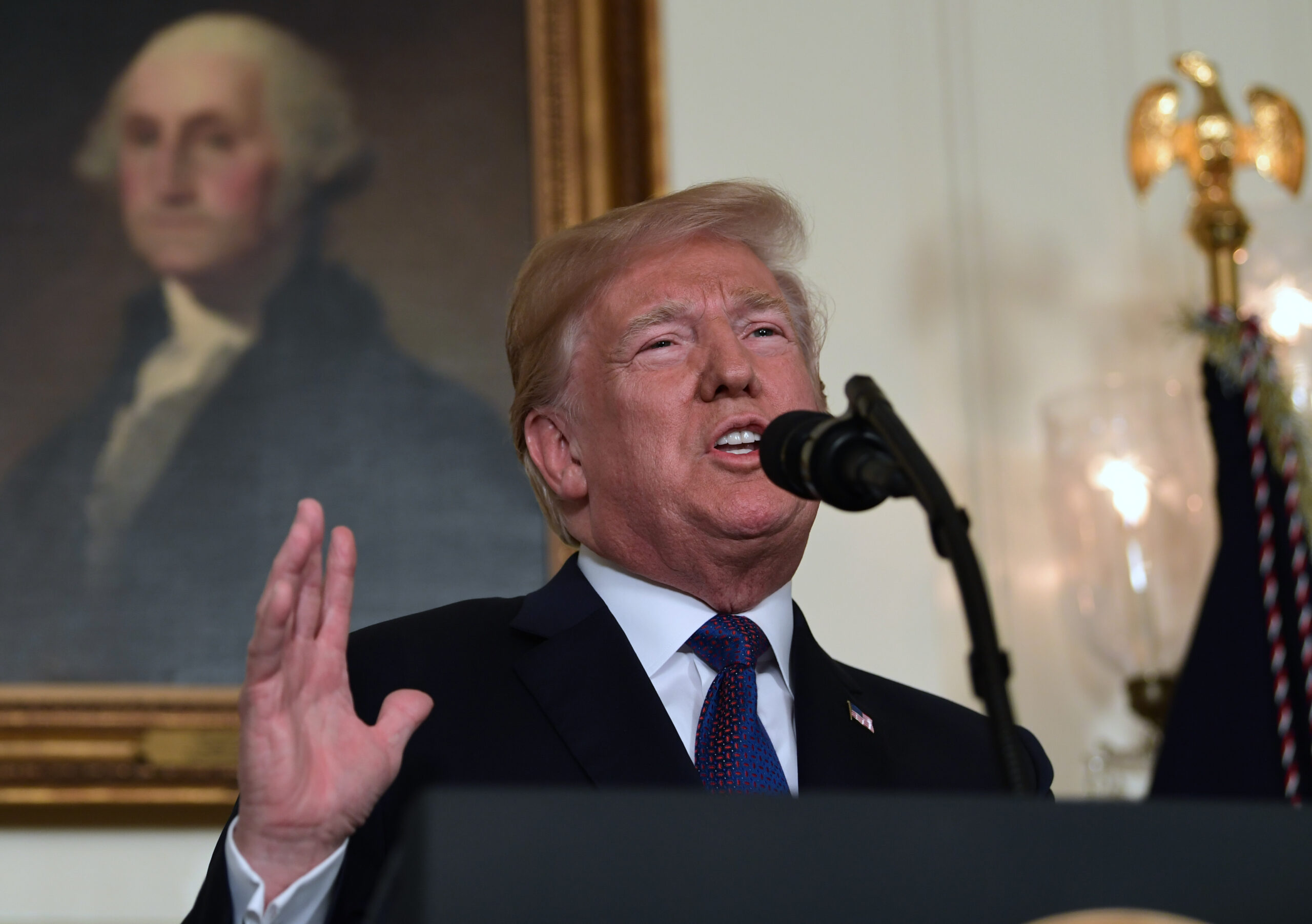
President Trump intends to withdraw U.S. forces from Syria as soon as possible following the defeat of the Islamic State, senators said Tuesday following a classified briefing.
“I think the administration’s plans are to complete the efforts to defeat ISIS and to not be involved,” Senate Foreign Relations Chairman Bob Corker, R-Tenn., told reporters.
Recommended Stories


That update, following a classified briefing to the Senate by Defense Secretary Jim Mattis, suggests that Trump’s determination to withdraw has hardened despite lobbying by French President Emmanuel Macron and other proponents of a longer commitment in the war-torn country. But a pair of top Republican senators said that the decision will enhance Russian influence in the country and set the stage for a conflict between Israel and Iran.
“Syria is going to be an armed camp of Hezbollah — Iranian military people — that will present a threat to Israel unlike any time in the last 20 or 30 years,” Sen. Lindsey Graham, R-S.C., told reporters. “Syria will fall into the hands of the Russians, the Iranians, [and Syrian President Bashar] Assad, which will be a nightmare for Israel and the region as a whole.”
Corker concurred, but blamed the outcome on former President Barack Obama’s acceptance of Russia as a power-broker in a 2013 deal that was supposed to result in the elimination of Assad’s chemical weapons stockpiles. “Once that decision was made, candidly, the die was cast as far as the future of Syria went,” he said.
Graham maintained that Trump should impose a no-fly zone over at least part of Syria and deploy enough American forces to ensure that Assad and his allies can’t attack local fighters who have partnered with the U.S. over the last several years. That plan, he argued, would force Assad to agree to a negotiated settlement brokered by the United Nations in Geneva, Switzerland.
“I’m not talking about a large number of troops, I’m not talking about invading Syria — hearing that kinda just gets old,” he insisted. “To think that you have any leverage under the current construct is insane. Why would Russia and Iran and Assad go to Geneva when they are winning on the battlefield uncontested?”
Corker declined to say directly if he wants the administration to develop a more aggressive military strategy, but he seemed to regard any hypothetical plan as more difficult to execute than Graham’s comments would suggest.
“It’s just not going to happen,” he said. “And to do so would take a significant effort on behalf of our own military. I don’t think that’s where the American people are right now.”
But the two senior lawmakers were on the same page about what the withdrawal would mean strategically.
“Russia and Iran, they will be determining the future [in Syria],” Corker said. “We may be at the table, but when you’re just talking and you have nothing to do with shaping what’s happening on the ground, you’re just talking.”
And Graham, who recently returned from a trip to the Middle East in which Israeli officials predicted a “bloody” clash with pro-Iranian forces, was emphatic that a conflict is brewing.
“Why is Israel bombing so much?” he said, before answering his own question. “Because they see the buildup of Iranian and Hezbollah influence, and they’re having to do it by themselves.”
