

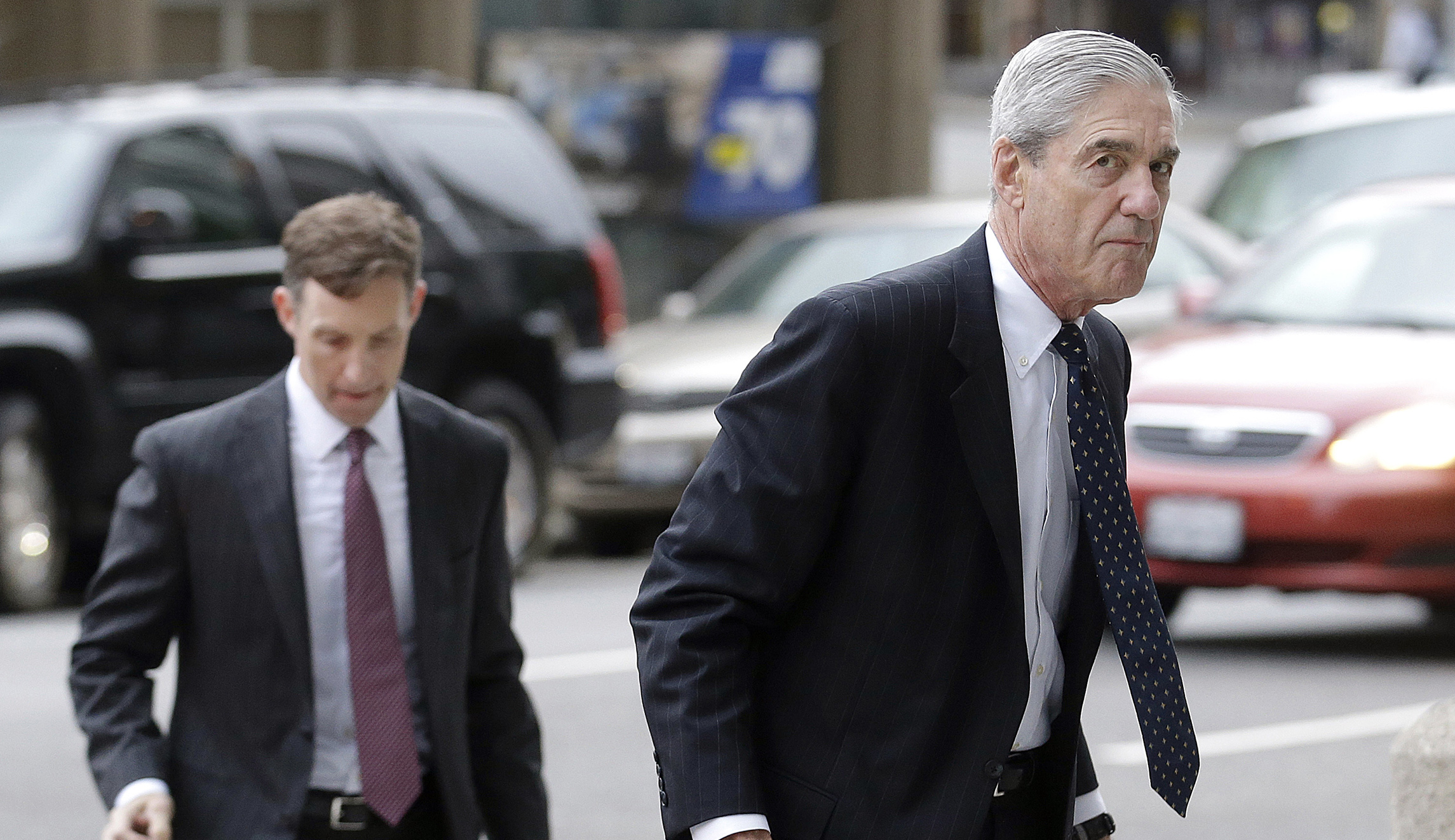
Former U.S. Attorney Andrew McCarthy says it was likely special counsel Robert Mueller’s staff who instigated the letter sent to Attorney General William Barr criticizing his four-page letter about the Russia investigation’s “principal conclusions.”
In the letter dated March 27, Mueller objected to Barr’s March 24 memo because it “did not fully capture the context, nature, and substance” of the 22-month investigation into Russian interference in the 2016 election and possible obstruction of justice by President Trump. Mueller called on Barr to alleviate public confusion by releasing the report’s introduction and executive summary for each volume.
Recommended Stories



McCarthy, who is a contributing editor at National Review, wrote in an opinion piece on Friday it was no coincidence a letter format was used. The letter, which he said was “undoubtedly” written by Mueller’s staff, was leaked to the Washington Post in the evening Tuesday, just before Barr testified to the Senate Judiciary Committee about Mueller’s investigation, and was publicly released the following morning.
“Mueller could simply have called Barr on the phone, as he has done a million times; but the staff’s partisan Democrats wanted a letter, which makes for much better leak material,” McCarthy wrote.
“Barr has known Mueller for nearly 30 years; when Mueller was the Criminal Division chief in the Bush 41 Justice Department, he reported to Barr, who was attorney general,” McCarthy wrote. “It should come as no surprise, then, that Barr was not getting his information from Mueller’s staff; he was getting it from Mueller directly. Nor should it come as any surprise that, before releasing his March 24 letter to the public, Barr gave Mueller an opportunity to review it; nor that Mueller declined that opportunity — given that he knows Barr well, and knew Barr would not misrepresent the report (especially given that the report would soon be public).”
In the four-page letter, Barr said Mueller was unable to establish that there had been criminal conspiracy between the Trump campaign and Russia. The letter also said Mueller did not reach a conclusion about whether Trump obstructed justice, adding that Barr and Rosenstein then concluded there was insufficient evidence to establish such a charge. Trump and his allies seized on the summary, claiming the president was completely exonerated. The full Mueller report was released earlier this month, with redactions.
During his testimony, Barr, who said he was not interested in putting out summaries, acknowledged he and Mueller spoke on the phone after he received Mueller’s letter, but stressed that special counsel did not think he misrepresented the investigation’s findings.
McCarthy wrote what really did happen was “obvious”: After receiving “fawning press for two years,” Mueller didn’t like how the media had turned on their “erstwhile hero.”
“This sent him reeling, and it brought to full boil the anger of Mueller staffers, who wanted to charge Trump with obstruction based on the creative (i.e., wayward) theory they had been pursuing — namely, that a president can be indicted for obstruction based on the exercise of his constitutional prerogatives if prosecutors (including prosecutors who are active supporters of the president’s political opposition) decide he had corrupt intent,” McCarthy wrote. “The staffers put their pique in a letter that could be leaked, and Mueller was sufficiently irked by the bad press that he signed it. And now Democrats are using the letter as the launch-pad for The Big Lie that Barr lied, calculating that if they say it enough times, and their media collaborators uncritically broadcast these declarations, no one will notice that they never actually refer to the transcript of what they claim is the false testimony.”
Trump, who often called Mueller’s investigation a “witch hunt,” also repeatedly railed at the special counsel team of “angry Democrats” he said were out to take him down.
Mueller’s testimony is now being sought by Congress. Senate Judiciary Committee Chairman Lindsey Graham invited Mueller to “provide testimony” to the panel if Mueller wanted to discuss any discrepancies with Barr’s responses to questions from lawmakers this week about the phone call between the two men in response to the March 27 letter.
