

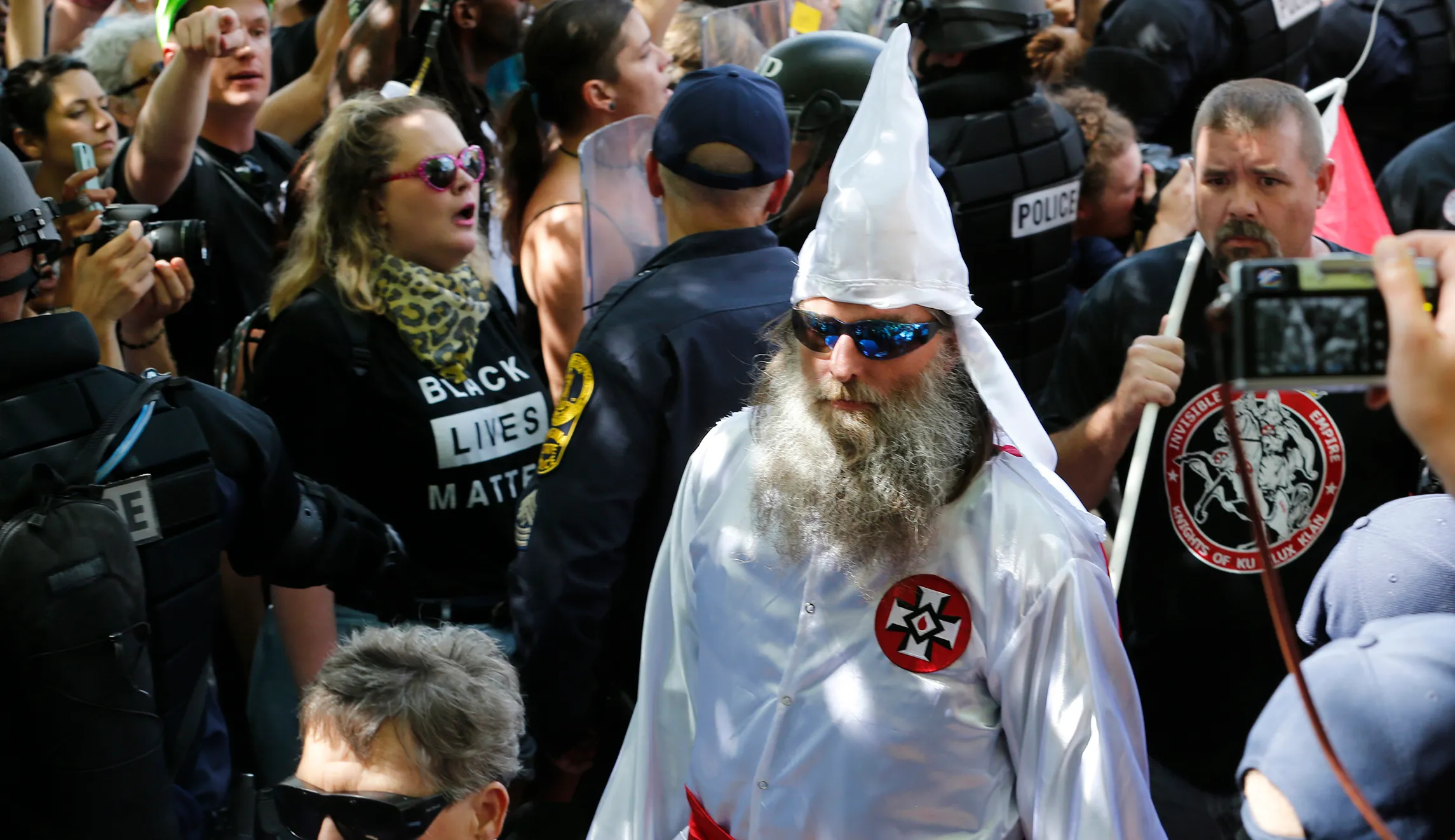
The Trump administration has rolled out a new strategy which names violent white supremacists as a leading domestic security threat.
The strategy is an attempt to streamline efforts across law enforcement nationwide to prevent domestic terrorism and other targeted violence attacks in the United States.
Recommended Stories



Acting Homeland Security Secretary Kevin McAleenan on Friday announced the DHS Strategic Framework for Countering Terrorism and Targeted Violence after what he said was a monthslong effort to create a plan to thwart both ideologically driven and nonideologically driven attackers on both a federal and local level.
“In our modern age, the continued menace of racially based violent extremism, particularly white supremacist extremism, is an abhorrent affront to our nation,” McAleenan told attendees at the Brookings Institution think tank in Washington.
The announcement is the first national-level strategy that states terrorist attacks inside the country and targeted incidents “overlap, intersect, and interact as problems and require a shared set of solutions,” no longer keeping separate the approaches to preventing these two types of attacks, according to a DHS document.
The acting secretary did not respond to a question about how much the new endeavor would cost the department. He also did not specify how local, tribal, state, or federal entities intend to stop white supremacists from carrying out mass attacks.
Earlier this year, DHS set up an advisory committee to look at securing faith-based facilities following a shooting at a mosque in Christchurch, New Zealand, and the torching of a historically African American church in Mississippi.
“The strategic framework takes a whole-of-society approach to prevention, empowering our citizens and our state, local, tribal, and territorial authorities, as well as our private sector, nongovernmental and community leaders to develop localized prevention frameworks to protect our communities,” the DHS said in a statement.
Under the strategy, DHS will release an assessment annually that looks at the state of terrorism and targeted attacks nationwide.
Part of the approach focuses on identifying populations and individuals who are bad actors would seek to “spur to violence,” including the youth, the “disenfranchised,” and the “disaffected.”
McAleenan added the Islamic State and al Qaeda, as well as foreign fighters, remain long-term security threats.
[Previous coverage: Trump condemns ‘white supremacy’ after mass shootings]
