

Public officials should be careful about accusing Russia of committing an “act of war” against the United States, according to the nation’s top Army general.
Recommended Stories


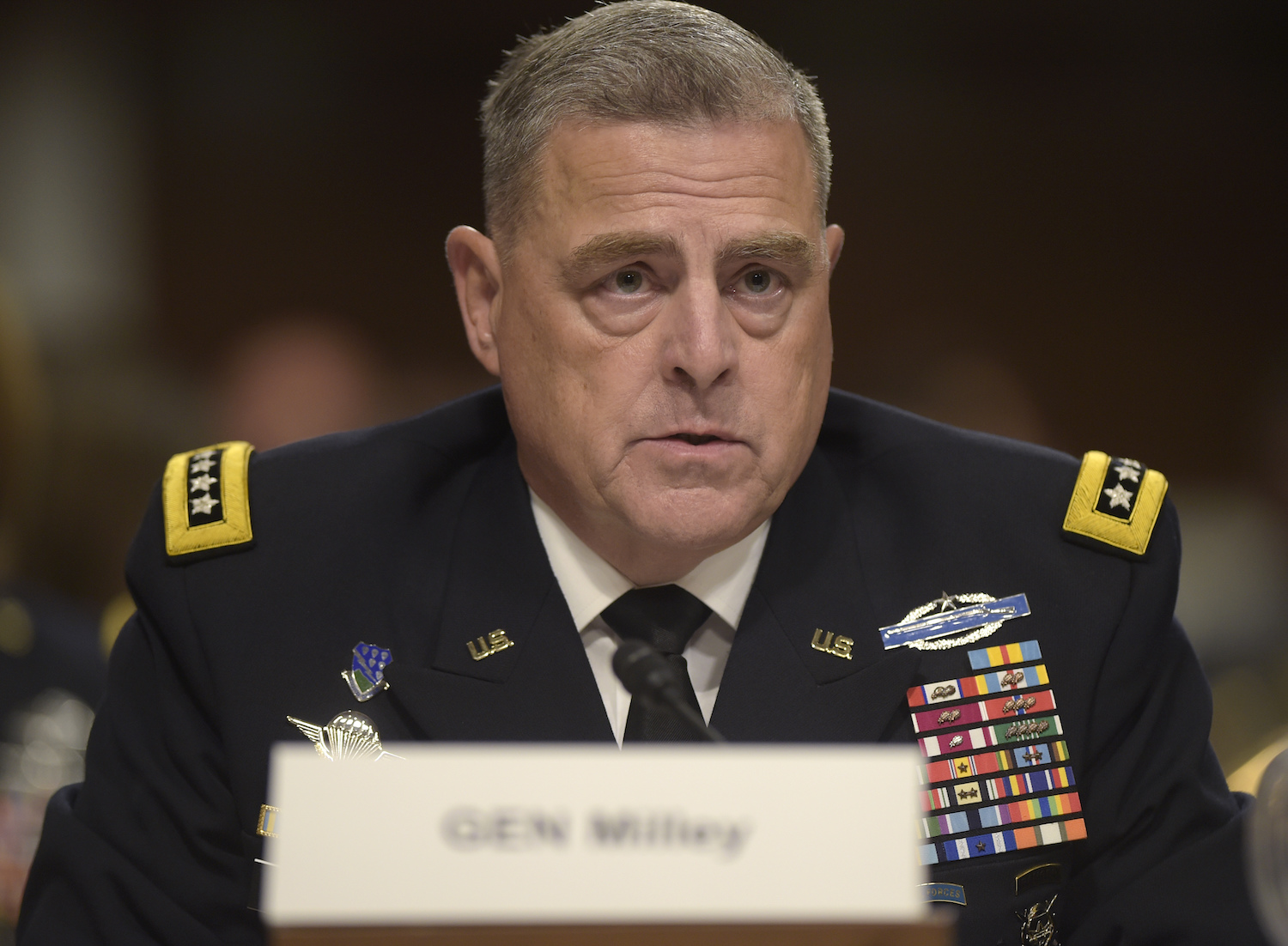
“Just this morning on the news, I forget who it was, but there was someone who said that the Russian efforts in the U.S. election was an ‘act of war,’ Army Chief of Staff Mark Milley said during New America’s Future of War Conference Tuesday morning. “That’s pretty strong language, and, if it’s an act of war, then you’ve got to start thinking of your response to that sort of thing. So, I would caution people about use of the term ‘war’ and make sure that we’re clear-eyed about what war is and what it isn’t.”
Milley didn’t mention any names, but he made the comments one day after House Permanent Select Committee Intelligence hearing on Russia’s cyberattacks against the Democratic party during the 2016 election cycle. Some Democratic panelists equated that interference with an act of war. Milley, who had defined war moments earlier as “imposing your political will on a human opponent through the use of organized violence,” emphasized that not all adversarial actions are tantamount to war.
House Democrats leveled the charge Monday, saying that the Russian cyberattacks fit the definition of “hybrid warfare,” a set of Russian tactics that involves cyberattacks and extensive propaganda designed to undermine support for another government or create confusion about Russian activities.
“I actually think that their engagement was an act of war, an act of hybrid warfare, and I think that’s why the American people should be concerned about it,” Rep. Jackie Speier, D-Calif., said during the hearing.
Milley displayed caution about using rhetoric that might imply the need for a more forceful U.S. response than policymakers want to endorse.
“There are a lot of acts that are aggressive, assertive, subversive, working against your interests, that may not rise to the level of war, and it’s not a crystal clear line,” he said. “It’s something that you have to apply reasoned judgement to. It’s not crisp, it’s not like crossing a white line on a highway, changing lanes sort of thing. There are sometimes where it is — the attack on Pearl Harbor, for example; the invasion of Poland — but, there are other times where it’s a little bit more murky and we have to be careful about it.”
