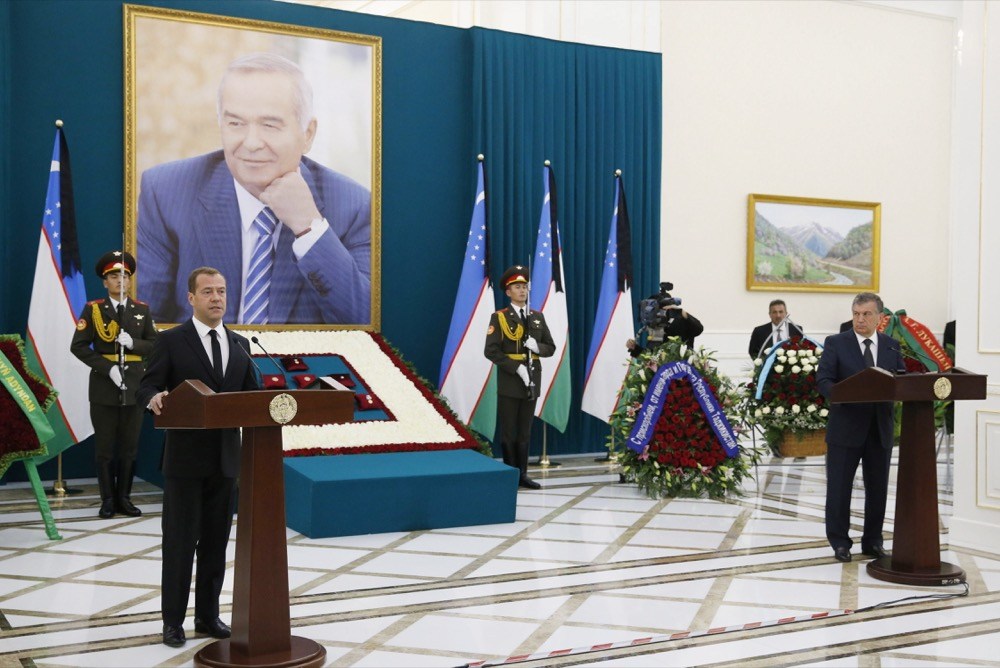
The death of Islam Karimov, the 78-year old party boss and dictatorial president of Soviet and post-Soviet Uzbekistan, a key strategic power in Central Asia, was announced September 2 in official Uzbek media. The cause of his demise was reported to be a stroke, and rumors of it had circulated for days. He was buried in an Islamic service on September 3, in Samarkand, his birthplace, according to the BBC. Uzbekistan is about 90 percent Muslim, with a population of 29 million.
Karimov ruled over Uzbekistan for 27 years, beginning as president of Soviet Uzbekistan in 1990. Under him, Uzbekistan departed the crumbling Soviet Union in 1991, but its political, social, and religious habits did not change. It had been a major element in the Russian-directed Communist system as a source of cotton, and to this day, according to the CIA World Factbook, the economy remains centered on cotton, of which the country is the world’s sixth largest producer and fifth largest exporter.