

Jitters about the slumping economy over the last decade impacted the American bedroom too, resulting in a huge baby gap as couples gave up making families. And it’s still lingering.
Recommended Stories



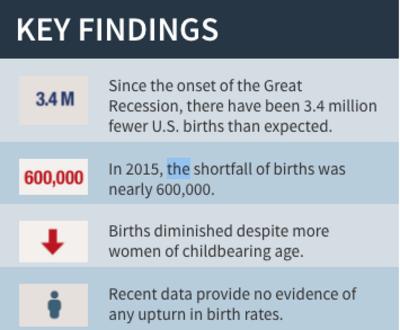
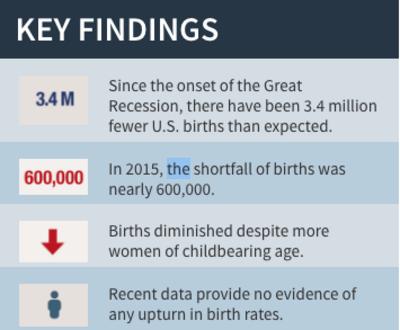
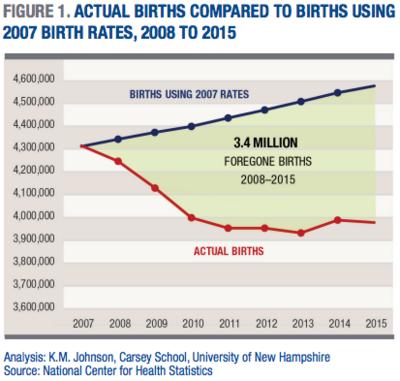
A new study from the University of New Hampshire put the gap at 3.4 million births since 2008.
And 2015 witnessed the lowest fertility rate on record and a gap of 600,000 births.
“The Great Recession sent an economic shock through American society that reached far beyond the stock and housing markets. More than five years after economists announced the end of the recession, fertility levels have still not recovered. As a result, more than 3.4 million fewer babies were born in the United States between 2008 and 2015 than would have been expected if pre-recession fertility rates had been sustained. In each of the last five years, this birth deficit has resulted in roughly 500,000 fewer births,” said the study.
The drop in births clashed with a new reality: there were more women of childbearing age during the period.
What’s more, said the study from the UNH’s Carsey School of Public Policy, there is no evidence that births will be on the rise soon, despite some reports that the economy is improving.
Said the report:
Nor do new data just released show any evidence of an upturn in births. National Center for Health Statistics data for 2015 show the lowest general fertility rate on record and only 3,978,000 births last year. There were 338,000 (8 percent) fewer births in 2015 than in 2007, just before the Recession began to influence fertility. This decline in births is entirely due to reduced fertility rates. The number of women in their prime childbearing years (20 to 39) actually increased by 2.5 million (6 percent) between 2007 and 2015. With more women of childbearing age, the expectation would be for more babies. Yet the larger cohort of childbearing age women in 2015 produced fewer births than the smaller 2007 cohort did. If the fertility rates of 2007 had been sustained through 2015, the larger cohort of women of childbearing age would have been expected to produce nearly 600,000 more children in 2015 than were actually born.
Paul Bedard, the Washington Examiner’s “Washington Secrets” columnist, can be contacted at [email protected]
