

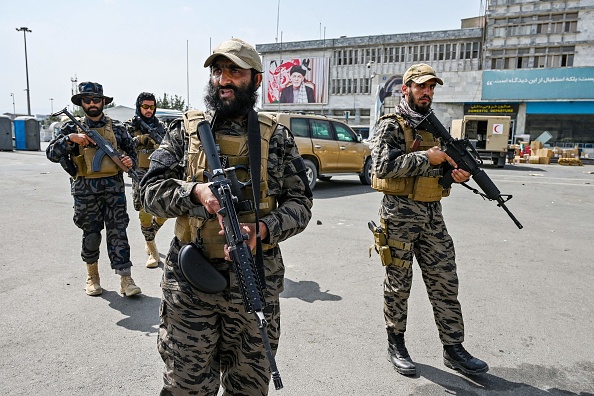
The Taliban or their affiliates have killed more than 100 people associated with the previous government in Afghanistan, its security forces, or those who worked with international troops, according to the United Nations.
U.N. Secretary-General Antonio Guterres wrote to the Security Council that he had received “credible allegations” that this group had been targeted by the Taliban since the group overthrew the U.S.-backed Ghani government ahead of the United States’s impending withdrawal, according to the Associated Press.
Recommended Stories


“More than two-thirds” of the victims were killed by the Taliban or their affiliates, according to the report from Guterres, published on Sunday, and it noted that the U.N. also had “credible allegations” that “at least 50 individuals suspected of affiliation with ISIS-KP,” the offshoot of the Islamic State based in Afghanistan, were among those killed.
The U.N. has also received allegations that the Taliban have been using “enforced disappearances and other violations impacting the right to life and physical integrity” of former government officials. Guterres also noted “a significant decline” in the total number of security incidents since the Taliban took over. There were 985 such instances between Aug. 19 and Dec. 31 of last year, and that represents a 91% decrease from the same period the previous year.
‘2021 HAS BEEN CATASTROPHIC’: FOOD INSECURITY RISING IN AFGHANISTAN
Guterres’s letter comes months after Human Rights Watch reported in late November that it had documented the killing of 45 former Afghan National Security Forces soldiers between Aug. 15, when the Taliban rose to power, and Oct. 31. In all, the group “gathered credible information on more than 100 killings” in four provinces.
Once the Taliban came to power, they promised amnesty for those linked to the previous regime and claimed that women would not lose many of the rights they fought for and won in recent years, though their actions have not been aligned with those sentiments.
The U.S. and the international community froze billions of dollars belonging to the government following the Taliban’s rise, though the lack of funding has likely contributed to the humanitarian crisis in Afghanistan. However, they have provided aid to help the Afghan people.
“An estimated 22.8 million people are projected to be in ‘crisis’ and ’emergency’ levels of food insecurity until March 2022,” the U.N. chief said. “Almost 9 million of these will be at ’emergency’ levels of food insecurity — the highest number in the world. Half of all children under five are facing acute malnutrition.”
Additionally, 93% of Afghans had insufficient food consumption roughly a month after the Taliban overthrew the Ghani government, 13 percentage points higher than it was on the day it collapsed, according to the World Food Program’s “Afghanistan Food Security Update” from September.
CLICK HERE TO READ MORE FROM THE WASHINGTON EXAMINER
With the U.S.’s planned withdrawal only two weeks away after the Taliban’s takeover, Western allies launched a massive evacuation effort for foreigners and Afghan allies who worked with those troops over the previous two decades. While they were able to evacuate more than 120,000 people, thousands of allies were left behind and remain at risk under the Taliban government.
