

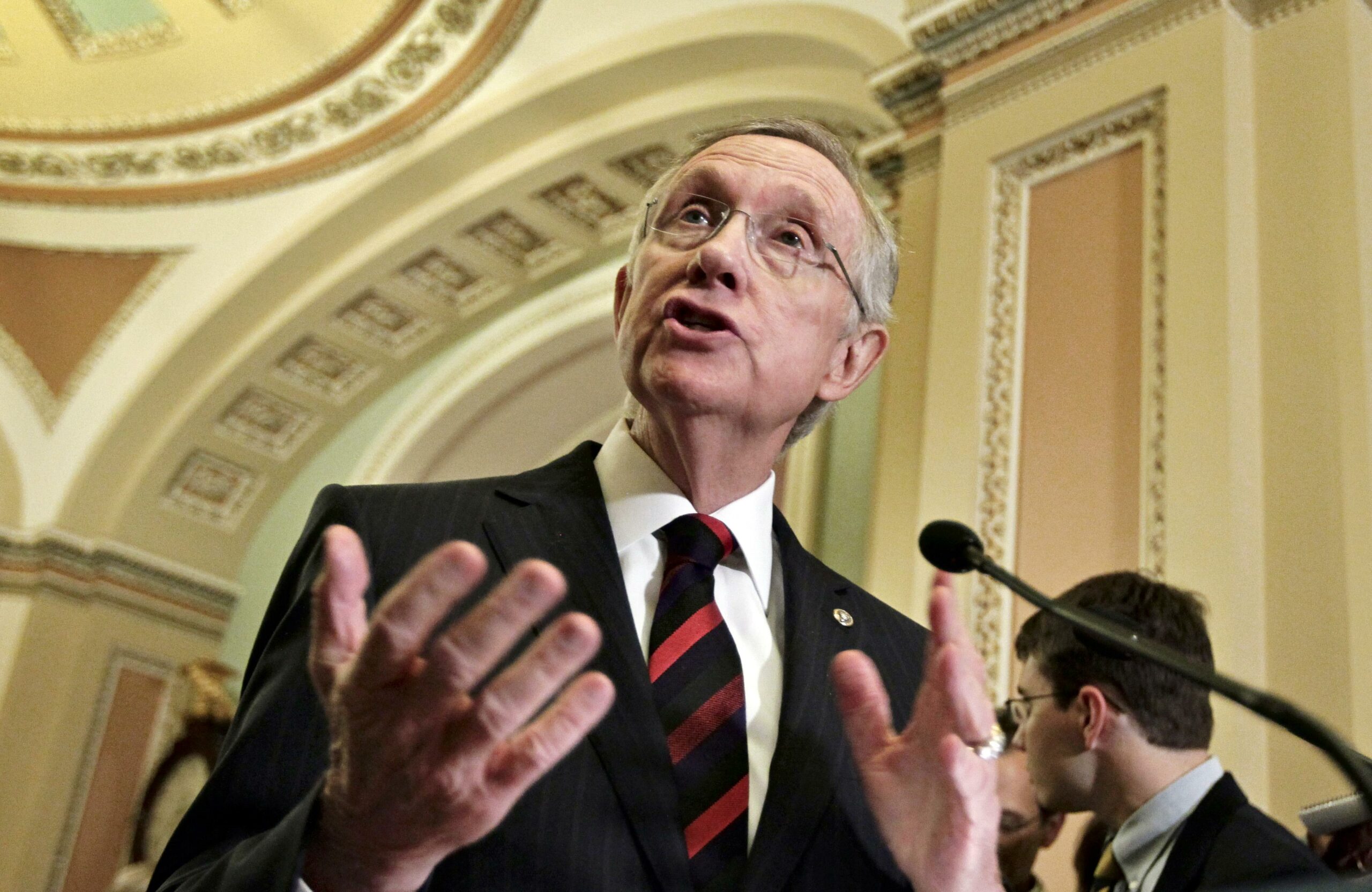
Senate Majority Leader Harry Reid, D-Nev., announced Wednesday that he will introduce a $6 billion relief bill to aid states hit hard by Hurricane Irene and other natural disasters. But Reid will schedule a vote on the additional funding for the Federal Emergency Management Agency in a way that would prevent lawmakers from cutting other parts of the budget to offset the disaster aid, making it politically difficult for some fiscally conservative Republicans to back the measure.
Reid on Wednesday appeared to anticipate, if not relish, the ensuing fight with Republicans, particularly those backed by the Tea Party, who have been insisting that any relief provided to the states be offset by spending cuts, as House Majority Leader Eric Cantor, R-Va., suggested last week.
“Some of my Republican colleagues are trying to cater to the Tea Party by holding up relief efforts,” Reid said. “For example, Rep. Cantor has suggested that we should hold up disaster relief to meet the Tea Party’s demands.”
Cantor said on Fox News last week that just like any family facing a disaster, there would have to be sacrifices elsewhere in the budget to offset the additional relief funding.
“Yes, we are going to find the money,” Cantor said. “We are just going to have to make sure there are savings elsewhere to continue to do so.”
But Cantor was immediately criticized by both Democrats and Republicans, including New Jersey Republican Gov. Chris Christie, whose state was pummeled so hard by Irene that all its counties qualify for federal disaster aid.
Christie said Congress should provide the aid now, when immediate relief is needed, and figure out budget cuts later.
Cantor tried to clarify his remarks, saying some additional funding for disaster relief is already factored into the federal government’s 2012 budget.
“I have never, never said that I’m holding anything hostage or would be for playing politics with this,” Cantor said. “It is inaccurate and I think it is irresponsible on part of those who have written that.”
But Reid’s proposal would include some money that falls outside the emergency spending that Cantor defined as acceptable because it would spend beyond the fiscal 2012 budget caps agreed upon earlier this year by both parties.
“It would be immediate, because the money is needed immediately,” Reid spokesman Adam Jentleson told The Washington Examiner. “FEMA will run out of money before the end of September.”
The $6 billion would help states recover from a string of natural disasters that have struck across the United States, from tornado destruction in Joplin, Mo., to damage from an earthquake in central Virginia to extensive wind and flood damage spread all along the East Coast by Irene.
With many House and Senate Republicans eager to get funds to their disaster-damaged states, it will be hard for the GOP to oppose the extra money amid stories of devastation.
“Does it mean Americans who are suffering, we’re going to say we can’t do this, we have to pay for this?” Reid said of potential GOP opposition.
