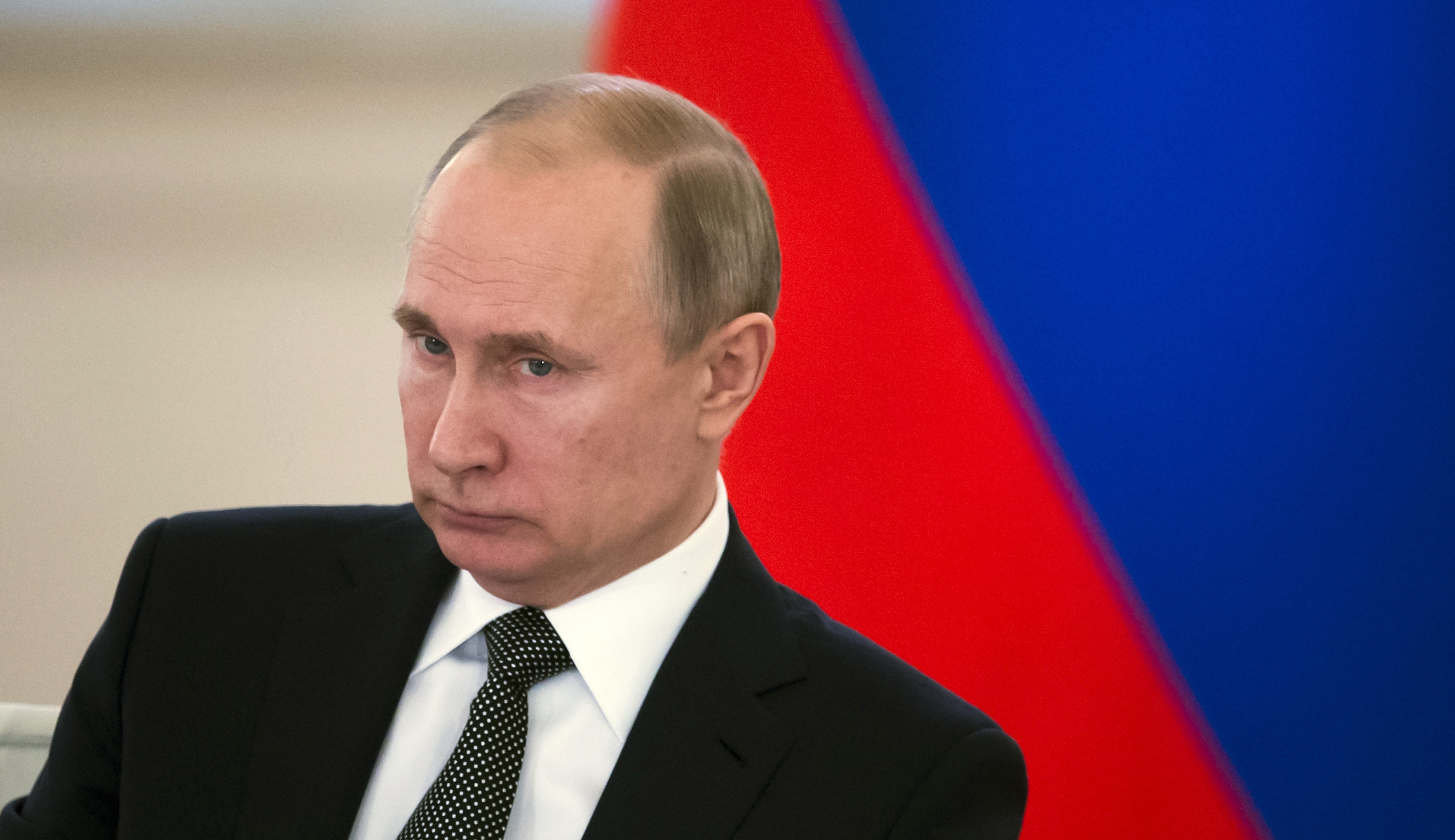
A bipartisan group of senators unveiled a new package of sanctions Thursday aimed at Russia and its president, Vladimir Putin.
“The current sanctions regime has failed to deter Russia from meddling in the upcoming 2018 midterm elections,” said Sen. Lindsey Graham, R-S.C., a lead architect of the legislation.
Recommended Stories
The new legislation represents a bipartisan congressional commitment to countering Russian influence as a reaction to the controversy that followed President Trump’s meeting with Putin in Helsinki. The proposal includes aggressive new initiatives, such as a prohibition on trades of Russian debt — a measure tabled during the last round of sanctions.
[More: Trump: Russia ‘fighting very hard’ to boost Democrats in midterm election]
But it also takes aim at Putin’s personal network, calling for sanctions on his allies and even family members who “facilitate illicit and corrupt activities” as well as a report on his personal wealth.
“For nearly two years, our nation’s top intelligence officials have repeatedly warned that the Kremlin is continuing its efforts to target our elections and sow chaos among our citizens,” Senate Armed Services Chairman John McCain, R-Ariz., said in co-sponsoring the bill. “Until Putin pays a serious price for his actions, these attacks on our democracy will only grow.”
The legislation was tailored to allay international concerns over Trump’s performance in Helsinki, when he blamed the United States for the poor state of relations with Russia during his joint press conference with Putin; in a subsequent interview, he seemed to lament the obligation to defend NATO allies.
The Defending American Security from Kremlin Aggression Act of 2018 would establish that the president cannot withdraw unilaterally from NATO, unless two-thirds of the Senate votes to exit — the same number required to ratify a treaty.
“With the passage of this legislation, Congress will once again act to establish a clear U.S. policy to hold Russia accountable with one clear message: Kremlin aggression will be met with consequences that will shake Putin’s regime to its foundation,” said New Jersey Sen. Bob Menendez, the top Democrat on the Foreign Relations Committee and cosponsor of the bill.
The language imposing sanctions on purchases on Russian sovereign debt is particularly notable, as the measure was not included in a 2017 sanctions package after the Treasury Department informed Congress that it would have “negative spillover effects into global financial markets and businesses.”
That’s not the only previously-considered proposal revived in the new sanctions push. The bill also calls for the Secretary of State Mike Pompeo to determine whether Russia qualifies as a state sponsor of terrorism. Menendez has favored slapping Russia with the terrorism label since March, when British Prime Minister Theresa May blamed Putin’s government for the use of a chemical weapon to carry out an assassination attempt in the United Kingdom.
“Unless Russia fundamentally changes its behavior, we must not repeat the mistakes of past administrations of trying to normalize relations with a nation that continues to pose a serious threat to the United States and our allies,” said Sen. Cory Gardner, the Colorado Republican who drafted that provision.
Trump’s team might be hard-pressed not to conclude that Russia warrants the label, given that the president designated North Korea as a state-sponsor of terrorism after dictator Kim Jong Un had his half-brother assassinated through the use of a chemical weapon.
The bill includes anti-corruption measures, such as a requirement for U.S. insurance companies to identify the owners of shell companies that make high-end real-estate purchases. Such sales are a common money-laundering tactic. It also expands the authority of U.S. officials to punish cyberattacks and espionage, while criminalizing cyberattacks against power grids and other critical infrastructure.
