

A California gun owner asked a federal appeals court on Wednesday to allow his lawsuit challenging San Diego County’s “dangerousness” standard for concealed carry permits, after he was denied a gun permit over his membership in a motorcycle club.
A three-judge panel on the U.S. Court of Appeals for the Ninth Circuit heard arguments in a lawsuit brought by Kenneth Shilling against San Diego County for revoking his concealed carry weapon permit over his affiliation with the Boozefighters Motorcycle Club. Shilling argued that the decision violated his First Amendment right of freedom of association and his Second Amendment right to bear arms. A federal district court tossed his case, finding that the sheriff was immune from the lawsuit, among other issues, but Shilling’s lawyer, Gary Gorski, urged the appeals court to revive the case and side with him.
Recommended Stories
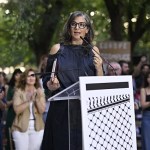


At the center of Shilling’s dispute is San Diego County Sheriff Kelly Martinez’s “internal, unpublished policy” labeling the motorcycle club as a “criminal street gang” and therefore labeling Shilling as dangerous and unsuitable to have a concealed carry permit. Gorski outlined to the judges how the policy harmed both Shilling’s free association and his gun rights, and that, despite Shilling finally receiving a permit last month, his lawsuit should remain alive.
The Supreme Court’s 2022 New York State Rifle & Pistol Association v. Bruen decision struck down New York’s requirement that applicants demonstrate they have “proper cause” to receive a concealed carry permit. After the Bruen decision, California repealed its “good moral character” standard for issuing concealed carry permits in 2024, instead only barring disqualified persons under “defined and objective criteria” from obtaining permits. Despite the process being streamlined in recent years, denials and long waits have still plagued citizens seeking concealed carry permits.
In the Golden State, as in most states, county sheriffs handle the processing of concealed carry permits, with different sheriffs having different policies in place. Several Southern California counties are also notorious for long permit processing times. Nearby Los Angeles County was the subject of a first-of-its-kind lawsuit filed by the Department of Justice last year over its long wait times for processing concealed carry permits.
In the lawsuit before the Ninth Circuit, Gorski argued that the issues for Shilling began after a new sheriff was elected and changed the policy for granting concealed carry permits. Gorski also argued that dismissing the case by disputing whether the state or the county should be the one facing the lawsuit would shield the policy from facing legal scrutiny.
“I think that’s what’s happening here as well, because the policy is not changing. The fact they give him a [concealed carry permit] is not going to stop a future harm. There has to be an injunction on what happened here, which is the classification of a group and saying you’re dangerous, therefore we can revoke your rights,” Gorski told the panel.
“And if we follow the logic of that, what’s to stop the county of San Diego from saying anyone with a bar license could be dangerous, because they’re driving to the court fast, they’re making arguments that are dangerous to the public?” Gorski said, using a hypothetical of other blanket bans that the policy could enable. “We find attorneys dangerous, so anyone with a bar license, you’re not getting a [concealed carry permit] either. You can see the slippery slope on this.”
NINTH CIRCUIT LIKELY ADDS TO DOJ LOSING STREAK OVER STATE VOTER ROLL LAWSUITS
The three-judge panel on the Ninth Circuit included U.S. Circuit Judges Kenneth Lee, an appointee of President Donald Trump; Patrick Bumatay, a Trump appointee; and Jennifer Sung, an appointee of former President Joe Biden.
The panel did not say when it will issue a ruling in the case. Regardless of the ruling, the losing side may appeal the ruling to either the full Ninth Circuit or the Supreme Court.
