

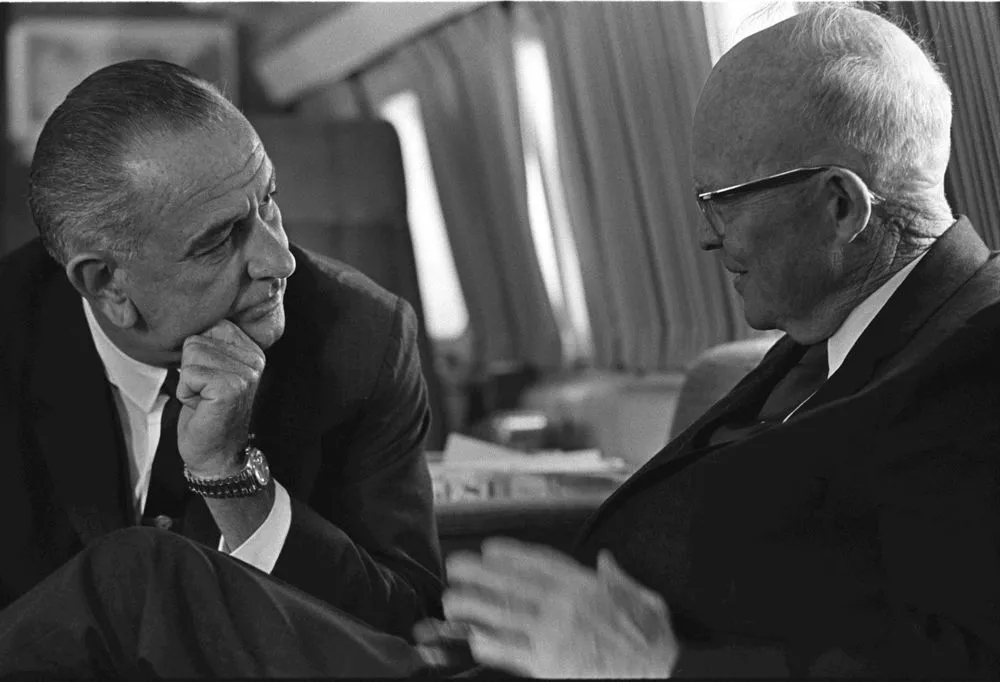
Marco Rubio, Paul Ryan, and Kelly Ayotte, and of all you desperate GOP candidates, threading the needle between a working class base in thrall to a demagogue and another fairly large bloc that detests him: Ike feels your pain. So does John Kennedy, and a very large group of the best and the brightest in that particular 1950-1954 window, most of them people of courage and character, who found themselves faced with the test of a lifetime, and behaved, in most cases, like you. They did not have to deal with the dilemma of endorsing (or dissing) their party’s flawed nominee, but they did have to face calls for denunciations of a rogue senator, or resolutions that called for his condemnation, that could have crippled their own hopes for future advancement.
Faced with the figure of Senator Joseph McCarthy, who delighted in attacking his colleagues with gusto, and who in the 1950 election had helped to defeat senators in and outside his own party, they hedged, bit their tongues, tried to equivocate, and often said nothing. As Richard H. Rovere writes in his book on the subject, “Paul Douglas of Illinois . . . the most cultivated mind in the Senate, and a man whose courage and integrity would compare favorably with any other American’s, went through the last Truman years and the first Eisenhower years without ever addressing himself to the problem.” Senator Kennedy, author of a book on political courage, did likewise, as did his state’s other senator, Leverett Saltonstall, his Republican colleague and friend. “Maurice Tobin, Truman’s Secretary of Labor, once went to a Veterans of Foreign Wars convention with an anti-McCarthy speech in his pocket,” but sensing an unfriendly political climate, did not pull it out.
Stay informed.Stay ahead.
Join Washington Examiner for unlimited access to the news, analysis, and commentary that matter most.
Already a member? Log in
