Presidential debates commission changes format to handle talky Trump

Published July 7, 2016 2:00pm ET


The Commission on Presidential Debates, the official sponsor of the four presidential and vice presidential debates in the fall, is reducing the structure and expanding the time candidates get to talk and respond, a change that should accommodate Republican Donald Trump’s freewheeling style and Hillary Clinton’s punchy retorts.

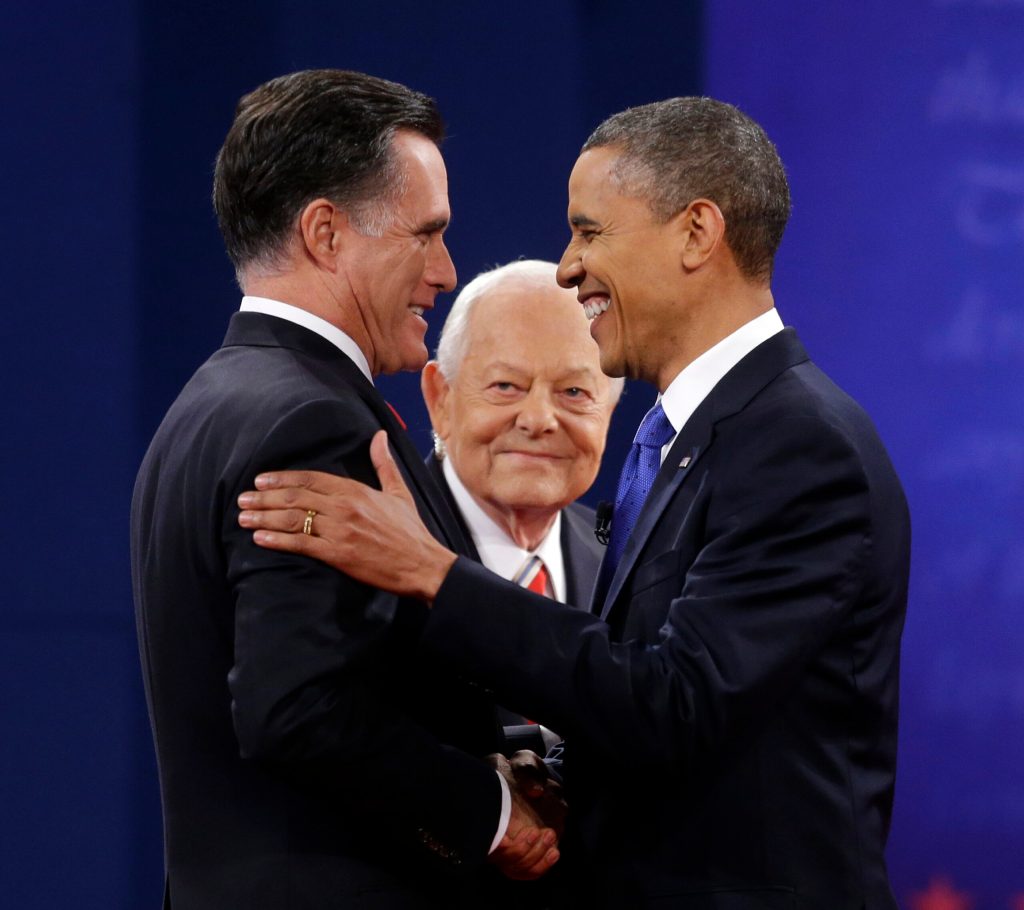
Officials this morning plan to announce the changes that build on the looser style and format in the 2012 debates.


“The CPD has a simple mission, to ensure that presidential debates help the public learn about the positions of the leading candidates for president and vice president,” commission co-chairs Frank J. Fahrenkopf and Michael D. McCurry said. “These formats will allow an in-depth exploration of the major issues in this year’s election.”

While past debates have featured a panel of journalists asking rapid fire questions, the changed format will break up the 90 minutes into 15 minute segments on major topics chosen by a moderator. Candidates will have a week notice on those topics.

“The moderator will open each segment with a question, after which each candidate will have two minutes to respond. Candidates will then have an opportunity to respond to each other. The moderator will use the balance of the time in the segment for a deeper discussion of the topic,” said the commission.

Al Gore and George W. Bush debate on Oct. 17, 2000. AP Photo

That format will be followed at the first and third presidential debate, taking place in September 26, at Wright State University in Dayton, Ohio, and October 19, at the University of Nevada-Las Vegas.

The second debate, October 9 at Washington University in St. Louis, will be in a town hall format, with half of the questions asked by uncommitted voters chosen by Gallup.

Then Sens. Barack Obama and John McCain debate in 2008. AP Photo

The vice presidential debate take place October 4 at Longwood University, in Farmville, Va. and will be divided into nine 10 minute segments.

“They are trying to build in more time for longer exchanges and less structure,” said a commission advisor.

The moderators have not been chosen and there is a line asking for the job. The Commission hopes to inject some diversity into those chosen.

The Commission has also expanded its effort to get the public involved, through social media and outreach to colleges, other schools and teachers.

“The public would like to take part in a civil discussion, both online and in-person,” McCurry and Fahrenkopf said. “Our goal is to make the tools available so that the debates can reach all Americans, particularly those who will be voting for the first time.”

The debate sites were picked because they are in battleground states.

Both Clinton and Trump are expected to agree to the dates, sites and formats, though some negotiating is expected between both sides over the staging. Trump has already challenged Clinton to debates.

It remains unclear if third party candidates will meet the test to get into the debates. The rules were announced a year ago. Under the criteria, in addition to being constitutionally eligible, candidates must:

— Appear on a sufficient number of state ballots to have a mathematical chance of winning a majority vote in the Electoral College.

— Have a level of support of at least 15 percent of the national electorate as determined by five selected national public opinion polling organizations, using the average of those organizations’ most recently publicly-reported results at the time of the determination.

The debates always draw huge audiences and this years could top 100 million. Media must apply to cover the debates by August 29.

Paul Bedard, the Washington Examiner’s “Washington Secrets” columnist, can be contacted at [email protected]