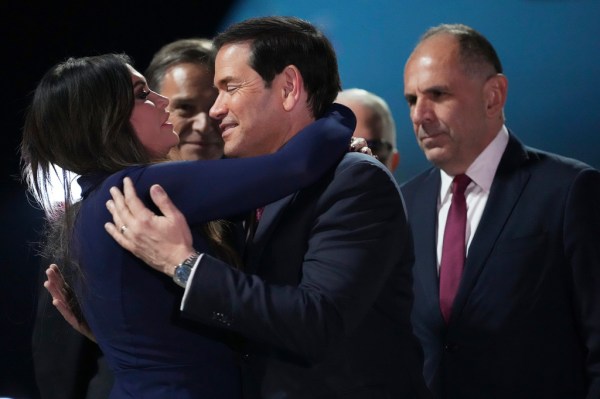
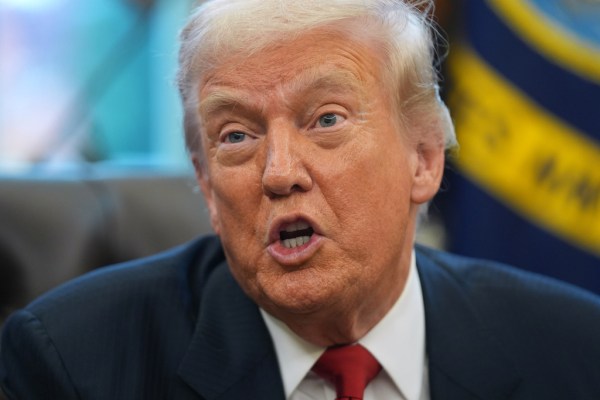
Secretary of State Marco Rubio‘s White House briefing on Tuesday sparked 2028 chatter, but it also offered a preview of what America First could look like post-Trump: disciplined, confident, and built to govern.
The secretary’s appearance in the White House briefing room triggered a wave of praise from conservatives who viewed Rubio not simply as a polished messenger, but as evidence of how the America First movement is evolving from a populist insurgency into a more mature governing movement.
Recommended Stories
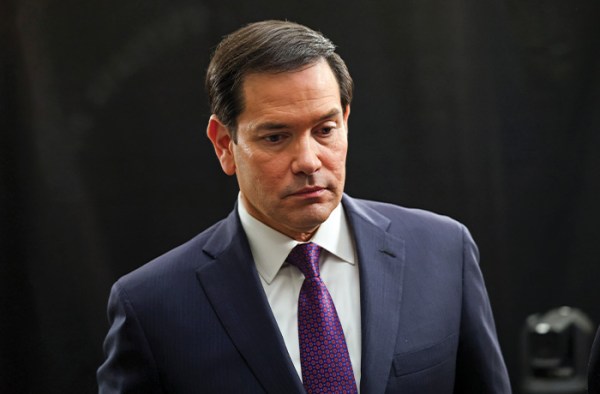
“The D.C. establishment spent years convincing itself ‘America First’ was a temporary political moment,” Sarah Selip, a GOP public relations strategist, posted on X. “This is what the evolution of the movement looks like: casual competence. No theatrics. No panic.”
“Just someone who can walk into the briefing room, take the President’s agenda, and articulate it cleanly without sanding down the edge that made the movement powerful in the first place,” she added.
That evolution is perhaps most evident in Rubio himself.
Rubio ran against President Donald Trump for the 2016 GOP nomination, even earning the moniker of “Little Marco” in the process. At the time, critics viewed Rubio as overly scripted and uncomfortable embracing Trump-style politics.
“When you compare Rubio from yesterday to where he was in 2016 debating President Trump, he’s like a totally different person,” one veteran Republican operative, who worked on two of Trump’s presidential campaigns, told the Washington Examiner. “He’s gotten his hands dirty. He’s showing what MAGA can be after Trump.”
Rubio’s rise also reflects how many longtime Republican foreign policy hawks have adapted to the America First movement rather than resisted it.
The shift allows Rubio to do something Republicans once thought impossible: project both governing credibility and Trump-era populism at the same time.
That former Trump campaign official specifically pointed to Rubio’s tenure at the State Department and as Trump’s national security adviser, along with the growing list of administration responsibilities he’s taken on over the past 16 months.
The White House told the Washington Examiner that “Secretary Rubio is doing an incredible job and everyone loves working with him in the West Wing.”
THE LOBBYING SWAMP IS ALIVE AND WELL IN TRUMP’S SECOND TERM
That growing confidence around Rubio has also fueled fresh speculation about his political future inside Republican circles.
Officially, Rubio still trails Vice President JD Vance for the GOP nomination, but his odds have steadily risen since Trump entered office last January. Rubio’s odds on both Kalshi and Polymarket have virtually doubled since the start of the Iran war in late February, though Vance is still up by double digits.
Dennis Lennox, a Republican strategist based in battleground Michigan, told the Washington Examiner that “nobody who isn’t being paid to say otherwise watched Rubio’s presser and didn’t think, ‘Can’t we make him president right now?’”
Rubio has repeatedly stated he would not run for president if Vance decides to enter the race himself, and Trump allies also privately dismiss talk of growing tension between the two men.
One former senior White House official even downplayed the idea that Rubio’s charm offensive on the press corps fundamentally altered the 2028 landscape.
“That’s just the job. Sometimes it’s Rubio’s day. Sometimes it’s the vice president’s day. Sometimes they’ll be onstage together,” the official told the Washington Examiner.
VANCE SELLS IRAN TO THE HEARTLAND WHILE RUBIO CHARMS WASHINGTON
Rubio’s strong reviews came the same day Trump-backed candidates successfully primaried five Indiana Republican state senators who opposed the president’s push for mid-decade redistricting.
The results served as another reminder that Trump remains the dominant force inside GOP politics even as Republicans increasingly debate what the America First movement looks like beyond his presidency.