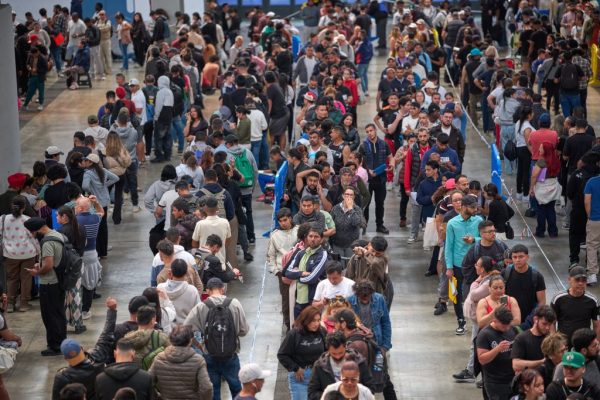
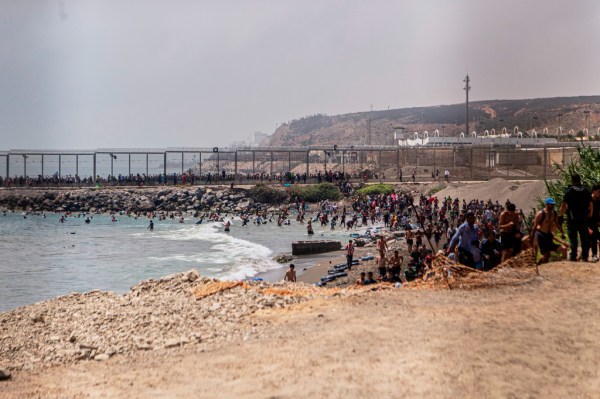
Spain finalized a highly controversial move to legalize over 500,000 illegal immigrants in the country, despite stiff opposition.
The Spanish Council of Ministers approved the measure, granting legal status to over half a million illegal immigrants in a country of under 50 million. The effort was pushed for months by Spanish Prime Minister Pedro Sanchez’s left-wing coalition government and represents the most sweeping amnesty enacted by a European Union country. Anyone who resided in the country for more than five months prior to Jan. 1, 2026, and doesn’t have a criminal record, is eligible.
Recommended Stories
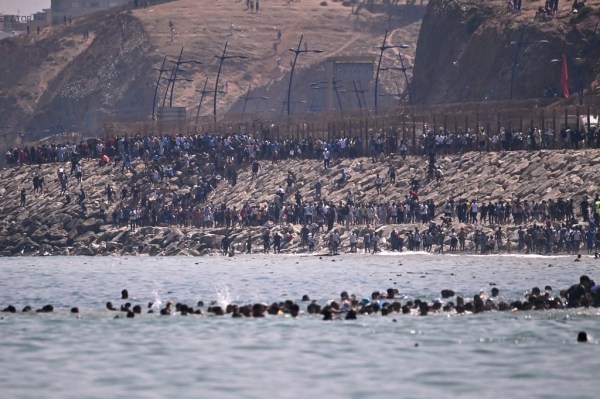
Sanchez tapped into rhetoric common in left-wing circles in the United States, saying the mass legalization was needed to preserve Spanish diversity.
“These are the people who build the rich, open and diverse Spain that we have today,” he wrote in a letter posted on X. “And the country we aspire to have in the future.”
Sanchez claimed that because Spanish people had previously gone to other countries, they now had a moral obligation to welcome new immigrants. He also tapped into the argument that immigrants are needed to offset Spain’s aging population.
“Spain, like other European countries, is growing older,” he wrote. “If we do not take in new people to work and contribute to the social security system, our prosperity will slow, our capacity to innovate will decline, and our public services — health care, pension, education — will suffer.”
The Catholic Church emerged as one of the most important supporters of the measure, being one of the effort’s central movers from the start. The original petition for mass legalization was backed by 84 Catholic organizations, America Magazine reported, including Caritas Spain, the Jesuit Refugee Service, and the Spanish bishops’ conference. Archbishop Luis Argüello, president of the Spanish bishops’ conference, met with Spain’s two main parties in the Congress of Deputies in June 2025, urging both to vote in favor of the amnesty bill.
The Migration Department of the Spanish bishops’ conference, Caritas Spain, and the Spanish Conference of Religious praised the decision in weighty terms in January when it began to gain traction, saying it was “demanded by broad sectors of society as a measure of political, ethical and social responsibility.”
“The time has come to take a decisive step toward a more just and inclusive society, where no one is relegated to invisibility and exclusion,” the statement read.
Catholic organizations have helped facilitate the mass migration of illegal immigrants to Spain, setting up infrastructure across Spain to house and integrate African and Middle Eastern illegal immigrants. They’ve also played a critical role in leveraging their moral authority to push the government to accept more immigrants.
“The protection of the right to life and the protection of people on the move must prevail over any security rationale and over any border,” Fr. Camillo Ripamonti, president of the Astalli Refugee Center, said in a January statement. “The Mediterranean cannot continue to be the scene of recurring tragedies.”
To fail to help immigrants cross the Mediterranean Sea to Spain, he proclaimed, was “akin to a Pilate-like ‘washing of one’s hands.'”
Spanish conservatives, who typically hold the country’s Catholic heritage as central to its identity, reacted with horror to the measure.
“The Spanish people have not given permission for this,” Vox leader Santiago Abascal said. “If the illegals ‘already form part of our daily life’ it is only because you and the PP have let them in against our laws and against our interests. The people will not forgive it. Sooner rather than later you will have to pay for it.”
Spain is part of the Schengen Area, which allows free travel between its members, making the mass legalization a larger problem for the rest of Europe.
“Tomorrow, they will be able to travel freely in France and even settle there, drawn by the generosity of our social system, which is open without conditions,” French right-wing leader Jordan Bardella said in a post on X. “This unacceptable and cynical decision must lead, in a first step, to suspending Schengen, and, over the longer term, to reserving freedom of movement exclusively for European citizens.”
SPAIN PUSHES CHINA TO ASSUME GLOBAL LEADERSHIP ROLE
Abascal cited Bardella’s statement as a wider consequence of Sanchez’s move, which he derided as treasonous.
“Sánchez brings Africa into Spain, and takes Spain out of Europe,” he said. “The pull effect is an expulsion effect of Spaniards from the common European space.”