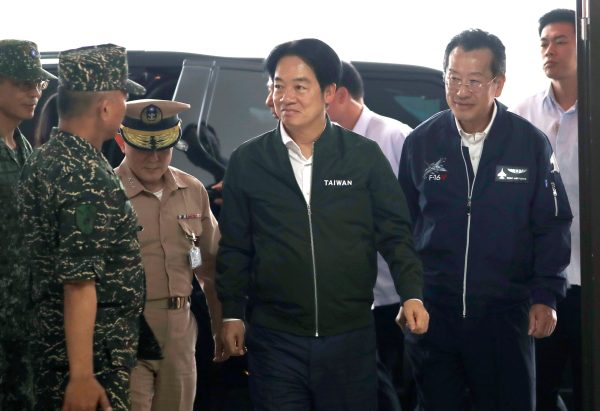
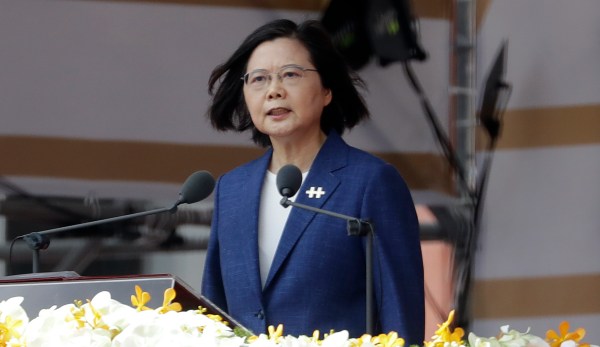
The United States and Taiwan are raising alarm over China’s capacity to disrupt international diplomacy after Beijing-aligned client states decided to keep Taiwan’s president out of Africa.
President William Lai was blocked from travelling to Eswatini this week after China allegedly pressured three African nations — Mauritius, Madagascar, and Seychelles — to deny airspace access to the president’s plane.
Recommended Stories
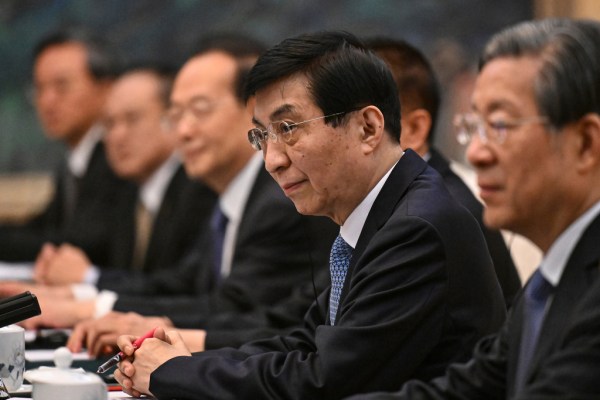
The island territory claimed it had previously been approved for travel by the concerned governments and that clearance had been suddenly revoked just days before the trip was set to take place.
Eswatini, formerly known as Swaziland, is one of the few nations in the world that recognizes Taiwanese sovereignty, and Lai intended to participate in a joint jubilee and birthday celebration for King Mswati III.
A Taiwanese official familiar with the situation told the Washington Examiner that the forced postponement has caused severe concern that “growing pressure from China in Africa” could be “undermining sovereign decision-making” by national governments and compromising the “normal functioning of international civil aviation” in the region.

Those worries are echoed in Washington, where the State Department accused the three African countries of “acting at the behest of China by interfering in the safety and dignity of routine travel by Taiwan officials.”
“These countries manage international airspace within their delegated Flight Information Regions that extend well beyond the sovereign airspace above their territories,” a State Department spokesperson told the Washington Examiner on Thursday. “This management responsibility exists solely to ensure aviation safety, not to serve as a political tool for Beijing.”
China has strategically invested in Mauritius, Madagascar, Seychelles, and other developing countries throughout Africa for decades as a means of extending its global influence. The development of transportation infrastructure, mining operations, public facilities, and other tangible benefits has won it friends across the continent.
These investments are not free, with some African nations racking up considerable debt liabilities with Beijing. The long-term quality and sustainability of Chinese construction have also been questioned.
Most concerning for the West, however, is that it gives the Chinese Communist Party economic leverage over sovereign nations — a soft power demonstrated by Lai’s canceled trip.
“This is yet another case of Beijing waging its intimidation campaign against Taiwan and Taiwan’s supporters around the world, abusing the international civil aviation system, and threatening international peace and prosperity,” the State Department spokesperson added. “We urge Beijing to cease its military, diplomatic, and economic pressure against Taiwan and instead engage in meaningful dialogue.”
Steven Yates, senior research fellow for China and national security policy at the Heritage Foundation, called the entire debacle an example of “neo-colonialism, China style.”
“The troubling aspect is we have a lot of people who are nervous nellies in every capital of the world that want to talk about a rules-based international order,” Yates, who is also a former deputy national security adviser, told the Washington Examiner. “And here you have the democratically elected government of a country … looking at engaging in, basically, positive-sum development with parts of the world that need that development — and the routine safe passage through airspace is being denied for on what basis?”
Seychelles and Madagascar have both denied any coercion from China in their decisions and defended them as their own.

“Malagasy diplomacy recognizes only one China,” a Malagasy foreign ministry official told Reuters. “The decision was made in full respect of Madagascar’s sovereignty over its airspace.”
Chinese Foreign Ministry spokesman Guo Jiakun denounced the State Department’s “irresponsible accusations” at a press conference on Thursday, calling them “nothing but a mischaracterization of the facts and truth.”
He urged the U.S. to “stop using the Taiwan question to interfere in China’s internal affairs, stop supporting and consolidating the so-called ‘diplomatic allies’ of Taiwan region, and stop sending wrong signals to ‘Taiwan independence’ separatist forces.”
China’s outrage might seem questionable in light of its glowing praise for Mauritius, Madagascar, and Seychelles. China’s Foreign Ministry and the nation’s Taiwan Affairs Office expressed “high appreciation” for the three countries respecting the Communist Party’s sensitivities toward Taiwanese diplomacy.
“All African countries, with the sole exception of Eswatini, have established diplomatic ties with China,” a foreign ministry spokesperson boasted in a Wednesday statement.
Taiwan, officially known as the Republic of China, considers itself a sovereign, democratic nation. The People’s Republic of China considers the island a part of its territory and views Taiwanese leadership as an illegitimate rebel government, meaning it will not hold diplomatic ties with any nation that has ties to Taiwan.
Acting Eswatini government spokeswoman Thabile Mdluli told the Washington Examiner that her country’s “long-standing relationship with Taiwan has over several decades contributed meaningfully to national development and remains an important pillar of our foreign policy.”
The small kingdom does not consider China an adversary and even conceded that “issues of airspace access are sovereign to the country’s concern” and therefore will not “view their decision as an insult to His Majesty.”
TAIWANESE OPPOSITION LEADER AGREES TO MEET XI JINPING AHEAD OF TRUMP SUMMIT
“Eswatini maintains that it has no enemies,” Mdluli emphasized to the Washington Examiner. “We remain open to cooperation with all nations. And we continue to engage the international community in a spirit of friendship.”
Eswatini is the only African country excluded from Beijing’s zero-tariff policy on African exports set to launch on May 1.