America has a plan to win the AI export race. Industry must deliver

Published May 17, 2026 8:00am ET


The U.S. government’s new full-stack artificial intelligence program is the right strategic bet. Now American companies have to make it pay off.

America has a plan to win the AI race. Now it’s time to execute. The administration’s AI Export Program is one of the clearest attempts in years to translate technological advantage into global market leadership. Rather than focusing solely on domestic regulation, it aims to make U.S. firms the most attractive partners for countries building AI infrastructure.

That strategy is sound — and overdue. But the outcome will not be determined by policy design alone. It will depend on U.S. companies showing up with complete, competitive, and deployable solutions. Its success or failure is existential for the future of the global AI industry.

POPE LEO FRAMES AI WARFARE AS MORAL CHALLENGE IN ROME SPEECH: ‘INHUMAN EVOLUTION’

Established through executive order in 2025 and now ramping up, the AI Export Program is one of the more structurally coherent technology policy initiatives in years. It treats AI as a complete capability requiring full-stack deployment: hardware, software, data infrastructure, and operational support. Of these, data infrastructure is the least glamorous and the most consequential. Models without governed, organized data underneath them don’t generalize. They demo well and deploy badly.

A foreign hospital with a diagnostic AI and no data labeling infrastructure, no training program for clinicians, and no interoperability with existing records will deliver nothing. It is the kind of failure that poisons future procurement and hands the market to whoever shows up next with a complete offer. 

In the coming weeks, the Department of Commerce, in consultation with the State Department and the Office of Science and Technology Policy, will solicit proposals from industry-led consortia. (A consortium, in this context, is a group of companies collaborating to provide AI solutions.) Each proposal must cover the complete stack: chips, servers, cloud infrastructure, data pipelines, AI models tailored for sectors such as healthcare, agriculture, or logistics, cybersecurity, and the training programs that allow recipient countries to use what they’re buying. Approved consortia receive targeted federal support, including Export-Import Bank financing, diplomatic backing, and expedited licensing.

Architecture carries policy. When a country builds its hospitals, power grids, or financial system on U.S. AI, it doesn’t just buy technology — it adopts American standards for privacy, security, and accountability by default. A health ministry running American diagnostic tools will find them designed to work with allied systems, maintained by vendors answerable to U.S. law, and built to be audited. The vendor choice is also a governance choice, and one that becomes nearly impossible to reverse once the infrastructure is in place.

The executive order explicitly allows “national champion” companies from allied and partner nations to participate in American-led consortia. A German cybersecurity firm, a Japanese data center manufacturer, or a British cloud provider can be part of a qualifying proposal. That means the program can draw on the best available technology from trusted partners, and allied governments are not being asked to choose between their own industrial champions and access to the American offer. The full-stack doesn’t have to be all-American to count.

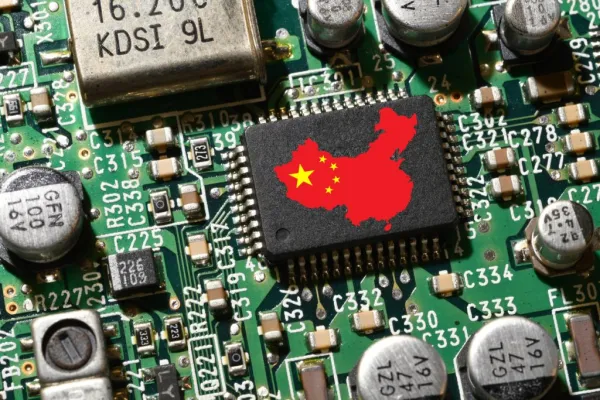
Beijing recognized the geopolitical implications of AI infrastructure early. For a decade, under the Digital Silk Road, China has deployed Huawei, Alibaba Cloud, ZTE, and state-backed financing across roughly 80 countries to build telecommunications networks, data centers, smart city platforms, and AI systems. The offer is consistently the same: affordable, fully integrated, and financed. The long-term implications are easy to overlook at the point of signing. Countries that build on Chinese systems train their engineers on Chinese tools, sign maintenance contracts with Chinese vendors, and adopt data standards that interoperate with Chinese platforms. Those relationships compound over time. Switching costs rise. And the governance assumptions built into the original architecture tend to persist long after the initial contract is forgotten.

Critically, this program emphasizes “data pipelines and labeling systems.” This has been the missing piece for many hyped AI rollouts in enterprise and government. When a data strategy is not treated as upstream of any AI strategy, the results tend to disappoint. Large organizations, in the United States and globally, cannot achieve anything meaningful without organizing their data to train models and agents to act specifically toward their needs.

The fair objection is that American export promotion programs have a checkered record — too often captured by well-connected firms rather than the best solutions. The consortium requirement addresses that directly: no single company can qualify alone, which means federal support serves the full package or it doesn’t get approved. 

AMERICA’S AI FUTURE WILL BE POWERED BY PRIVATE CAPITAL, OR NOT AT ALL

Industry needs to treat this as a market-entry decision, not a grant application. The Persian Gulf States are committing AI infrastructure budgets now. Southeast Asian governments are in active discussions with vendors. Sub-Saharan Africa is earlier in the cycle and still genuinely contestable. The question in every market is whether a U.S. consortium shows up with a complete, financed offer before the window closes. Federal financing and diplomatic support can sharpen that offer considerably. But they cannot substitute for companies that have done the market work. Industry will need to lean in and act as a true partner to the government entities facilitating these deals, rather than a beneficiary.

Beijing understood years ago that AI infrastructure is foreign policy. Washington has finally written it down. The question now is whether American industry will treat this moment as the opening it is, or whether, a decade from now, the rest of the world will be running on Chinese AI because U.S. industry failed to grasp this opportunity.

Matthew Rose is the Head of Corporate and Government Affairs at Snowflake and a senior fellow with the Atlantic Council.