The West needs a new strategy toward jihadist Iran regime

Published May 27, 2026 9:00am ET


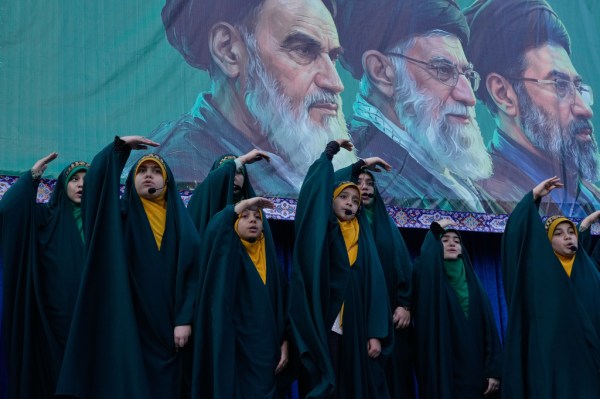
“We fear nothing when we are with God. If we are killed while we are with God, we are blessed, and if we kill while we are with God, we are also blessed.” This is one of Islamic Republic founder Ruhollah Khomeini’s most famous quotes. In Khomeini’s interpretation of jihad, now the Islamic Republic’s interpretation of jihad, it does not matter how devastating the consequences are for the Iranian people. What matters is how much damage is caused to the enemies of Shia Islam.

With an ideology like this one, how can we expect military deterrence to cause any long-term change in behavior? 

From the Cold War onward, the NATO alliance and most of the Western Hemisphere developed their military capabilities to deter any thoughts of aggression. For over 80 years, the United States has remained the most powerful military in the world, and throughout its battles, it has shown its willingness to take action against aggressors. But, as we’ve learned, there are hostile regimes and terrorist groups that do not care about the well-being of their own host nations, or even the well-being of individuals within their leadership. Coincidentally, many of them also share the fundamental goal of wiping Israel off the map and bringing an end to American “imperialism.” 

TRUMP IRAN DEAL: IT’S NOT A VICTORY IF THE REGIME SURVIVES

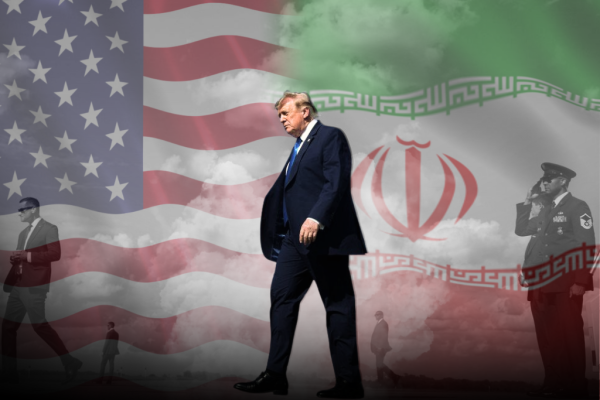
The Islamic Republic is founded on the rejection of the “Little Satan,” Israel, and the “Great Satan,” the U.S. The regime’s senior clerics have sworn to turn the White House into a husayniyya, a Shia Muslim congregation hall. This is also why, despite the devastating blows to its leadership and military infrastructure, the regime claims it won this most recent round of conflict with the U.S. and Israel. To them, the fact that the U.S. had to use its resources to attack them is enough of a victory, even if part of that victory means losing their lives.

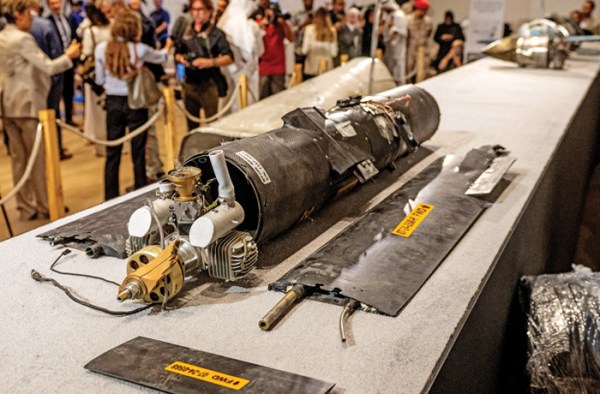
This is why the Islamic Republic’s foreign policy is the furthest thing from realpolitik. In an economic situation where the average inflation rate is above 50%, and in a sociopolitical context where foreign militias are imported to suppress mass internal dissent, one would think the regime would look for a way to de-escalate. But instead, domestically, it doubled down on the suppression of civil liberties, even closing a historic hotel because its guests were not wearing “proper hijab.” Internationally, despite exhaustive rounds of negotiations and many opportunities to end the battle, the regime has shown no sign of ending its nuclear program, its support for its proxies, or the “axis of resistance” rhetoric. 

Given this context, trying to alter the Islamic Republic’s behavior through deterrence and external pressure will result in the same broken cycle that the U.S. and the European Union have been stuck in for the last five decades. The West appeases the regime, the regime builds up its proxies and military infrastructure, the West imposes sanctions, the regime enters negotiations, and the loop restarts. This is why, instead of asking how to change the Islamic Republic’s behavior, the West should ask how to confront the regime as it is. 

This does not mean that sanctions, military pressure, or deterrence are irrelevant. They can weaken the regime’s capabilities and delay its operations. But they cannot be mistaken for a strategy of behavioral transformation. Deterrence works when the target wants to avoid costs more than it wants to pursue confrontation. The Islamic Republic, however, has repeatedly shown that it can convert punishment into propaganda. In that framework, pressure alone does not force moderation; it often gives the regime another opportunity to justify repression at home and escalation abroad. 

IRAN ISN’T A PROBLEM TO MANAGE — IT’S A THREAT TO END

A regime cannot be permanently contained by threats it has already learned to absorb. Deterrence may delay the Islamic Republic’s next move, but it cannot transform the logic that drives it. As long as the regime sees confrontation as proof of legitimacy and sacrifice as victory, the West will remain trapped in the same cycle of pressure, escalation, and negotiation.

The question, then, is not how to make the Islamic Republic behave differently, but how to support the Iranian people’s demand to end the regime that continues to threaten U.S. and European national security. 

Armita Hooman is a research analyst at the National Union for Democracy in Iran.