Trump’s hands are tied in Hormuz. Here’s ‘Plan B’

Published July 23, 2026 6:00am ET


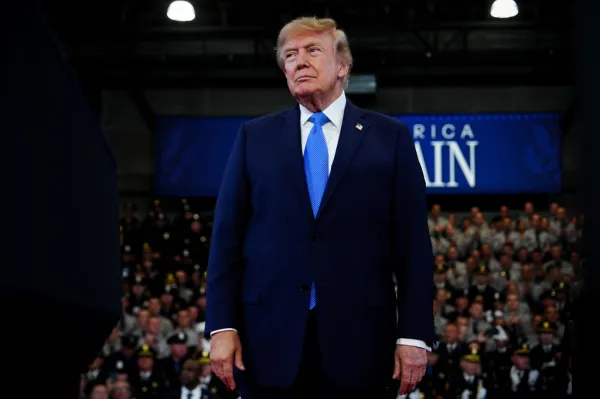
By attacking Iran, President Donald Trump triggered a crisis over the Strait of Hormuz that he’s struggled to resolve as commander-in-chief. His only way out now may be as a statesman — but the window to avoid uncontrolled escalation could be closing.

Multiple U.S. troops were recently killed in Iranian missile strikes. The memorandum of understanding whose key job was reopening the strait lies in tatters. The sides are now exchanging expanded strikes to impose their competing visions of Hormuz’s future. The prospect that the war could enter an even more dangerous phase is growing by the day. 

Shutting down Hormuz has been Iran’s greatest achievement of the war. A successful U.S. operation to liberate it would represent a huge strategic reversal — not just dramatically strengthening Washington’s leverage in future negotiations but transforming the conflict’s current narrative of U.S. defeat into one of American success in restoring deterrence. 

Given those advantages, if a unilateral U.S. military option exists that could, with high confidence and acceptable cost, free Hormuz and — crucially — keep it free, Trump should give the order. The problem is that despite knowing for five months how central the strait’s disposition is to the war effort and America’s global standing, the order hasn’t come. 

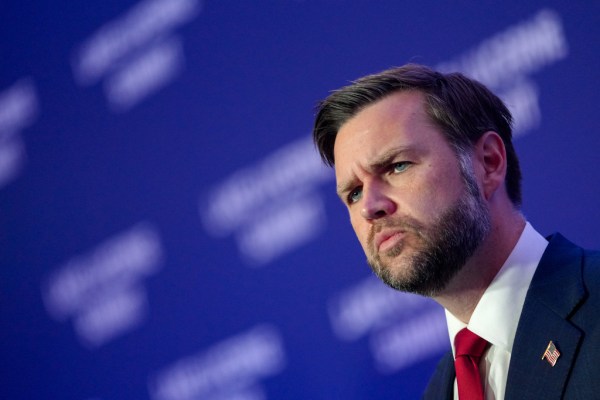
Which strongly suggests that the option doesn’t exist — in no small part because as Trump has observed, one “guy with a drone can shut [the strait] down.” Last week, Vice President JD Vance offered his version of the dilemma: “You can bomb them, you can take away their radar, you can take away some of their drones and some of their missiles,” he said, “but it’s just too easy to fire at ships in the straits.” 

The likely costs of seizing Hormuz are daunting. The battle could take months, involving ground forces, high casualties, and the dangerous depletion of critical munitions stocks. Iran could unleash its remaining firepower to devastate Gulf energy infrastructure, while its Houthi allies shut down shipping through the Red Sea — potentially ruinous for the global economy. Meanwhile, any U.S. military gains could be undone by Trump’s “guy with a drone.” 

There is a fundamental asymmetry of interests and pain thresholds at work. For Iran’s rulers, the stakes in Hormuz are existential — the essential lever they need to deter future attacks once this war concludes. They seem determined to fight as long as necessary, absorbing devastating costs without regard to the immense suffering of their own people. 

The United States, in contrast, is a democracy with midterm elections looming. Trump’s war has been deeply unpopular from the start, exacerbated by spikes in gas prices and inflation. Expanding the war now would carry enormous military, economic, and political risk, with no guarantee of sustainable victory. 

If the honest assessment is that a military solution remains unavailable at a price either Trump or the American people are prepared to pay, the clear-eyed response is to accept reality, however regretfully, and develop an alternative strategy to make the best out of a horrible situation. 

That strategy would use aggressive diplomacy to weaponize the widespread international consensus on restoring freedom of navigation. Washington’s most powerful allies in the Gulf, Europe, and Asia already reject Iranian control of Hormuz and are primed to be forged into a more forceful multinational coalition. 

The missing piece has been China, which vetoed a UN Security Council resolution on Hormuz in April on grounds that America’s military attacks and blockade of Iran should end. Nevertheless, Chinese officials have repeatedly called for a rapid return to free, safe, and unimpeded navigation, rejecting efforts to militarize the strait or charge tolls. 

Between 40% and 50% of China’s oil imports transit the Gulf, and its economic relations with the UAE, Saudi Arabia, Iraq, Qatar, Kuwait, and Oman dwarf its ties to Iran. Once the guns fall silent, a U.S.-organized, Gulf-led offensive to pressure and incentivize Chinese cooperation might succeed in isolating Iran by shifting the dynamic from Iran vs. Trump to Iran vs. the world. 

‘NO DEAL’: JD VANCE’S IRAN FANTASY COULD COST AMERICA EVERYTHING

The sequencing might work as follows: an initial Security Council resolution calling for the urgent restoration of Hormuz as a free and open international waterway and authorizing a multinational naval coalition to work with Iran and Oman in clearing it for safe passage. Britain and France have already volunteered to lead such an effort. Should the coalition report back that Iran is impeding the resolution, the Security Council would reserve the right to take additional action, including condemnation, sanctions, and, ultimately, authorization to reopen Hormuz by force. 

It would not be easy or quick. It would require tremendous diplomatic skill, patience, and presidential leadership — none of which have been hallmarks of this administration. Even then, pulling it off will be a long shot. But in a world of terrible options, where further military escalation courts disaster and success in equal measure, a Plan B focused on an American diplomatic push could be the least bad path forward. 

John Hannah is senior fellow at the Jewish Institute for National Security of America. He served in both Republican and Democratic administrations, including as former Vice President Cheney’s national security advisor.