An AI camera error put a baby at gunpoint. Warrantless surveillance has gone too far

Published September 3, 2026 11:00am ET


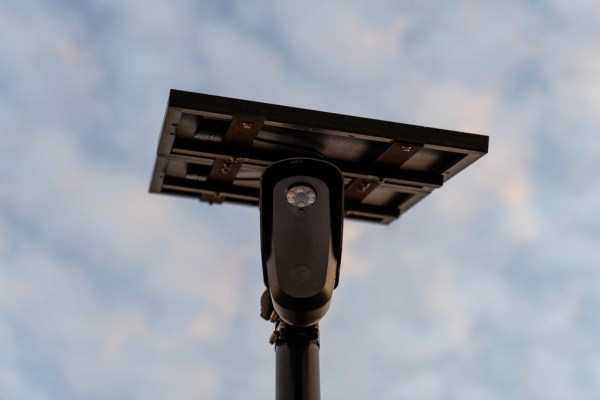
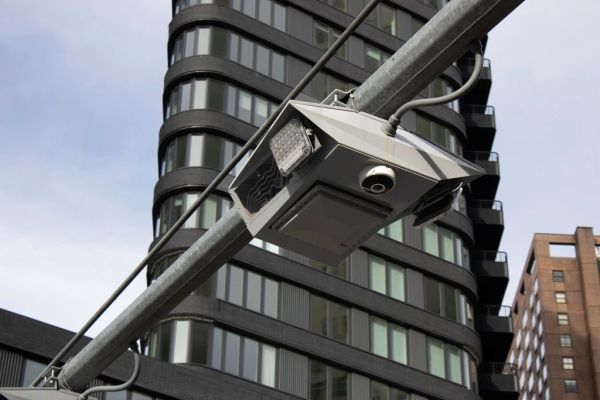
Automated license plate readers — high-speed cameras that capture the license plate information of each passing vehicle — are making headlines for all the wrong reasons.

In Arkansas, recently released body camera footage shows a young couple with a small baby in the car being detained at gunpoint after an ALPR mistakenly flagged their vehicle as stolen. 

This is hardly an isolated incident. Errors involving ALPRs have led to innocent people being held at gunpoint and even jailed, while misuse of the technology has enabled law enforcement officers to stalk former romantic partners and obtain private information about the citizens they are sworn to protect and serve.

But the problem with ALPRs goes beyond errors and abuse. Their ordinary use raises a more fundamental constitutional concern. These camera systems allow the government to collect and retain enormous amounts of personal information about people who are not suspected of any crime, all without a warrant.

A recent Supreme Court decision provides courts with a framework for confronting that problem.

The court recently ruled in Chatrie v. United States that the government’s collection of cellphone location history constitutes a search under the Fourth Amendment because people have a privacy interest in that information.

The reasoning that led the court to reject the warrantless collection of location history should likewise lead courts to reject other types of warrantless digital surveillance that allow the government to collect sensitive information about innocent people, including ALPRs.

As I argued in an amicus curiae brief in Chatrie, the government must obtain a warrant before it uses advanced surveillance technology to pervasively and indiscriminately collect information about people’s movements, because that information can reveal intimate details about their daily lives. Cellphone location history is retrospective, easy to gather, and can be collected from everyone, regardless of whether they have even been suspected of a crime. As Chatrie held, it’s that combination that makes its warrantless collection constitutionally dubious.

The same reasoning should apply to ALPRs. ALPRs capture the license plate information of each passing vehicle, along with the date, time, and precise location of that vehicle. ALPR systems can then retain that information for a possibly indefinite period and create a comprehensive record of motorists’ movements over time. 

In Marco Island, Florida, for example, the city has installed ALPRs on all bridges entering and leaving the island. Location data captured by these ALPRs is retained for three years and proactively shared with law enforcement agencies nationwide, even though the vast majority of the information collected has no connection to criminal activity.

Such pervasive monitoring is difficult to square with the Supreme Court’s previous affirmation that people do not forfeit their right to privacy merely by entering public spaces. And while a brief observation of someone traveling on public roads may not implicate Fourth Amendment protections, the government’s ability to compile and analyze years of someone’s location history and create a detailed portrait of their daily life clearly violates their right to privacy.

But ALPRs are only one tool in the government’s expanding surveillance arsenal. 

A similar Fourth Amendment issue is implicated in New York City’s Location Reporting Rules, which require for-hire vehicle companies, including ride-share services such as Uber, to provide the government with precise location data of all drivers and passengers — without individual suspicion, probable cause, or a warrant.

The Securities and Exchange Commission’s Consolidated Audit Trail, meanwhile, is the largest collection of personal financial data in American history. It requires brokers and other market participants to transmit detailed information about all U.S. market trades to a centralized database that the SEC and other regulators can access indefinitely. 

This means the government can access extensive records of the financial activities of millions of Americans who are not suspected of any wrongdoing. It’s no wonder SEC Commissioners Hester Peirce and Mark Uyeda have called the CAT “a system that one would expect to find in a dystopian surveillance state.” 

SEC’s CAT, New York City’s location-reporting regime, and Marco Island’s license plate reader program may differ in their details, but they share a common flaw. Instead of investigating specific individuals based on evidence of wrongdoing, they sweep up sensitive data on millions of innocent people and search for justification later.

This kind of indiscriminate data collection amounts to dragnet surveillance — or as the Chatrie court put it, a “virtual panopticon.” 

As Chatrie recognized, constitutional protections do not disappear simply because technology makes surveillance easier. Whether the government is tracking people through cellphone data, license plate readers, ride-share records, or financial transactions, the Constitution requires a particular reason to search a particular person. The mass collection of data in the hopes of uncovering wrongdoing is not in line with that requirement. 

FLOCK SAFETY CALLED ITS CRITICS ‘TERRORISTS.’ NOW IT WANTS TO BE YOUR PRIVACY SAVIOR

Fortunately, the New Civil Liberties Alliance and others are already challenging these constitutional transgressions in court, presenting judges with an opportunity to apply the principles recognized in Chatrie. They should seize it.

If the Fourth Amendment is to remain a meaningful safeguard in the digital age, courts must build on Chatrie and reject dragnet surveillance in all its forms.

Andreia Trifoi is litigation counsel at the New Civil Liberties Alliance.