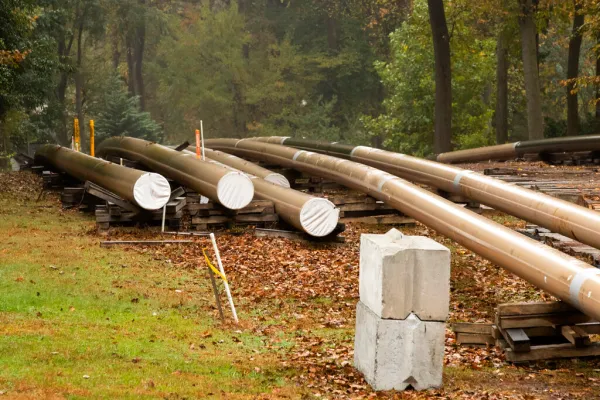
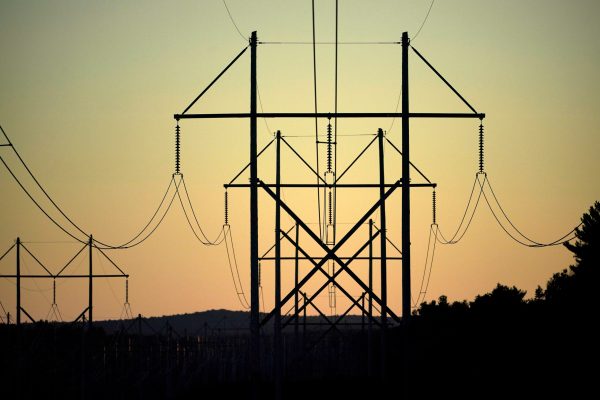
When Congress gets back from its August recess, bipartisan permitting reform talks are expected to continue.
There’s no reason why our nation can’t develop projects in a timely manner while also protecting the environment in a common-sense manner.
Recommended Stories
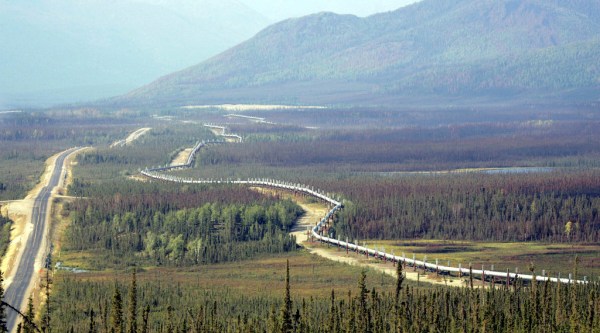
Yet for decades, federal environmental statutes have been applied in a manner using little common sense. Even worse, these laws and their permitting requirements have been weaponized to block development and restrict the use of private property.
As Congress considers permitting reform, what would successful permitting reform legislation look like? Here are five principles to help answer that question:
First, the legislation shouldn’t pick winners and losers. Permitting reform should apply across the economy and not just to specific sectors. It also shouldn’t apply solely to specific types of businesses within an industry.
Conservatives have long been focused on permitting reform. The Left is new to the party, in large part because they recognize the problem of government-created obstacles to projects they favor, such as wind and solar power.
Permitting reform shouldn’t be some excuse to create favorites, be it wind and solar, or coal and natural gas. Reform that applies across the board will help everyone. And certainly, when it comes to electricity, any favoritism shouldn’t come at the expense of electricity ratepayers or the reliability of the grid.
Second, legislative reform needs to improve predictability and fairness. For example, imagine getting a permit from the federal government and then, many years after the fact, the government changes its mind.
That is exactly what happened to the Mingo Logan Coal Company when the Environmental Protection Agency, in 2011, retroactively vetoed a Clean Water Act Section 404 dredge-and-fill permit lawfully issued by the U.S. Army Corps of Engineers. The veto was four years after the permit was issued.
Retroactive vetoes of any kind after permits have been issued should be prohibited.
Third, permitting reform needs to address numerous laws. Much of the focus is often on the National Environmental Policy Act, a procedural law requiring environmental reviews. While NEPA reform is important, including imposing reasonable time limits on third-party lawsuits and limits on who can bring such actions, addressing other federal statutes is arguably even more important.
NEPA isn’t even a permitting law. Other statutes, such as the Clean Air Act and Clean Water Act, are permitting laws, and their permitting requirements trigger NEPA reviews. Regulated parties must meet both the underlying statutory requirements of these laws and NEPA requirements.
If the number of triggers can be reduced, then the burden of both the triggering statutes and NEPA can be reduced.
Fourth, the federal government shouldn’t be actively trying to kill off businesses and industries that would benefit from permitting reform.
To illustrate this concern, coal and natural gas should benefit from proper permitting reform. But that won’t mean much if the EPA or another agency is trying to ensure they no longer exist. This is no exaggeration. The Biden EPA’s 2024 power plant rule would help to kill off coal and new natural gas plants.
Any permitting reform legislation needs to make it expressly clear that the reforms won’t be undermined by agencies weaponizing other statutes to kill off disfavored businesses, such as coal and natural gas. After all, permitting reform isn’t very helpful to a business or industry if they no longer exist.
Fifth, when examining possible environmental effects of projects, agencies should consider only likely effects that result in concrete harm and are directly connected to the specific project. The alleged harm shouldn’t be speculative; it should be the proximate cause of the harm.
These five principles are certainly not exhaustive. Other issues, such as reducing overlap and respecting property rights, are also critical.
The Empire State Building was built in just 410 days and the Hoover Dam in about five years. This quick turnaround would be a pipe dream today. But there’s no reason why this should be the case. Taking environmental concerns seriously shouldn’t be a pretext for blocking or delaying development.
THINK YOU OWN YOUR LAND? A 100-YEAR-OLD LOOPHOLE SAYS STATE AGENTS CAN WALK RIGHT IN
Congress needs to develop permitting reforms that are consistent with these straightforward and common-sense principles.
If they do, it would be a big win for lawmakers across the political spectrum, and most importantly, a big win for the public.
Daren Bakst is the director of the Center for Energy and Environment at the Competitive Enterprise Institute.