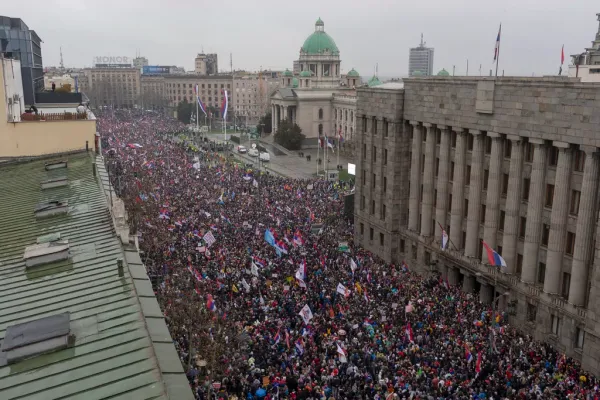
As voters head to the polls on Sunday, students are once again at the center of Serbian politics. Their movement began two years ago, in November of 2024, when the concrete canopy of the newly renovated railway station in Novi Sad, the country’s second largest city, collapsed and killed 16 people. Many Serbians saw the disaster as a symbol of corruption in public construction contracts. Students demanded the release of all project documents and the prosecution of those responsible. Their protests spread from university faculties to weekly marches across the country, drawing in farmers, actors, lawyers, and judges. Today, that energy has taken a political shape as the Student List, a 250-member electoral slate. It poses the first serious challenger to President Aleksandar Vucic in 14 years.
The government has responded to the protests with growing force. Demonstrators faced mass arrests, surveillance, and violent attacks by government supporters and ruling party-affiliated thugs, some of whom were later pardoned by Vucic. Violence also marred the last local elections, with journalists among the targets. There are fears that new violence may follow Sunday’s results.