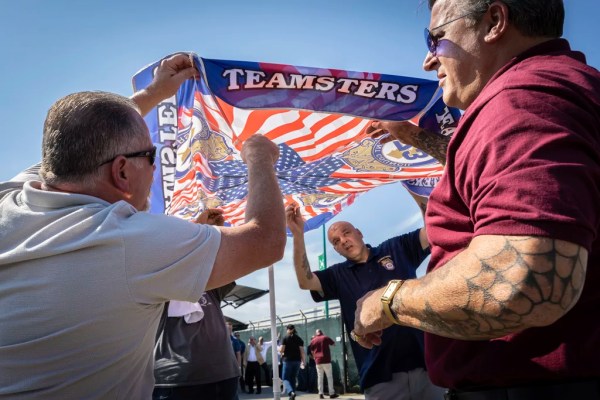
Unions are supposed to provide employees with a representative voice in the workplace, but the Center for Union Facts turned up a distressing fact after analyzing data compiled by the Bureau of Labor Statistics and the National Labor Relations Board: Less than than 10 percent of private sector union members voted for the union to which they pay dues. Such 20th-century workplace rigidity looked like solidarity back in the 1950s heyday of organized labor. Today, it is out of place in industrial and commercial workplaces that increasingly emphasize cooperation rather than confrontation, creativity in place of formalized work rules and individual initiative over repetitive processes.
That realization sparked this week’s Washington Examiner special report, “Out of Touch with America: Are Unions Obsolete?” With only 11 percent of all employees now in unions, membership has reached its lowest level since the mid-1950s when it peaked at just under 35 percent. Just as significant is the transformation of organized labor in recent years from being predominantly about private sector workers employed by for-profit businesses to mostly government employees paid with tax dollars. The traditional union model no longer serves the vast majority of working Americans, so even national labor leaders are experimenting with new approaches.