“Halfway House: GOP falling short in midterms,” reads the headline on this Politico story on 2014 House races. Writer Alex Isenstadt notes that in House races Democratic committees are outraising and outspending Republican committees, which is interesting, considering that Republicans currently hold the House majority and, as Democratic Congressional Campaign Committee head Tony Coehlo used to remind donors in the 1980s, “every committee and every subcommittee chairmanship.” Isenstadt does not probe too deeply here at why the Democrats have this advantage, though in fairness Democratic fundraisers are not likely to advertise their secrets.
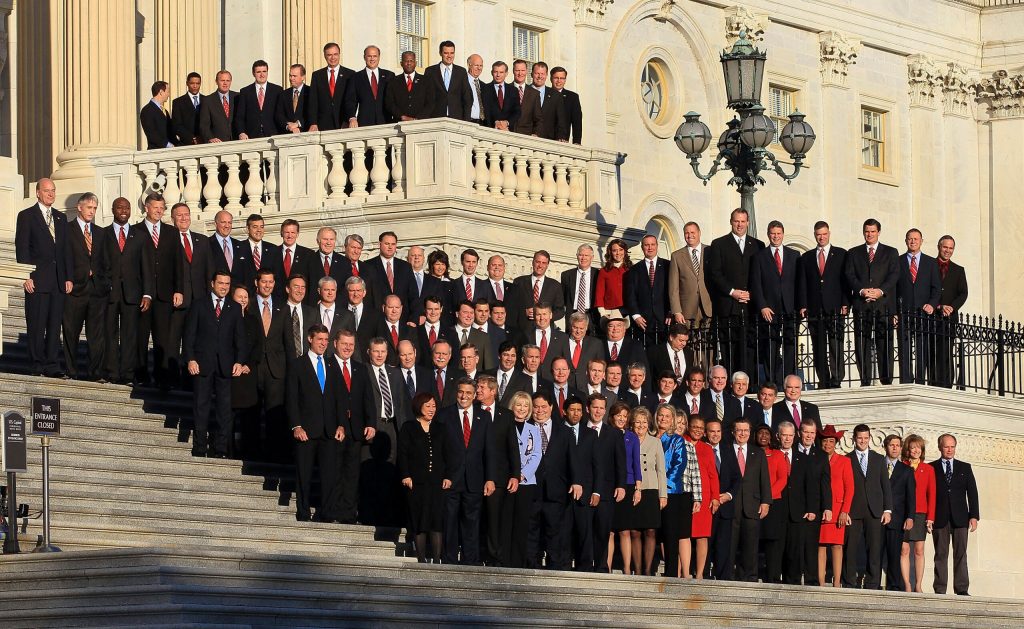
Republicans gained 63 seats in 2010, the biggest change of party in House seats since 1946 and 1948. GOP redistricters wisely chose to protect incumbents rather than try to oust Democrats.Isenstadt is also careful to note that Republicans gained 63 seats in the 2010 election — the biggest change of party in House seats since 1946 and 1948 — and Republican redistricters sensibly sought to protect possibly shaky Republican incumbents rather than seek to endanger Democrats. In other words, Republicans have already made the gains that the non-presidential party sometimes (1938, 1958, 1966, 1974, 2006) but by no means always (1986, 1998) makes in elections in the sixth year of a presidency.