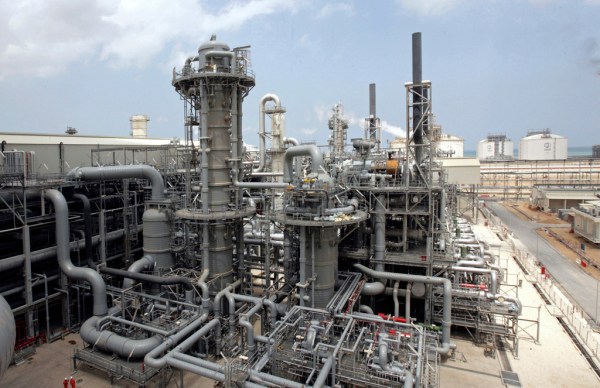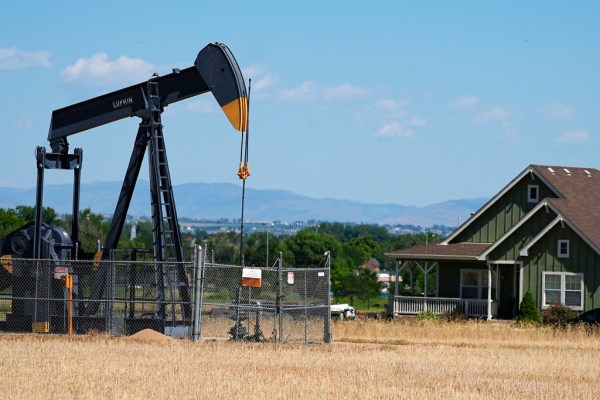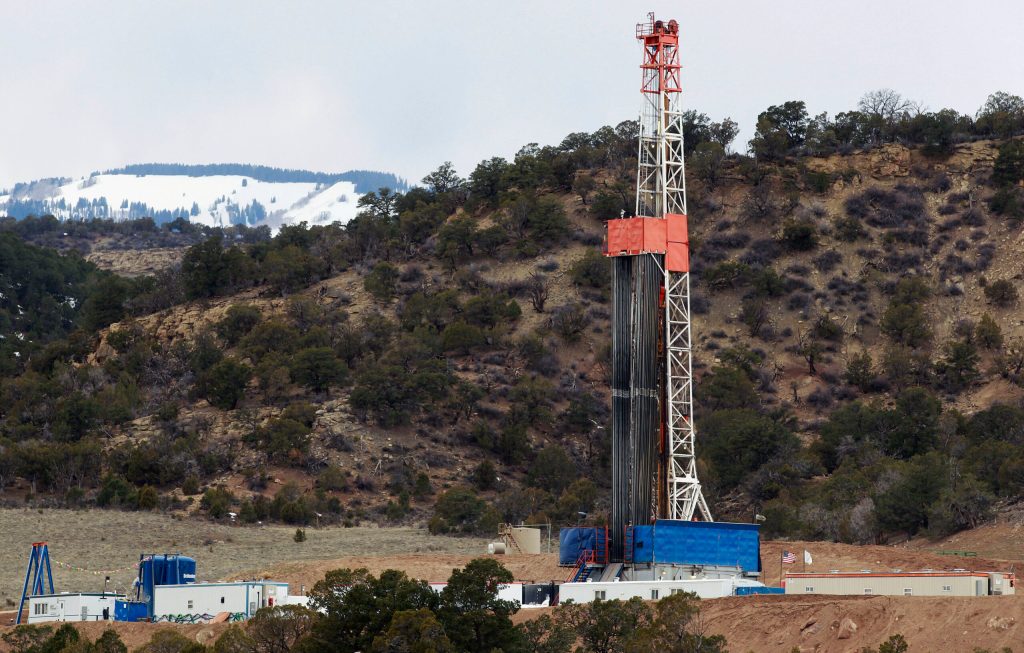
Booming oil and natural gas production made possible by technological advances in hydraulic fracturing and horizontal drilling has been the lone bright spot in the U.S. economy throughout President Obama‘s tenure in the Oval Office. The U.S. Energy Information Administration released data last week that effectively illustrates the boom, saying “total U.S. net imports of energy, measured in terms of energy content, declined in 2013 to their lowest level in more than two decades. Growth in the production of oil and natural gas displaced imports and supported increased petroleum product exports, driving most of the decline. A large drop in energy imports together with a smaller increase in energy exports led to a 19% decrease in net energy imports from 2012 to 2013.”
The EIA also made public its latest long-term projections, including the U.S. achieving energy independence by 2037 — that is, zero net oil imports from the Middle East and other foreign producers — under the most optimistic of those scenarios. Driving the increasingly optimistic projections from the EIA is growing productivity in the Eagle Ford Shale area of Texas and North Dakota’s Bakken Shale area. The new-rig count in Texas, for example, has zoomed from less than 100 in mid-2009 to more than 300 today, while oil production has gone from a mere 30 barrels per day in 2009 to more than 500 today, according to EIA data. No wonder an EIA spokesman told Bloomberg News “this is the first time the Annual Energy Outlook has projected that net imports’ share of liquid fuels consumption could reach zero.”