

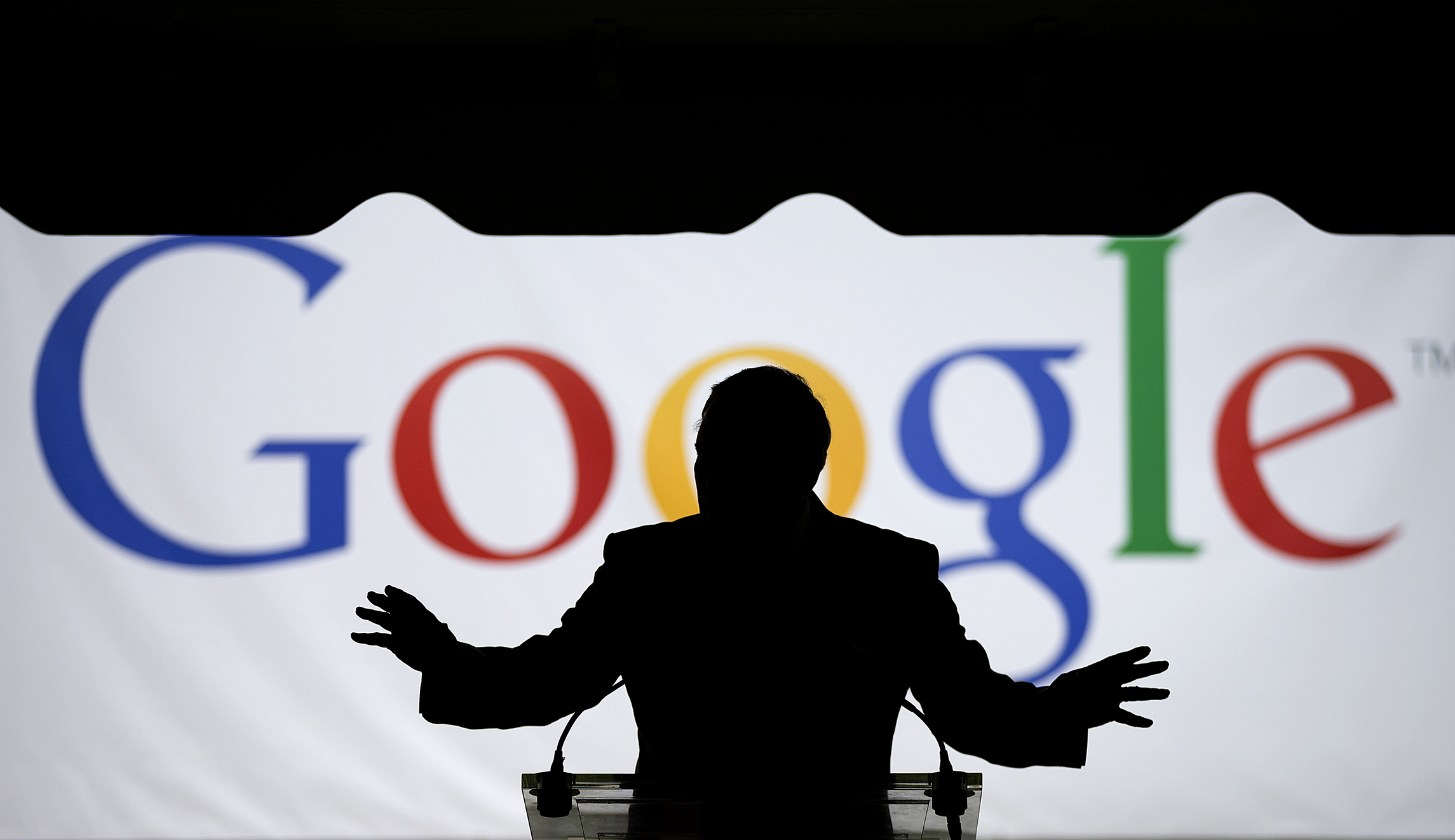
As their infractions begin to pile up, there is increasing interest in the unchecked power of Silicon Valley companies. Congressman Frank Pallone, ranking member of the House Energy and Commerce Committee, recently called out Google, Facebook, and Twitter for policies that, in his words, “are not neutral.” So as Republicans and Democrats alike grow more skeptical of these companies, the question remains – how do the likes of Google keep such a tight lid on their free speech monopoly? This quest to maintain power is no more evident than in the recent firing of Barry Lynn.
In late August, the New York Times reported that New America, a think-tank dedicated to open markets in the United States, had fired Barry Lynn, one of their scholars in residence. The firing, justified with a generic statement on Lynn’s incompatibility with the organization’s “openness and institutional collegiality,” followed Lynn’s increasing concern over the monopoly power of Silicon Valley companies.
Recommended Stories



It’s no coincidence that Lynn – a respected scholar with a long history at New America – was fired after praising the EU’s decision in June to levy a $2.7 billion fine against Google for antitrust violations. Eric Schmidt, Google’s parent company Alphabet’s Chairman, also served as the Chairman of New America until 2016, and the think-tank’s conference room is called the Eric Schmidt Ideas Lab. Google, along with Schmidt’s family foundation, are some of New America’s largest financial backers, contributing more than $21 million to the organization over the years.
The irony, and hypocrisy, of Lynn’s sacking, cannot be overstated. Google is primarily a search engine. It exists to make it easier for users to find whatever information they would like. However, it is becoming increasingly clear that Google is a monopoly, and the debacle with New America only serves to hammer home the hypocrisy that the company whose motto used to be “don’t be evil” regularly exhibits. The search giant’s influence extends far beyond the dollars it spends in Washington and is particularly apparent on its own platform. That is, of course, for those whose opinions differ from Google’s own unquestionably leftist viewpoint.
Google regularly censors content across its suite of products, and like Barry Lynn’s ill-fated praise of the EU’s actions against the firm, the targets of these actions are typically ideologically at odds with Google. In August, Diamond and Silk, a popular duo of African-American women known for their vocal support of President Trump, found that the majority of their YouTube videos had been stripped of the right to advertise. Similarly, well-known Canadian professor Jordan Peterson was banned from YouTube temporarily in August with little explanation.
These recent instances of censorship have one very important characteristic in common – they are conservative voices, advocating views that don’t mesh with Google’s well-known liberal bent.
Despite its de facto utility status, Google continues to operate almost completely ungoverned, exercising its massive influence on our politics, entertainment, and culture in any way it sees fit. And more often than not, the firm has used this influence to permeate political conversations, silencing opinions it deems unfit for the greater public.
Free speech is the bedrock of American society – it was a founding principle of our nation, and it continues to make us great. But the rise of Silicon Valley monopolies, and Google, in particular, has set a dangerous precedent; a company that launders its influence not only through Washington think tanks and academia, but also increasingly injects its considerable biases into the very fabric of the internet itself. Whether the target is an individual promulgating his or her views on YouTube or an entire division of an influential think tank, Google’s reach seems boundless.
The rise of Google and the increasing importance of preserving free speech are on parallel tracks. As we move along these tracks, we must be ever vigilant of the threat to free speech that companies like Google pose to a truly free and open internet. It’s time to hold Google accountable for its actions and treat Google like the monopoly that it is. Anything less than a full examination of Google’s monopoly power risks turning the internet from a platform for the free and open exchange of ideas, into Mountain View’s corporate plaything.
Burgess Owens, a former Super Bowl champion, sits on the advisory board for Free Our Internet.
If you would like to write an op-ed for the Washington Examiner, please read our guidelines on submissions here.
