

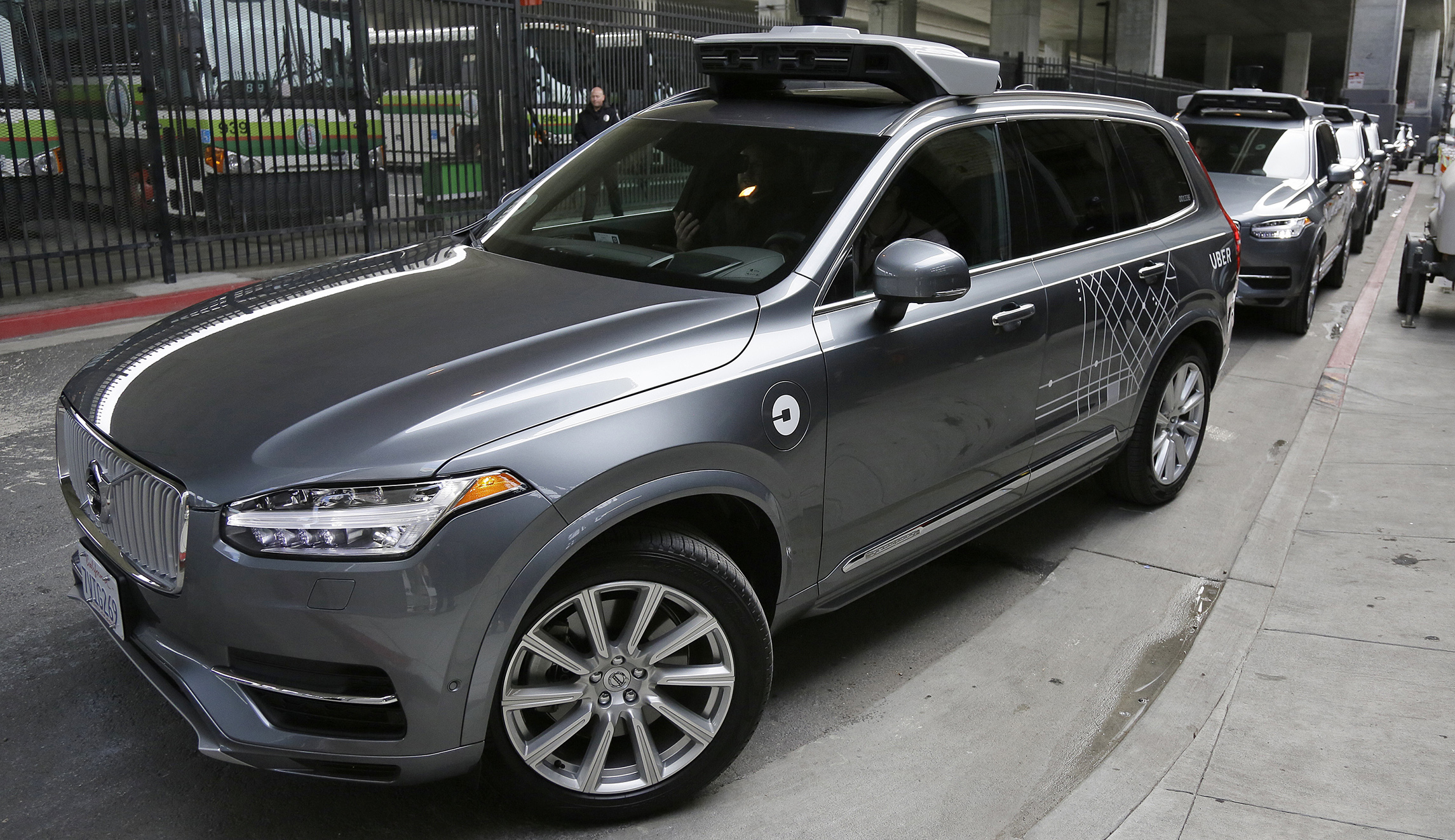
The Internet went absolutely crazy in August when an unmarked, gray van drove around the streets of Arlington, Va., sans driver. The authorities were alerted. The local news tracked down the seemingly autonomous vehicle. An entire community pulled out their smartphones to snap pictures.
A month later, the mystery has been solved. Researchers at Virginia Tech Transportation Institute admitted that there was actually a driver inside the supposedly driverless car and he was disguised as one of the car’s seats. That crazy camouflage stunt, turns out, was actually for science.
Recommended Stories



Here’s me trying to talk to a man in a car seat costume @nbcwashington pic.twitter.com/e5humOM7uS— Adam Tuss (@AdamTuss) August 7, 2017
The Virginia Tech researchers tried gauging public perception of driverless cars and, while they haven’t released their findings, the Alexandria episode tracks decently well with what we suspected: Though quite afraid of automated automobiles, Americans still want driverless cars.
Nearly 7 in 10 Americans, 67 percent, wouldn’t feel safe hopping inside a driverless car, according to new polling from ReporterLinker. But more than half, 53 percent, want their next vehicle to drive itself. That’s an interesting paradox that should put autonomous automakers on notice.
While companies like Ford, Google, and Tesla have poured millions into autonomous vehicles, a string of high profile crashes have hurt the technology’s image. It doesn’t help that the majority of America’s commuting population prefer getting behind the wheel. But research isn’t going to come to a screeching halt thanks to two key demographics: women and millennials.
Unlike men, who insist on driving themselves, 67 percent of women say they’re open to letting a robot take the wheel. That could be good news for automobile companies, considering the fairer sex tends to wield oversized influence when it comes to car shopping. As for millennials, the generation that grew up on technology, they’re all about the idea. Altogether, 74 percent say they’re optimistic about the idea.
The two of those demographics could keep automated automotive dreams alive. And perhaps sooner rather than later, real driverless cars could be driving around, but without researchers dressed like seats.
Philip Wegmann is a commentary writer for the Washington Examiner.
