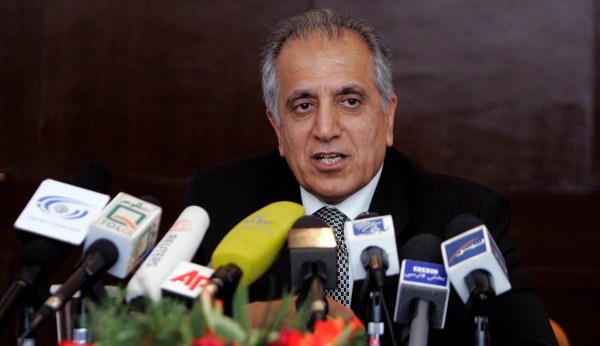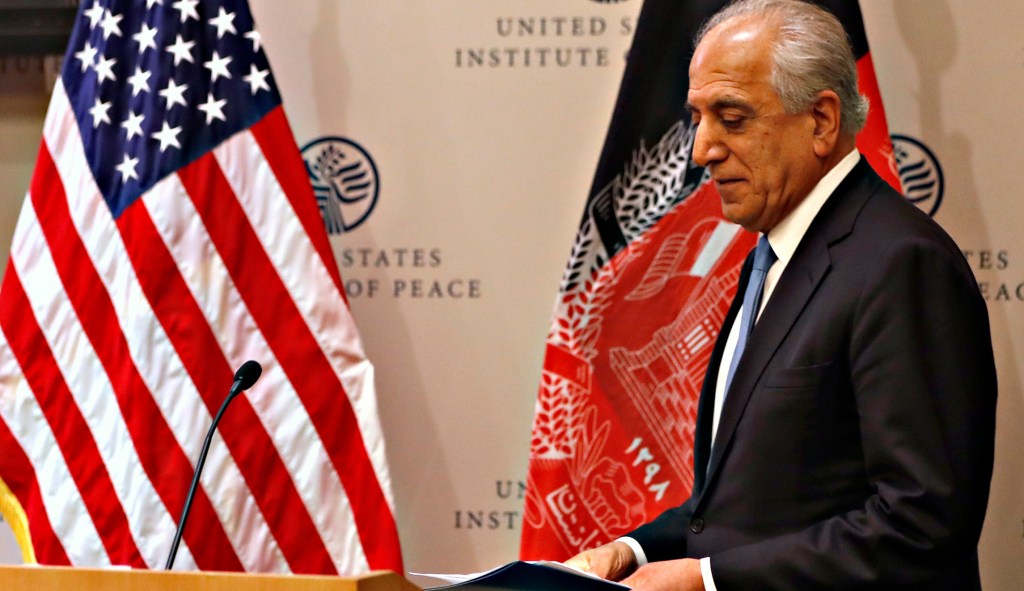
Presidential envoy Zalmay Khalilzad continues to advance his proposed peace deal with the Taliban despite increasing criticism inside Afghanistan that he is, in effect, empowering the Taliban, undercutting the elected government, and simply embracing the same formula and Taliban pledges that the Clinton administration accepted when it negotiated with the Taliban prior to the Sept. 11, 2001, terror attacks.
Such criticism came to a head earlier this month when Afghan national security adviser Hamdullah Mohib visited New York and Washington and criticized both Khalilzad’s imperious manner (a complaint Afghans share with Iraqis) and his efforts to cut the elected Afghan government out of the loop on the commitments he was making that would affect them (a complaint India shares with Afghanistan). The U.S. State Department (and Undersecretary of State David Hale, a former U.S. ambassador to Pakistan) was furious at Mohib’s remarks. They had tried to keep any criticism of Khalilzad’s dealing from reaching Congress, hence their decision to deny a U.S. visa to Amrullah Saleh, a former interior minister and head of Afghan intelligence.