

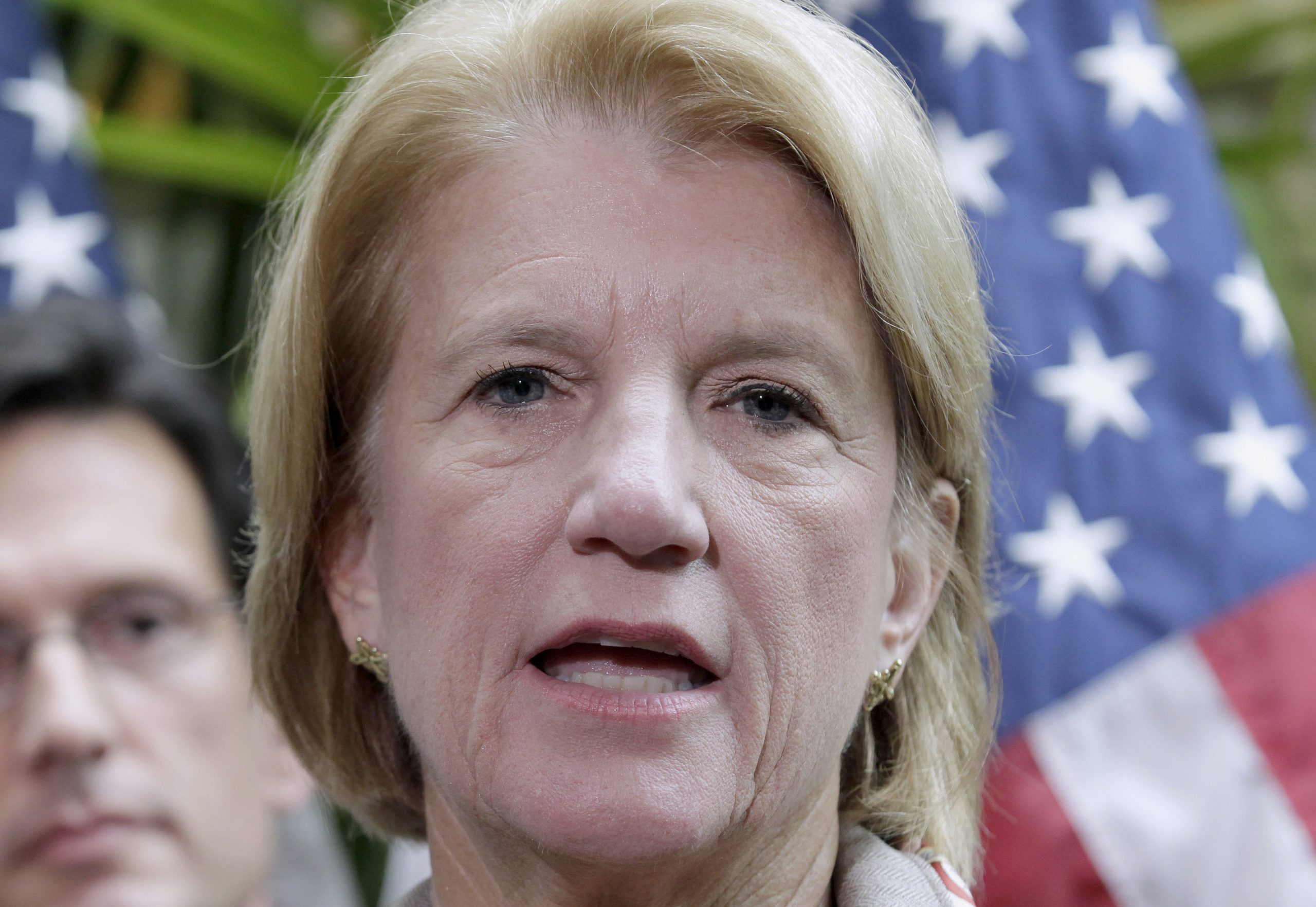
There are 40 new Republican women running for Congress in 2014, along with 17 female incumbents. Not all 40 are likely to win, but the GOP does stand to increase the number of women representing the party in Congress.
This post will be updated with each new Republican woman who wins her election.
Recommended Stories


Shelley Moore Capito, R-W.Va.
As soon as the polls closed in West Virginia, the Associated Press called the Senate race for Rep. Shelley Moore Capito, who easily defeated her opponent Natalie Tennant.
Moore Capito was first elected into the House of Representatives in 2000, and will become the first woman to represent the state in the U.S. Senate.
Tennant struggled to distance herself from President Obama’s coal policies in a state where energy is a top issue.
Joni Ernst, R-Iowa
Ernst became the first woman elected to the U.S. Senate from the state of Iowa, in a race that was hotly contested until the very end.
Ernst was also on the receiving end of sexist remarks, with an ad from her opponent, Rep. Bruce Braley, using the image of a “chick.”
Barbara Comstock, R-Va.
Comstock faced an uphill battle in Northern Virginia, which is becoming increasingly Democratic, but the popular and politically savvy Virginia delegate was able to best her opponent, Democrat John Foust.
Comstock was targeted by the Clinton machine because of her role as an opposition researcher against President Clinton in the 1990s. Her opponent claimed she had never had a “real job.”
Elise Stefanik, R-N.Y.
Stefanik has become the youngest woman ever elected to Congress after defeating her opponent, documentary film producer Aaron Woolf.
Stefanik faced multiple sexist remarks from Woolf and his campaign, and she handled them with the grace and composure of a seasoned politician.
Mia Love, R-Utah
Love won her second attempt at congressional seat, making her the first black Republican woman in Congress as well as the first Haitian-American representative.
Mimi Walters, R-Calif.
Walters won a traditionally Republican district over her opponent, Democrat Drew Leavens.
Walters has been in the state Senate since 2008, and was running for an open seat vacated by Republican Rep. John Campbell, who announced his retirement earlier this year.
Martha McSally, R-Ariz.
After a lengthy recount process, McSally defeated incumbent Democrat Ron Barber. Barber had won a special election for the seat to replace rep. Gabrielle Giffords, D-Ariz., who resigned a year after being shot during a public event.
McSally is a retired Air Force officer and was the first woman to fly in combat. She had previously lost to Barber in 2012, but narrowly defeated him this time by less than 200 votes.
McSally should be a hero of the Right when it comes to gender issues. In 2002, she sued then-Defense Secretary Donald Rumsfeld for requiring female military personnel in Afghanistan to adhere to local customs — for example, to wear a head-to-toe covering, not drive automobiles, sit in the back seat and always be accompanied by a man. At the time, McSally was supported by feminists.
