

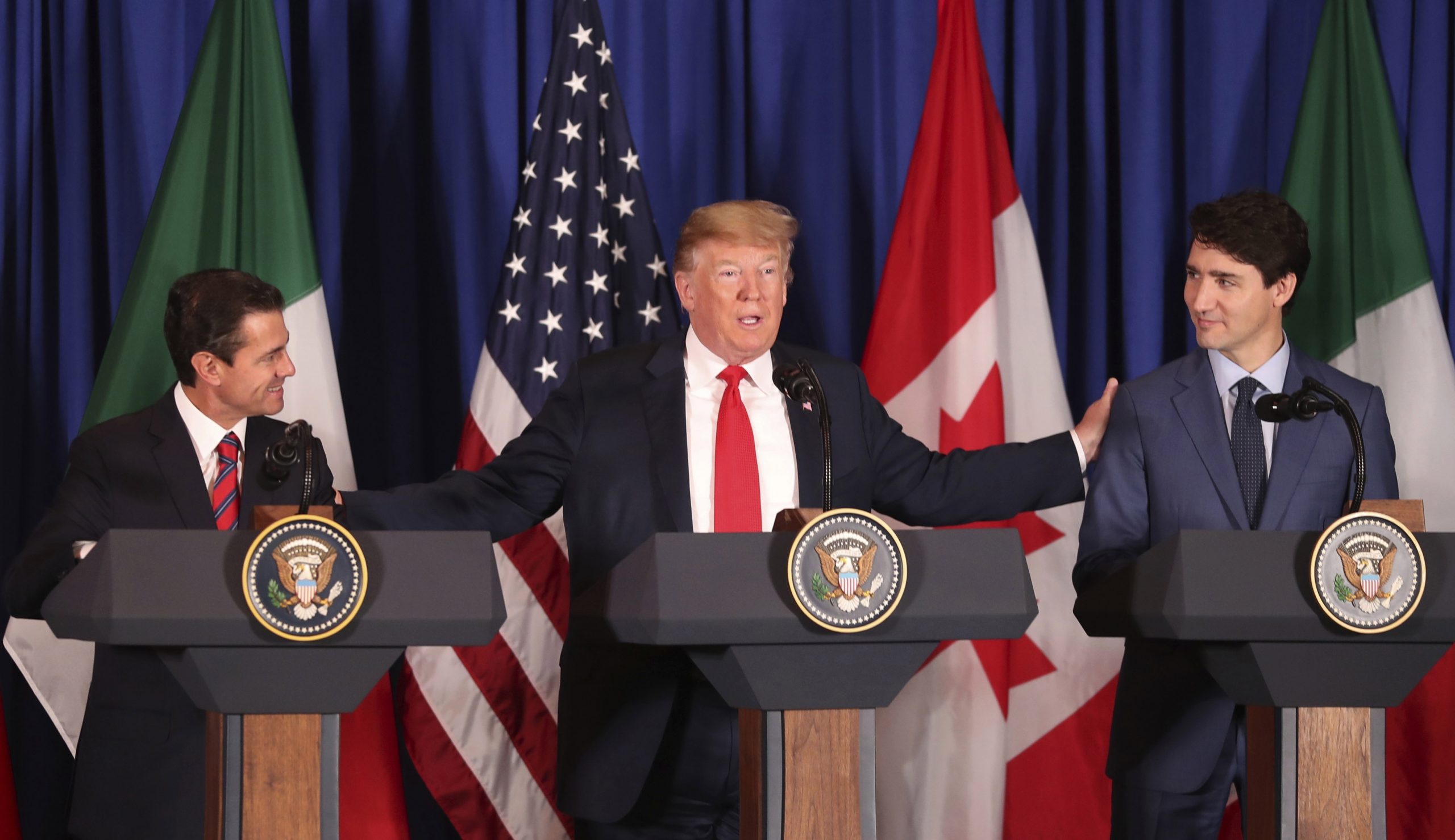
The worst thing that could have come out of a NAFTA renegotiation, a priority of the Trump administration, would have been implementing new tariffs on the successful free-trade zone between the United States, Mexico, and Canada. Thankfully, the USMCA framework that will be considered by Congress will retain the best thing about NAFTA: zero tariffs on 11,227 imported goods from Canada and Mexico.
At their core, free trade agreements such as USMCA are mutual tax-cutting agreements, since tariffs are taxes on imports. Canada and Mexico account for one-quarter of U.S. trade, and it’s in our interest to keep North American trade taxes as low as possible.
Recommended Stories


Reducing U.S. import taxes gives manufacturers and farmers access to the raw materials they need, ensures consumers have year-round access to products ranging from avocados to Christmas trees, and allows Americans to specialize in the jobs we are best at. USMCA also provides for zero tariffs on most U.S. exports to Canada and Mexico, further helping Americans across the country.
The best thing about USMCA is that it retains the reciprocal zero-tariff benefits of the North American Free Trade Agreement. As the Progressive Policy Institute’s Ed Gerwin pointed out, “The North American economic platform—and the U.S. trade and jobs that it supports—depends significantly on key rules of the road established by NAFTA. By far the most important of these is NAFTA’s assurance of duty-free treatment of virtually all regional trade in qualifying products.”
While NAFTA and USMCA have their critics, most of the criticism has been directed at other aspects of the agreements. For example, Democrats in Congress are mostly concerned about proposed USMCA provisions regarding intellectual property and enforcement, not the zero-tariff framework that contributes so much to U.S. prosperity.
NAFTA was highly controversial when it was being considered by Congress in 1993. The late presidential candidate and businessman Ross Perot was the deal’s highest-profile critic. In a debate with Vice President Al Gore, Perot asserted: “Now, people who don’t make any money can’t buy anything. When you look at the man who works for Zenith in Mexico, and you compare him to his counterpart who works for Zenith in the United States, this poor man makes $8.50 a day. You know what his dream is? To someday have an outhouse.”
Mexicans, however, did not turn out to be too poor to buy U.S. exports. According to the Office of the U.S. Trade Representative, Mexico is our second largest export market (next to Canada), and U.S. exports to Mexico have increased by 537% since 1993, just before NAFTA took effect.
NAFTA was alleged to lead to “a giant sucking sound” of jobs and investment dollars going from the U.S. to Mexico. The opposite happened. Since NAFTA took effect, the U.S. has attracted nearly $5 trillion in foreign direct investment and added more than 38 million new jobs.
Critics such as Vermont Sen. Bernie Sanders claim that free trade is bad for manufacturing. According to Sanders, “Since 2001, nearly 60,000 manufacturing plants in this country have been shut down and we have lost over 4.7 million decent paying manufacturing jobs. While bad trade agreements are not the only reason why manufacturing jobs in the U.S. have declined, they are an important factor.”
That’s laughably misguided.
In January 2019, our country’s real manufacturing output was 50% higher than it was in January 1993, pre-NAFTA. Maintaining the North American free trade zone would allow U.S. manufacturing to grow even more.
Presidents Ronald Reagan, George H.W. Bush, Bill Clinton, George W. Bush, Barack Obama, and Donald Trump might not agree on much. But trade agreements negotiated by each of their administrations share the reciprocal zero import tax feature.
Reasonable people can disagree about what else should be in trade agreements. In addition to tariff elimination, recent trade deals have included minimum wage mandates, environmental provisions, guarantees against foreign expropriation of U.S. property, intellectual property rules, gender discrimination guidelines, and support for the free flow of data between countries, among other things.
These issues are often controversial, and they are not unimportant. But policymakers shouldn’t miss the forest for the trees. The most important thing a trade agreement can do is to eliminate taxes that block the free flow of goods. There should be no disagreement on the benefits of locking in reciprocal tariff-free treatment through USMCA.
“Protectionism” is, or should be, a dirty word. It is a policy that empowers lobbyists, bureaucrats, and legislators to cut special deals that protect politically connected firms from competition. NAFTA was a historic American victory against protectionism, and Congress should reaffirm the U.S. commitment to mutually beneficial U.S.-Mexico-Canada trade.
Bryan Riley is the director of the Free Trade Initiative with the National Taxpayers Union.
