

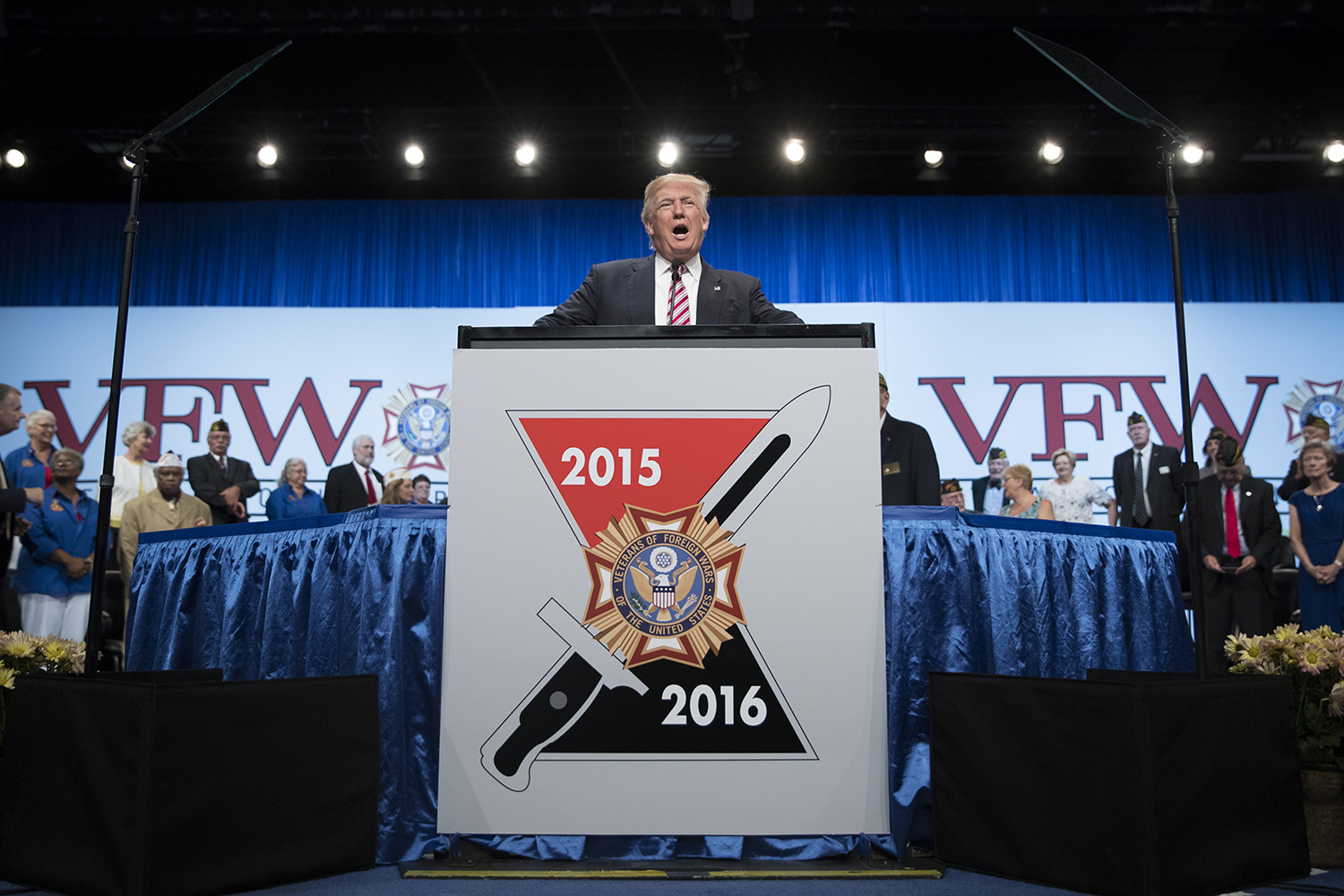
President-elect Donald Trump can do a great deal to bring the country together by making good on his promise to do right by America’s 21 million veterans — too many of whom bear the brunt of inefficient and unaccountable bureaucracy. Many of the big policy changes promised by Trump in other areas might tend to divide the nation; but, if he delivers on his plan to keep faith with our veterans, he will unite us in a very worthy cause.
Since the scandalous treatment of veterans by Veterans Affairs hospitals came to light in 2014, the U.S. Congress has prescribed a host of remedies that have yet to correct the essential problems or hold bureaucrats accountable for their failures. According to a survey released this summer, 7-8 percent of VA appointments are not scheduled within the 30-day period prescribed by Congress in a 2014 reform law; nearly 300,000 veterans have had to wait a month or two for appointments, according to an article in Military Times. The average wait-time system-wide was nearly 7 days for primary care appointments, 4.4 days for mental health treatment, and over 10 days for specialty care.
Recommended Stories


The number of U.S. veterans committing suicide is a national tragedy. Vice President Joe Biden sought to take Trump to task in October by saying that the GOP candidate is out of touch with the challenges faced by veterans. Biden bellowed about “20 suicides per month.” With all due respect to the earnest vice president, the number he cited was terribly wrong. According to a recent study, that scandalous number is more than 20 suicides per day. Worse yet, according to a report in September, more than a third of the calls to the VA’s suicide hotline were “rolled over” to be answered by less experienced staffers; some of the most qualified counselors handled fewer than five calls per day and ended their shifts early.
Healthcare services are only the most provocative of the veterans’ benefits that stand to be improved. The Veterans of Foreign Wars touts a six-point pro-veteran agenda for improving VA and other services. A crosscutting issue the group identifies is the question of budget sequestration; the group argues that arbitrary budget caps on VA and Pentagon spending prevents the sort of “needs-based” funding that will help ensure adequate support for veterans.
Full funding of and eligibility for Post-9/11 GI Bill education programs is another priority, the VFW asserts, citing several congressional initiatives to trim such benefits; the group also endorses extending GI Bill funding to vocational programs.
On veterans’ health services, the VFW advocates “restructuring delivery systems and procedures that facilitate access” to care, realigning the allocation of VA resources, and reforming the department’s culture to instill innovation and accountability. The VFW also singled out the need to improve knowledge and access to benefits for dealing with post-traumatic stress and traumatic brain injury, as part of a broader strategy for addressing the shocking suicide rates among veterans. According to the VFW, access to doctors, medical facilities, and VA services are critical to reducing suicide rates.
Job services for veterans — at the time of separation from service and for a lifetime — is another VFW priority. The group says that military pensions should be “robust” and flexible; these benefits, the VFW says, should be funded regardless of a veteran’s needs and should be extendable and transferable to beneficiaries.
Candidate Trump used characteristically bold rhetoric to advocate for better treatment of U.S. veterans; but when questioned about the GI Bill, for example, he seemed uninformed on the details. His campaign issued a 300-word 10-point plan that included very basic ideas, from choosing a VA secretary, “whose sole purpose will be to serve veterans;” incentivizing innovators and protecting whistleblowers in the VA; appointing a commission to study waste and mismanagement; establishing a “private White House hotline” to field veterans’ complaints; etc. The Trump campaign’s plan also pledged to increase the number of mental health professionals in VA facilities and to allow veterans to seek healthcare from non-VA providers so that “no veteran will die waiting for service.”
There is no reason to doubt President-elect Trump’s commitment to the men and women who “have borne the battle” in service to the nation. If he moves quickly to appoint and empower a VA chief who will accept nothing but the best for our veterans, and if he works with Congress to deliver on the pledge of well-deserved VA benefits, he will draw us all together for a noble purpose.
Roger Noriega was U.S. Ambassador to the OAS and Assistant Secretary of State for Western Hemisphere Affairs from 2001-05. He is a visiting fellow at the American Enterprise Institute, and his firm Visión Américas LLC represents U.S. and foreign clients. Thinking of submitting an op-ed to the Washington Examiner? Be sure to read our guidelines on submissions.
