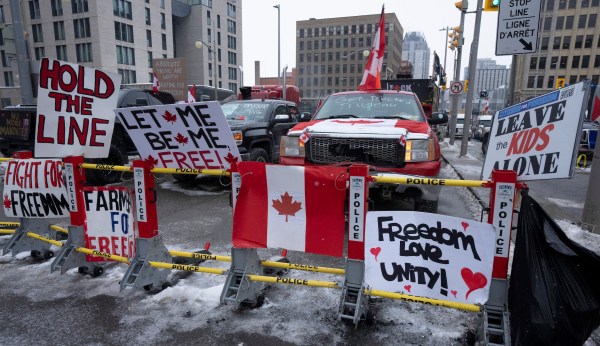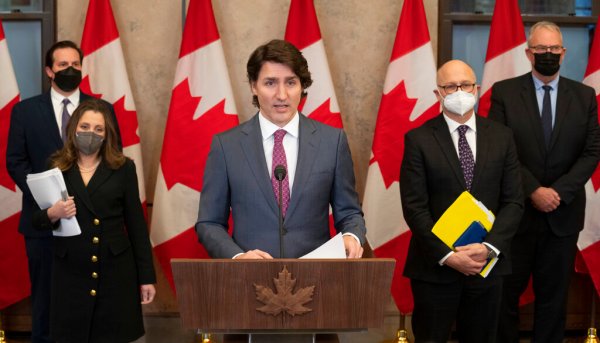
In January, a convoy of truckers and their supporters converged on Canada’s capital, Ottawa, to oppose vaccine mandates, COVID-19 lockdowns, and Prime Minister Justin Trudeau. The protests turned into a three-week occupation that shut down large parts of the city, prompting Trudeau to invoke emergency powers to evict the occupiers. Trudeau’s use of emergency powers was controversial and criticized by some as unnecessary and excessive. Now, a public inquiry is investigating the debacle, and no one is walking away looking good.
The convoy protest was unprecedented in Canada’s history — never before had vehicles been used to blockade a city. Meanwhile, in another part of Ontario (the province where this all took place), convoy protesters used vehicles to blockade the Ambassador Bridge, closing a border crossing that accounts for 25% of U.S.-Canadian trade. Some protest leaders called for overturning the government, but the vast majority of participants simply wanted pandemic-related public health measures rescinded. A small number of neo-Nazis infiltrated the convoy and were quickly kicked out by protesters, but they were used by convoy critics to misrepresent all those involved as fascists. Meanwhile, convoy supporters ignored consistent reports that some protesters were harassing and threatening locals. Most Canadians, including many sympathetic to the convoy, understood that the protest, while initially acceptable, had gotten completely out of hand.