

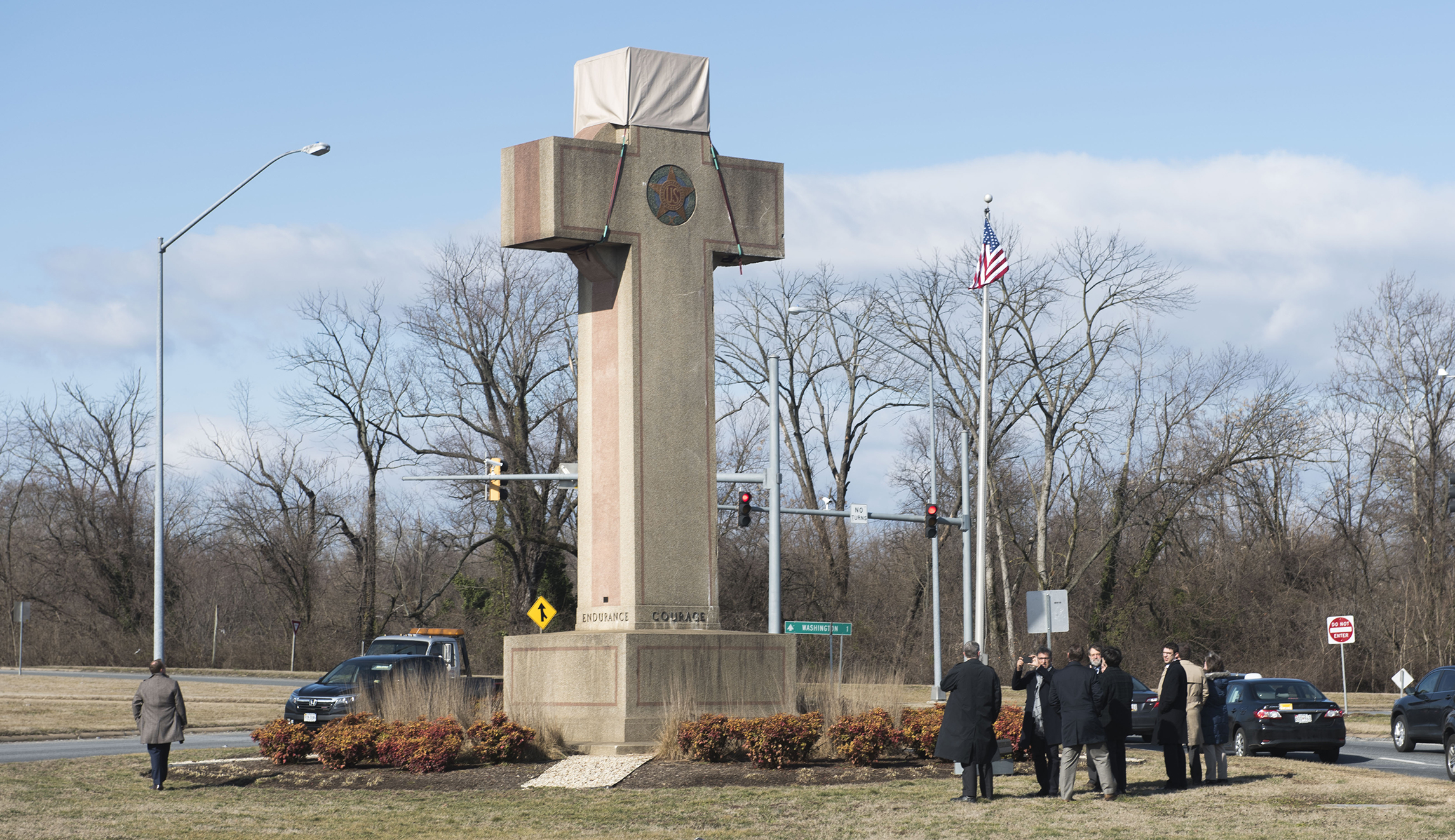
As activists strove over the past two years to take down statues of slave owners, Confederates, and racists, we generally agreed with the efforts but worried about who their next target would be. It ended up being Christianity.
The iconoclasts have lost for now. The American Humanist Association persuaded only two of nine Supreme Court justices that the Constitution demanded demolition of a century-old war monument in the shape of a cross.
Recommended Stories


The ruling had narrow implications. The cross in question — the Peace Cross, a World War I memorial in Bladensburg, Md. — has been around so long that it had taken on a mostly secular meaning, the majority explained. The opinion rests on this detail, and so it doesn’t preclude challenges to newer or more fully religious displays on public property.
But there’s something very important about the church noting the largely secular nature of this monument. No sober observer could claim that this privately erected monument to peace that sat on government property amounted to the establishment of Christianity as a state religion, especially in Maryland’s D.C. suburbs. This shows that the crusade to tear it down was obviously motivated by a deep disdain for religion.
Justice Samuel Alito’s opinion suggested the Humanists’ suit was part of “a campaign to eliminate items with a religious association” that “may evidence hostility to religion.” He’s right. And he’s right that removing it “would be seen not as a neutral act,” Alito wrote, “but as a manifestation of ‘a hostility towards religion that has no place in our Establishment Clause traditions.’” The last phrase quotes Justice Stephen Breyer in a 2005 opinion.
But hostility toward religion is a significant part of the Left’s political energy and the Democratic Party’s agenda these days. More precisely, there is a concerted effort to chase religion out of the public square and into a purely private sphere.
The Obama administration, for instance, argued that the family that owned Hobby Lobby surrendered its First Amendment rights to free exercise of religion insofar as it entered the marketplace. For-profit businesses supposedly aren’t allowed to act on their religious principles, the Obama administration argued.
We doubt that the Democrats’ official position is that corporations must always pursue profit and nothing else. Surely, they’d allow for corporations to back environmental causes, or say, to publicly support gay pride. It is only religion that they want to drive out of the marketplace.
Obama tellingly misquoted the First Amendment, claiming it guaranteed the “freedom of worship,” as if freedom of religion just meant you got to pray how you wanted, not that you were free to live according to your conscience. When defending the effort to force the Little Sisters of the Poor to violate their conscience and provide birth control for their employees, Nancy Pelosi explained, “I do my religion on Sundays.”
But free exercise of religion isn’t simply freedom of worship. No religion asks its followers to obey the rules and offer praise on only one day out of seven.
The mindset that tries to drive the church out of the public square is a radical one and a dangerous one. Cheers to the court that just slowed its march.
