

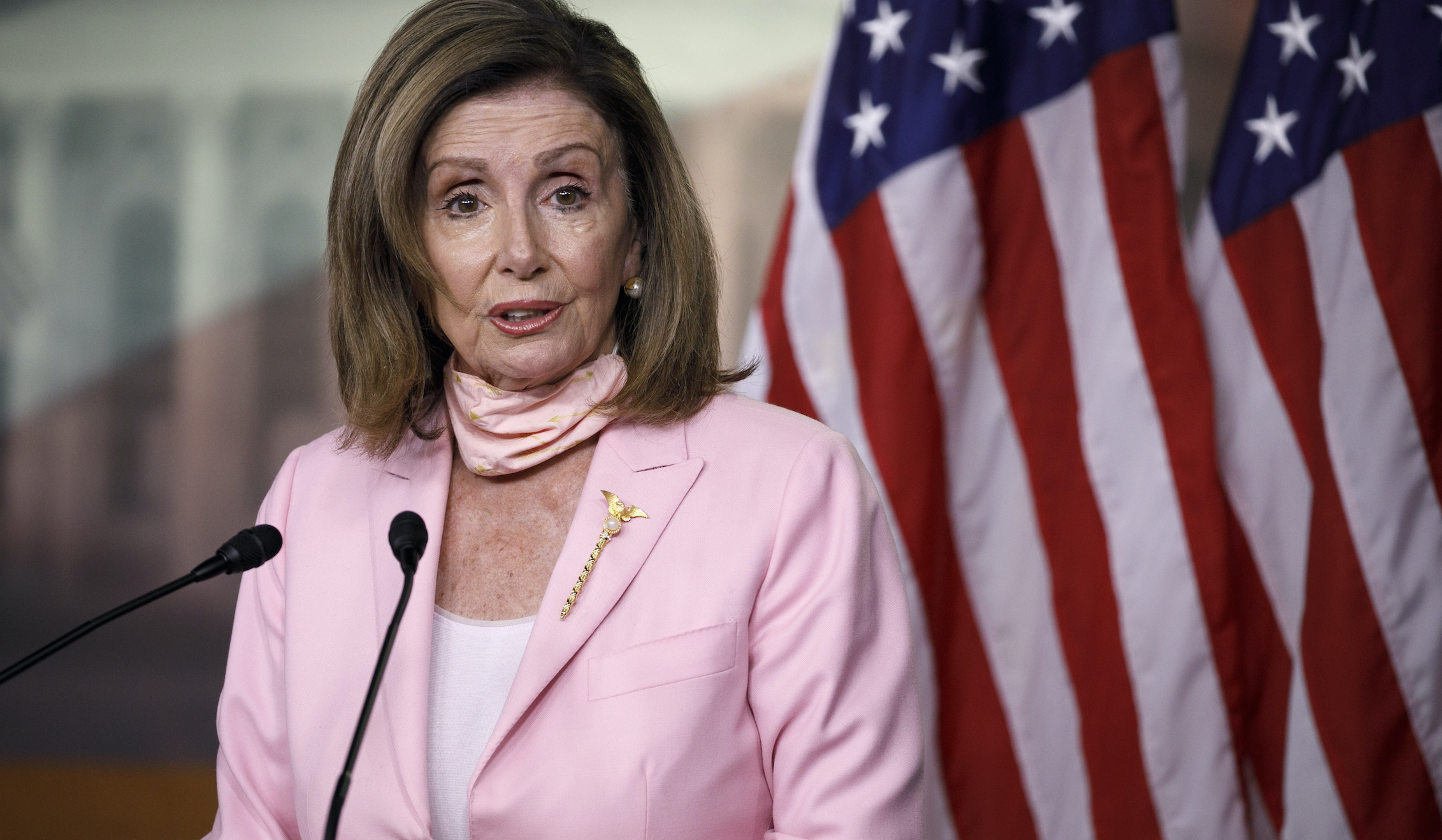
Nancy Pelosi’s grip on the speaker’s gavel is tenuous. Even with a historically unpopular president of the opposing party atop the ticket, Pelosi couldn’t gain House seats. In fact, she lost seats — lots of them — and nearly lost her majority. And this is on her second chance as speaker. Remember: Pelosi lost the House majority after just four years in the last decade.
The left wing of her party is upset that Pelosi is a sellout and that the current Democratic Party doesn’t care enough about good campaigning. Democrats of all sorts worry that things got away from her when “defund the police” and democratic socialism became attached to the party.
Recommended Stories


There’s a good case to be made, though, that Pelosi is a political maestro. Countless magazine articles and probably a few books will be written on her political successes, her style, and her image. But today, in the aftermath of President Trump’s defeat and her majority’s surprising losses, one aspect of her leadership deserves attention: her willingness to spend her majority on what she saw to be greater goods.
Republican congressional leaders have often seen the majority as almost a good in itself. You get the majority because it’s good to get a majority, and you be very careful with your majority because you wouldn’t want to lose your majority. That’s why Republicans don’t really govern as conservatives (outside of tax hikes). Instead, they expand the federal role in education and energy while expanding Medicare and never repealing Obamacare.
The most aggressive thing Senate Majority Leader Mitch McConnell has done with his majority is fill the courts with conservative appointees, which is basically cost-free politically and is also a retribution for the dirty things Chuck Schumer and Harry Reid did on judges, from blocking Miguel Estrada to abolishing the filibuster in 2013.
So if you imagine a majority is like money, Republicans hang tight onto their money. Pelosi, in contrast, sees a majority as something to be spent. A legislative majority is not a good in itself. It is a means to other good ends. And if you have to lose your legislative majority as a result of accomplishing your real aims, well, that’s just like having to spend your money in order to get the actual good.
In 2010, Pelosi spent her legislative majority on Obamacare. Increasing the federal government’s role in the healthcare sector, in people’s personal lives, and in the employee-employer relationship was an immense benefit to Democrats. They gained new levers with which to control the economy, hospitals, drug companies, insurers, state governments, and all sorts of employers — even nuns!
Did Obamacare cost Democrats control of Congress in the 2010 elections? Almost certainly. But that was worth it. Why have a majority if you’re not going to use it on something good? Why have money if you’re not going to spend it? Why have a hammer if you’re not going to scuff it by hitting some nails?
And in the past year, Pelosi spent her majority again. Check out this tweet by Sam Stein:
Trump not cutting a second stimulus deal with Pelosi in August or September arguably cost him the election and one has to wonder if pelosi suspected it would and dragged the negotiations along
— Sam Stein (@samstein) November 8, 2020
It’s another brilliant sacrifice by Pelosi.
I posited on the air last week that the two players who failed to deliver additional coronavirus aid over the summer and in the fall both suffered at the ballot box: House Democrats and the Trump administration.
Did Pelosi and Trump both make mistakes by not cutting a deal? Not necessarily. If Pelosi sacrificed some of her vulnerable members in order to harm Trump and that helped Joe Biden beat Trump, then it might have been worth it. (Where the economic well-being of the country enters into this calculation is another matter.)
Now, Pelosi might lose the gavel. That might be the right decision by Democrats. But when they send her packing, they should thank her for being willing to spend Democratic majorities in order to win lasting policy battles for her party.
