

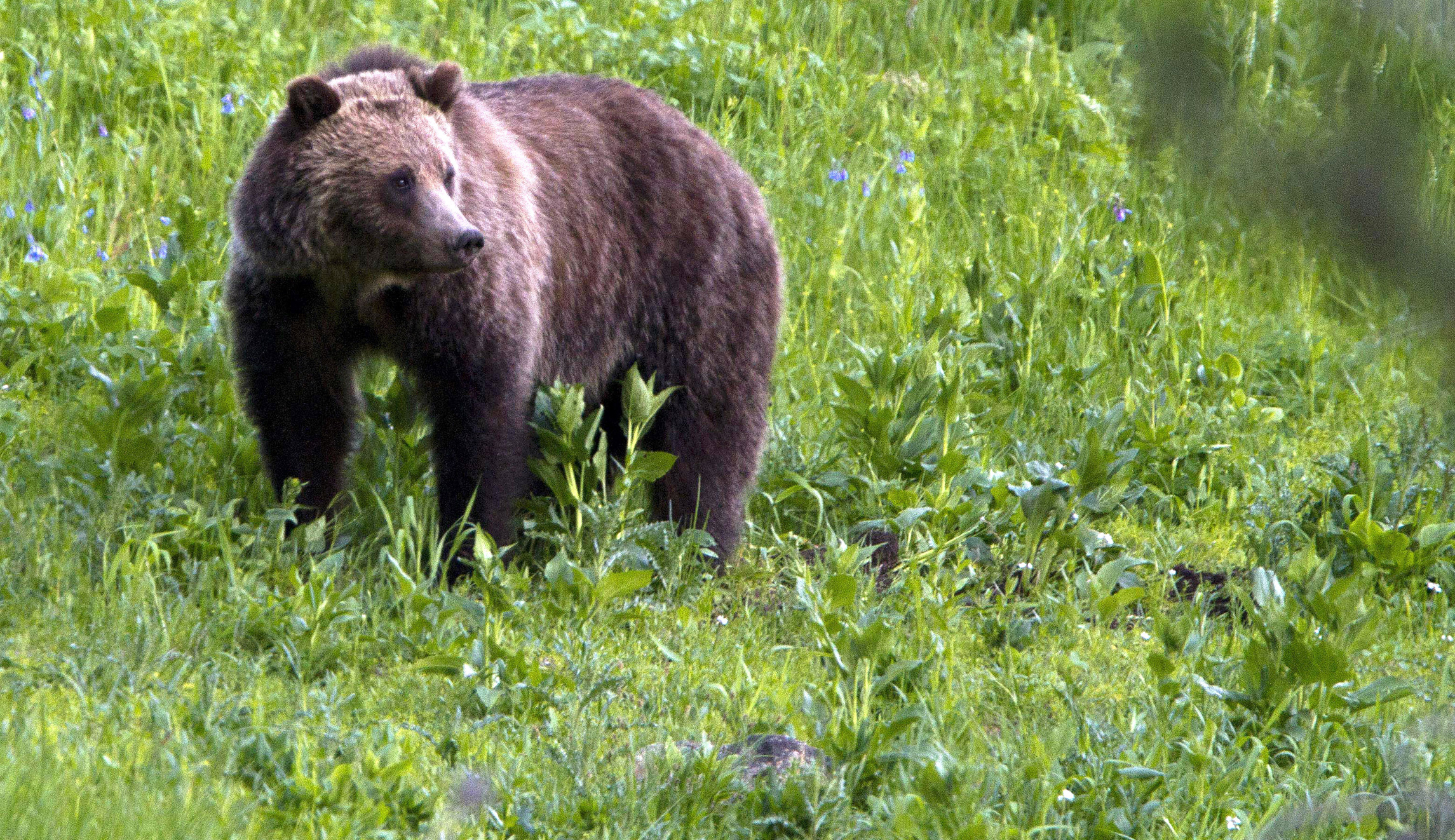
The grizzly bear is in the news thanks to the U.S. Fish and Wildlife Service’s removal of a massive, isolated, and thriving population of the predator from the Endangered Species Act list to allow management by western wildlife officials. That drew lawsuits by several radical environmental groups that argue there are too few grizzly bears, to which three western states responded in a rare show of support for a federal Endangered Species Act program. Days ago, ranchers from Wyoming and their associations joined those lawsuits to put human faces on an environmental cause celebre supported by coastal urban elites.
“It’s difficult not to anthropomorphize grizzly bears,” writes Scott McMillion, author of Mark of the Grizzly: Recent Bear Attacks and the Hard Lessons Learned. “They are so much like us. They … love sugar and meat and fat. They stand upright, wander, are curious, get angry, can be jealous, possessive, and promiscuous. They spank their children. And they are so much stronger than us [‘and incredibly fast’].” It’s little wonder the grizzly bear (Ursus arctos horribilis) is the subject of such wild fascination and idle curiosity for those outside the rural West.
Stay informed.Stay ahead.
Join Washington Examiner for unlimited access to the news, analysis, and commentary that matter most.
Already a member? Log in
