

The U.S. military announced late on Tuesday that a Russian surveillance aircraft had intruded into the U.S. air defense identification zone near Alaska on “two separate occasions, over the past two days.”
Recommended Stories



An air defense identification zone is an airspace beyond national borders within which entering aircraft are expected to broadcast their identity and destination. Whether this was a dedicated Russian surveillance aircraft, of which the Russian military has only a few, or an airborne radar or maritime patrol aircraft (most likely an Il-38) is unclear. Regardless, while Russia conducts these intrusions from time to time, it is likely the Kremlin is trying to send a number of messages here.
First off, Russia is signaling its retained ability to threaten the U.S. West Coast. The public, if sometimes veiled, reinforcement of Russian pride and power is central to Vladimir Putin’s strategic doctrine. With tensions between the United States and Russia at high levels over the war in Ukraine, and with Russia suffering very significant setbacks and losses in that war, this display allows Putin to remind the U.S. of something. Namely, that Russia can still threaten the U.S. homeland.
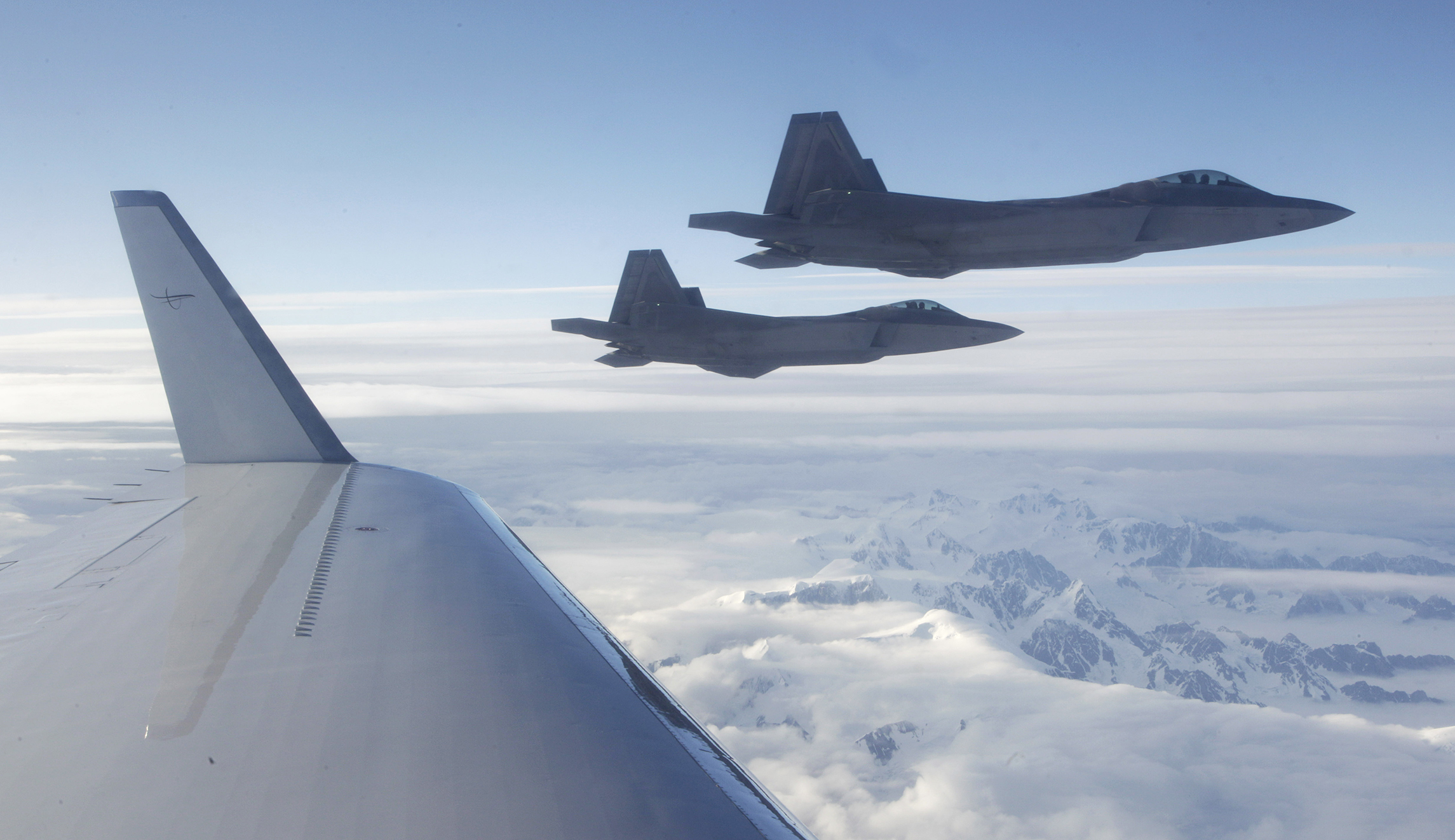
The F-22 fighter jet factor is also important in this regard. At least one F-22 intercepted the intruding Russian aircraft. The problem: There aren’t that many F-22s available to the U.S. military. Responding to Russian threats to NATO’s eastern flank, President Joe Biden recently transferred six F-22 Air Force fighter jets from their Anchorage home base at Elmendorf Air Force Base to Poland. I’ve argued that this transfer degrades the U.S. military’s already grossly inadequate readiness against China.
In turn, via this airborne action, Moscow reminds Washington that it can tie down U.S. military assets where the U.S. wants those assets available for other operations. Considering their finite number (about 140 total) and exceptional capability (as air superiority fighters, the F-22s are far superior to the F-35s), the Alaska-based Pacific Air Forces F-22s would be more valuable based out of Hawaii or Guam. The problem: U.S. plans for both defending and striking against Russia’s strategic forces require the U.S. to retain some F-22s in Alaska. At the margin, this helps China because the jets aren’t available to fight the People’s Liberation Army. Enraged over House Speaker Nancy Pelosi’s recent visit to Taiwan and determined to escalate against U.S. interests in response, Beijing will view Russia’s incursions this week as a welcome show of solidarity. Putin sees his relationship with China as a critical ingredient of Russia’s retained great power status.
Russia’s threat in the high north is not just for show.
The F-22 involved in this week’s intercept would have been launched from Elmendorf Air Force Base, likely to conduct an intercept over the Bering Sea. Why does that matter?
Determined to exert de facto control over the lucrative energy and fishing reserves of the Bering Sea, Russia has conducted aggressive intrusions into these waters in recent years. This includes transits into the U.S. exclusive economic zone and the harassment of American civilian fishing vessels. While the Trump administration moved to impose a cost for Russian activity in this area, the Biden administration has been more tolerant of it. Putin’s ultimate interest rests on securing control over the Arctic, securing its energy supplies, and new, global warming-enabled transit routes for Russia’s sole benefit.
Top line: Russia is sending more than one message. But the U.S. lacks the military capacity to contest simultaneous war threats from both Moscow and Beijing. Put another way, White House national security spokesman John Kirby is wrong when he says all is well.
