
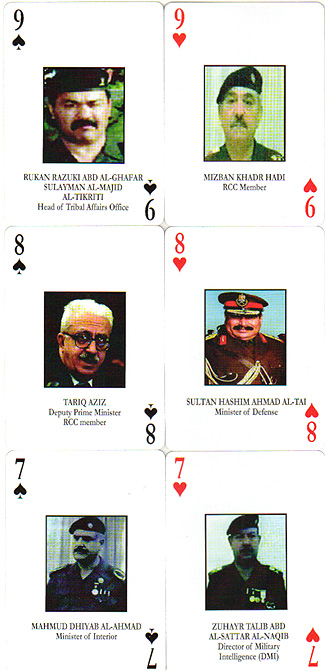
Sultan Hashim Ahmad, Saddam Hussein’s defense minister and the “eight of hearts” in the Iraq War’s “deck of cards” most wanted, died in prison on Sunday, July 19. He surrendered to U.S. forces in Mosul in 2003, six months after the U.S.-led invasion ousted Saddam’s regime. The Iraqi government subsequently sentenced Sultan Hashim to death for his complicity in the 1988 chemical weapons attacks on Kurdish civilians, though the Iraqi presidency commuted the ex-defense minister’s sentence.
Today, some are lionizing Sultan Hashim because of his military service. Certainly, many Iraqis (not only Sunni Arabs but also Shiites and Kurds) honor the Iraqi army over which Sultan Hashim once presided. In both the regional Kurdish capital of Erbil and in Basra, southern Iraq’s largest city, Iraqis continue to honor their army’s legacy on Jan. 6. When I asked Iraqi Kurds about this while teaching in their autonomous region before Saddam’s ouster and just 13 years after they suffered the Iraqi government’s chemical weapons and ethnic cleansing campaign, they explained they differentiated between the Iraqi Army and those in Saddam’s inner circle who were directing it. This should not surprise: Most Iraqis are nationalist and proud of a culture and a legacy that long predates Iraq’s formal 1932 independence.
Real journalism.Trusted by millions.
Unlimited access to in-depth reporting, expert analysis, and the stories that shape our country.
Already a member? Log in