

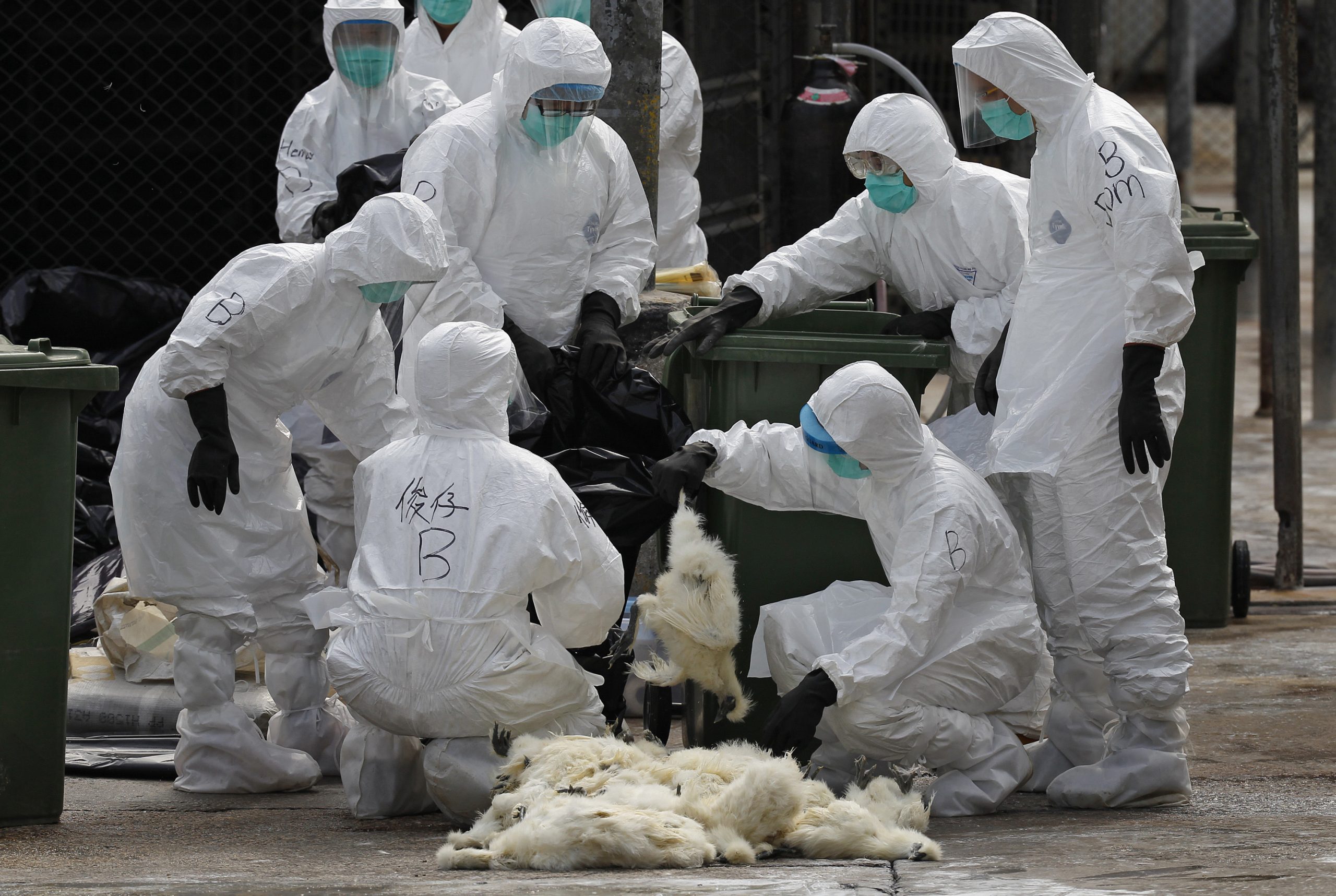
H5N1 bird flu has been on the public health radar as a potential cause of the next pandemic since 2003, when I first began to study it. It continues to kill millions of poultry every year. The rare human case is still almost 50% deadly, hence the reason for all the worry.
But despite the fact that H5N1 now shows an ability to infect mammals, with cases found in foxes, seals, dolphins, otters, and wild dogs, the number of human cases remains extremely small. In part, that’s because several mutations would have to occur before bird flu could spread from human to human.
Recommended Stories


BIDEN MANAGES TENSE RELATIONS WITH CHINA
Still, the scale of this flu matters.
Over the past year, in the U.S. alone, over 58 million poultry have been infected (close to 100% mortality rate because of their poor immune systems), with close to 7,000 wild birds according to the Centers for Disease Control and Prevention. There has only been a single human case. But this doesn’t stop the worry. A single traveler from England to Scotland, infected with H5N1, has just set off alarms in the United Kingdom, with advisories and bird flu zones and comparisons made to COVID-19 and Wuhan, despite the lack of human spread with bird flu.
Globally, since 2003, 873 human infections with A(H5N1) viruses, including 458 deaths, have been reported to the World Health Organization. Nevertheless, in Moscow, 11 out of 125 regions are being quarantined because of outbreaks among birds, not humans. This appears to me to be entirely fear-driven, rather than due to public health precautions. At least with the COVID-19 pandemic’s public quarantines, many of which were excessive and ineffectual, there was actually a virus sickening and killing people on a large scale.
Don’t get me wrong, I am not dismissing the H5N1 bird flu risk, especially considering gain of function research has been taking place on it for years. Indeed, in the Netherlands, Dr. Ron Fouchier induced four mutations allowing the flu to spread from ferret to ferret (a species similar to humans in how it transmits viruses). This disturbing event led to only a short moratorium on gain of function research on H5N1.
CLICK HERE TO READ MORE FROM THE WASHINGTON EXAMINER
The government will allow research on bird flu that had been halted over safety concerns. But officials have not publicly announced the decision nor explained how it was made. So the most likely scenario where bird flu causes the next pandemic would be a lab leak rather than via nature, where a species barrier has protected us thus far against highly pathogenic influenzas in birds.
Monitoring birds carefully and culling infected flocks makes sense, but the spread of highly contagious fear does not. Plus, excess attention on bird flu means resources are taken away from other potential pandemic pathogens.
Marc Siegel MD is a professor of medicine at NYU Langone Health and medical director of Doctor Radio on SiriusXM. He is a Fox News Medical Analyst.
