

To exit the stalemate over the government shutdown someone is going to have to compromise and change their opinion on the stakes at hand. For House Speaker Nancy Pelosi, D-Calif., she needs a compromise on a border wall and a catalyst for a change of heart on the morality of walls.
She would get both of these if she went down to Brownsville.
Recommended Stories


I just got back from a tour of the Rio Grande Valley sector border at the southernmost portion of Texas. It’s the most illegally crossed part of our border with Mexico, with 160,000 apprehensions of illegal aliens in 2018, more than three times the apprehensions that take place in any other sector.
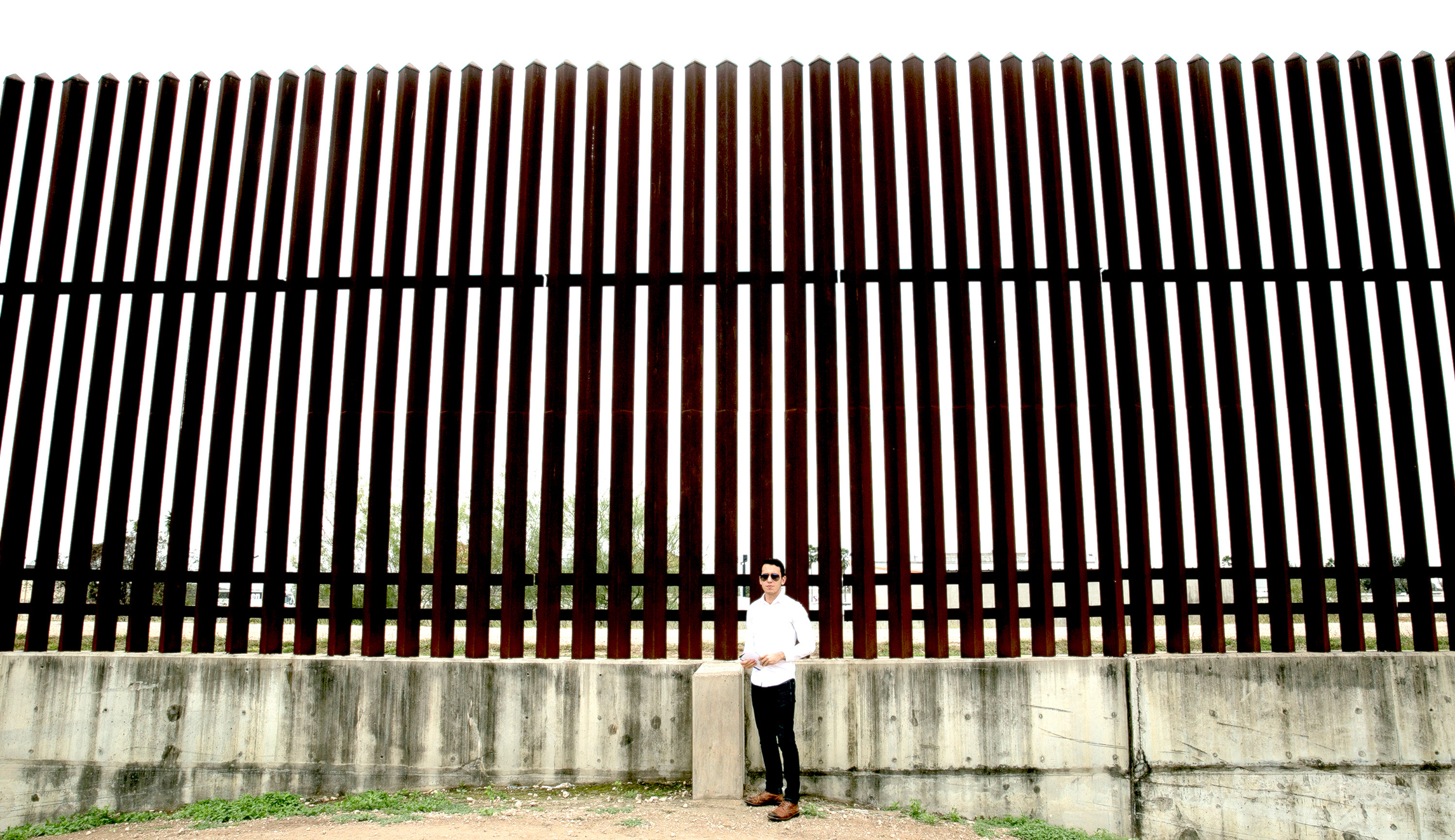
U.S. Border Patrol agents told me that 90 percent of crossings that occur in the sector take place where there is no border barrier, which they refer to as “wall.” This is not “the wall” as was conceived during President Trump’s 2016 campaign, and for which no consistent definition exists.
“Wall” in southern Texas is about 25 feet of vertical barrier, half concrete, half steel, and much of it serves two functions: 1) It reinforces levees (long stretches of ditch) that contain flooding from the Rio Grande, and 2) it serves as a high obstacle that all agents say is immensely effective in stopping or slowing down aliens who’ve crossed into the U.S. and are trying to flee farther into the country.
As of now, the wall exists in pieces. In some areas, it stretches for miles, in others, it might just be 100 yards. John Morris, division chief of law enforcement in the Rio Grande Valley sector, told me that the goal for years has been to fill in the gaps as best as possible with more of the same barrier, accompanied by cameras to sit every 100 feet atop the steel and more agents stationed intermittently.
Morris said that has been the plan since the mid-1990s and that the wall portion of it began construction in 2008, after Congress passed the Secure Fence Act of 2006.
They haven’t been able to complete the overall goal for a number of reasons: Lack of federal funding, sanctuary laws that protect vast areas of shrub and brush (which illegal crossers hide in), and then the process of working out agreements with private land owners whose property runs right up against the border and whose permission would be needed to construct more barrier.
“It can be done,” Morris told me. “We’ve done it before.” He was referring to the east portion of the sector an hour away in Brownsville, where nearly continuous wall runs up against the border and where Morris said is under far more control than farther west Texas.
If Pelosi took her own trip to that stretch of border to see the problems border agents are experiencing and what they’re asking for to fix them, she would see that in this particular area, the existing “physical barrier” should be extended.
This wouldn’t be a capitulation by her. She wouldn’t be giving Trump his grand but vague “wall,” but she could say that she sees the necessity in addressing that specific area of the border, which is straining more than any other to deal with drug smugglers or other potential criminals coming into the country, due to the other issue overwhelming the area: Central Americans claiming asylum.
Any line of honest reasoning leads to the conclusion that Democrats don’t consider illegal immigration or border security a national priority so Pelosi has absolutely no incentive to negotiate on either issue after the government shutdown. It has to be done now and unless Trump gives in, this is her way out.
