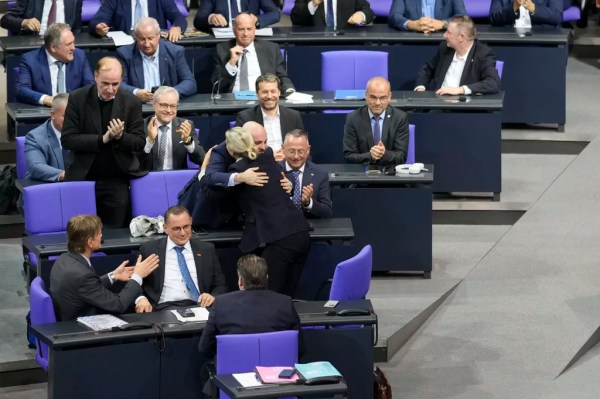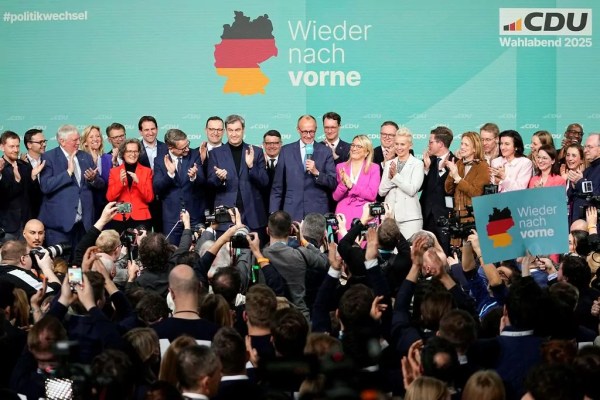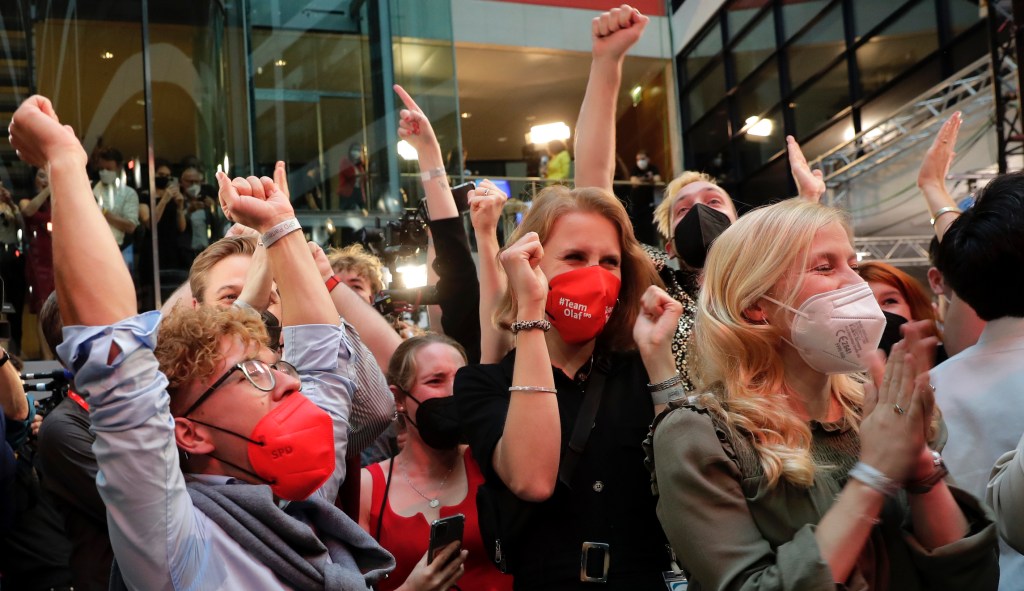
The good news is that there will be no socialist government in Germany after Sunday’s elections narrowly defeated that outcome. Germany elected the second-largest parliament in the world (after the People’s Congress in China) with 735 representatives. The three left-wing parties, the SPD (Social Democrats), Greens (left-wing environmentalist party), and radical leftist Die Linke (the former East German Communist Party), got a combined 363 seats, but they would have needed 368 to form a government.
The two biggest left-wing parties, the SPD (25.7%, up 5.2 percentage points from 2017) and the Greens (14.8%, up 5.9 percentage points from 2017), made significant gains, but the far-left party Die Linke lost 4.3 percentage points, coming in at 4.9%. Since there is a rule in Germany that a party needs at least 5% to enter the Bundestag (the German equivalent to the House of Representatives), the extreme left almost missed out entirely. However, there is a special rule that a party can still get into the Bundestag if it wins three direct mandates, which means that Die Linke has just scraped into the German parliament.