

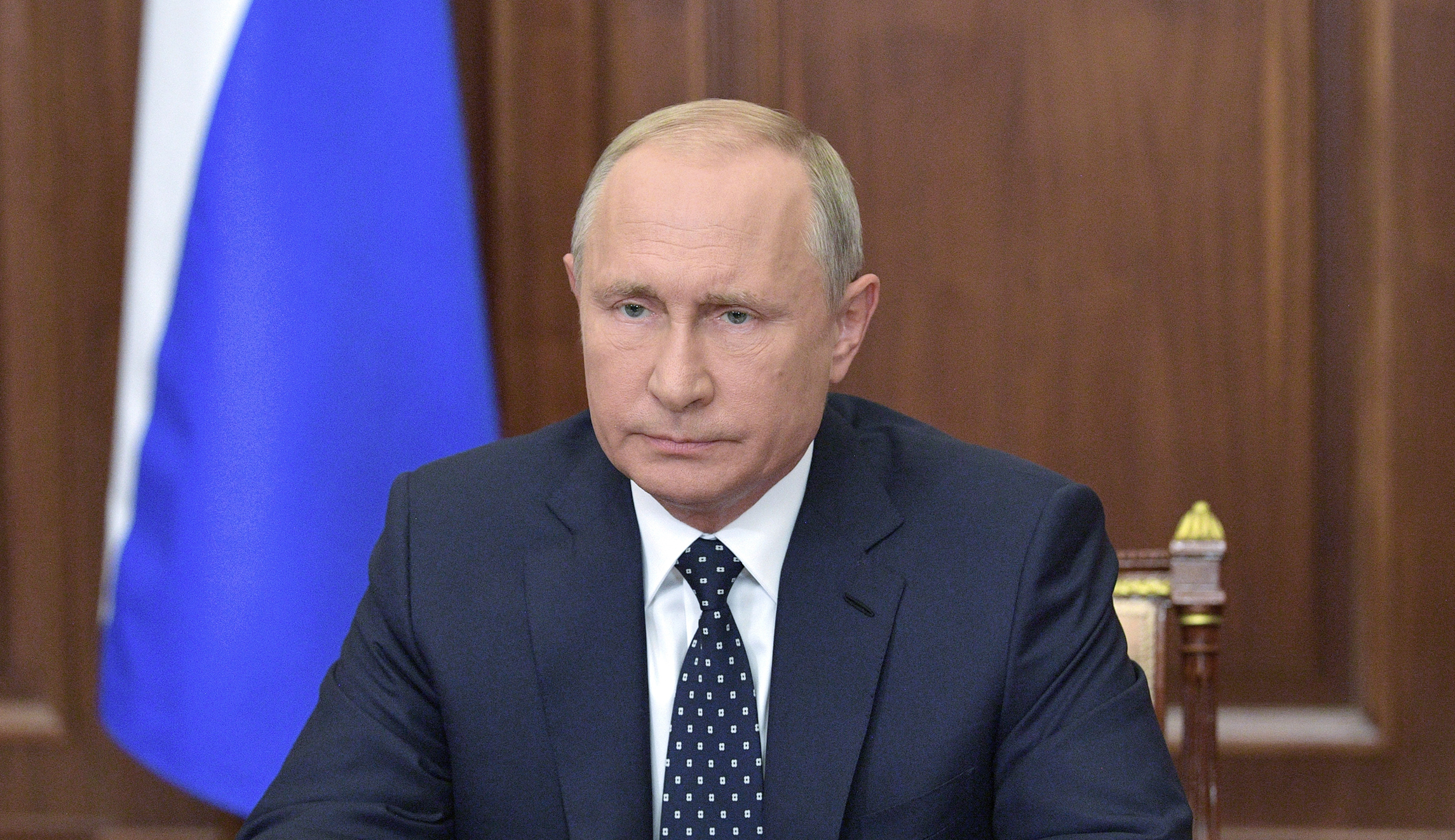
Russian President Vladimir Putin’s decision to roll back planned pension reforms won’t address the central issues facing his country, a demographically challenged nation beset by corruption and declining export potential.
In a rare backtracking move, Putin on Wednesday announced that the pension eligibility age for women would rise from 55 to 60 instead of 63. The altered plan comes alongside Putin’s falling approval ratings and is sure to help them along (although he remains popular).
Recommended Stories


The deeper problem is that Putin has little interest in doing what must be done.
First off, Russia’s demographic base is under significant pressure. While its birth rate is on an upward track after a systemic post-Cold War decline, too many Russians continue to die too young. These death rates reflect endemic alcoholism, drug abuse, and stress-related cardiovascular diseases. Yet even if Russia’s population slowly moves towards positive growth, its tax base will have to support a growing number of pensioners. That will break the bank, hence Putin’s tepid and hesitating reforms.
And speaking of the bank, Russia’s next biggest issue is its economy, characterized by an overreliance on energy exports, endemic corruption, and insufficient investment. With fracking-based energy extraction methods and the U.S. energy revolution fundamentally undercutting the cost basis of Russia’s energy-export model (a key tool of Putin’s foreign policy), Russia has to find new ways to make its economy grow. The problem is that more than 50 percent of Russia’s export base is dependent on energy, and that money is its government’s critical revenue component. At the same time, Russian investment has utterly failed to counterbalance its export model vulnerabilities. In short, Russia has no plan B.
Meanwhile, Putin bases his power on a patronage relationship with powerful oligarchs. He has little interest in challenging those oligarchs and forcing market competition into his economy. And so Russia’s vast potential is sacrificed on the altar of corruption. Putin’s only alternative action is his effort to boost Russian military exports to the Middle East.
And there’s another problem. Unable to help himself from stealing territory, using nerve agents to poison British citizens, supporting chemical weapons atrocities in Syria, and threatening the west, Putin has invited major international sanctions on his economy. Alongside domestic repression (which U.S. social media companies sadly support) and the Russian government’s harassment of foreigners, foreign investment in Russia has understandably plummeted.
Ultimately, this means that Russia’s major problems are either Putin’s fault or ones he is unwilling to address.
