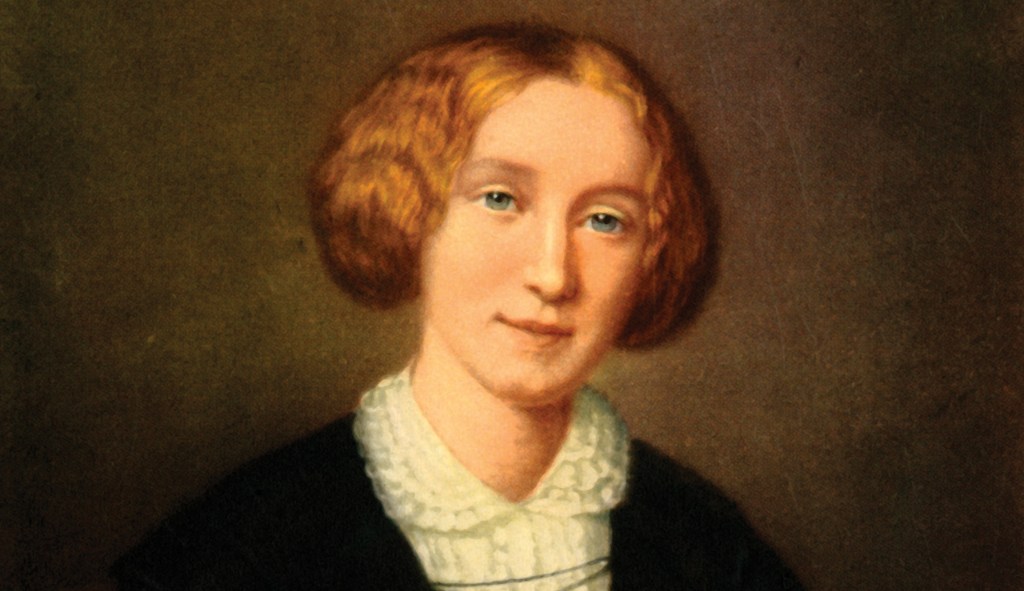
“Marriage must be a relation either of sympathy or of conquest,” George Eliot writes in Romola, a novel that presents marriage as the latter and charts the eponymous heroine’s efforts to escape a domineering husband. “Marriage is a state of higher duties,” the young Dorothea Brooke says in Middlemarch. “I never thought of it as mere personal ease.” Her marriage to the musty, dusty, cold-hearted scholar Casaubon, “a dried bookworm towards fifty,” turns out to be a trial. If only she had listened to her uncle, who declares marriage to be a “noose.” Gwendolen Harleth, in Eliot’s last novel, Daniel Deronda, feels a similar constriction in her marriage, imagining not a noose around her neck but rather the “throttling fingers” of her tyrannical husband Henleigh Grandcourt. In Eliot’s 1859 novella The Lifted Veil, love curdles into loathing for Latimer and Bertha, and their marriage becomes such an ordeal that she ends up conspiring with her maid to poison him.

In 1855, Eliot wrote to a friend: “If there be any one subject on which I feel no levity it is that of marriage and the relation of the sexes.” Clearly. For her, marriage mattered gravely. Her depictions of her characters’ marriages are suffused not with solemnity, for those marriages are serious affairs — mainly because they are difficult or disastrous. Mismatched couples flounder in chaotic alliances or toxic unions, husbands lose control and wives duck for cover, and wedded bliss proves woefully short-lived or tragically unattainable.