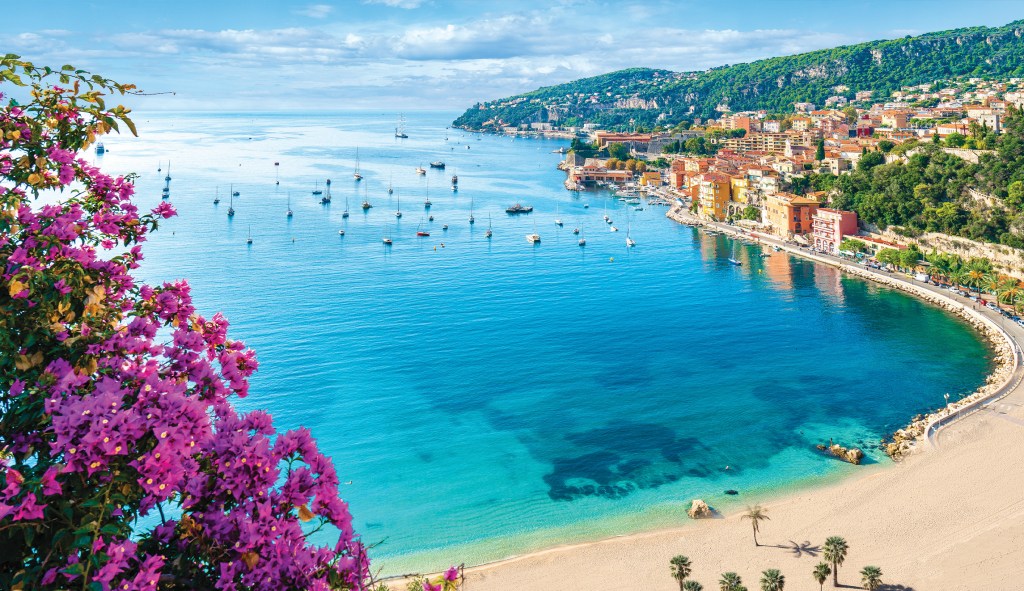
When the French composer Hector Berlioz arrived in Nice from Rome in the spring of 1831, it wasn’t music that preoccupied him, but murder. After this pit stop in the southeast of France, he planned to go on to Paris and kill his treacherous fiancee, her new husband, and finally his lovelorn self. But the beauty and the serenity of the coast had a profound effect on him, soothing his thoughts, healing his heart, and changing his mind. The dramatic cliffs around Nice also inspired him to write his overture to King Lear. He called his stay the happiest 20 days of his life. Asked at the time what he was doing there, he replied: “I compose, I dream, I thank God for the glorious sun, the sea, the flower-clothed hillsides.”

Since then, countless visitors have flocked to the French Riviera to bathe in its glow and revel in its delights. Many, like Berlioz, have been revivified by the area’s natural charms or creatively influenced by their surroundings: F. Scott Fitzgerald showed how this side of paradise became a playground for wealthy and glamorous expatriates in Tender is the Night; Monet was mesmerized by the “magical light” of the Mediterranean and sought to capture it in his art; and Coco Chanel’s sojourns to the south led her to open a salon in Monte Carlo selling beachwear that included her elegant and liberating “beach pajamas.”